The midnight air in Kowloon carries a very specific scent. It smells of damp concrete, exhaust fumes, and cheap instant noodles eaten under the harsh flicker of a dying fluorescent tube. For a thirteen-year-old boy whose name will never appear in the history books, it also smells like freedom. Or at least, his version of it.
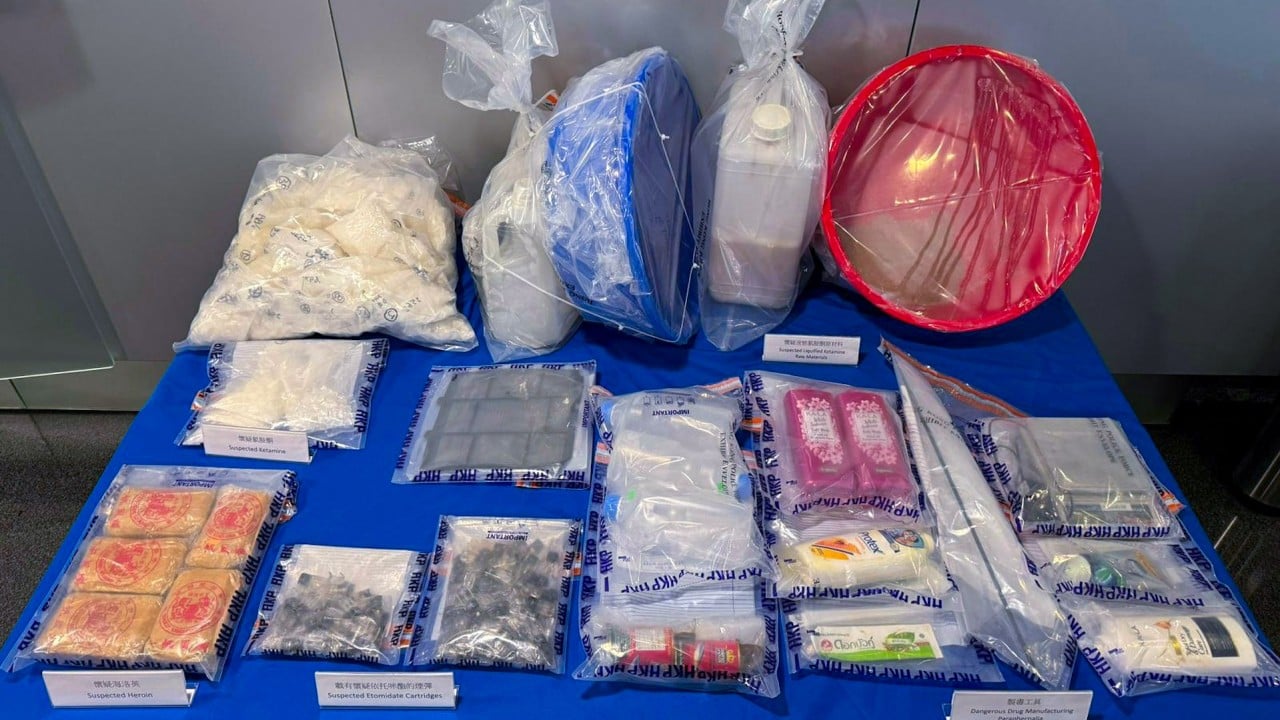
Consider what happens next: a heavy boot kicks against a metal door. Shouts echo down a stairwell that smells of urine and old dust. Flashlights cut through the gloom like surgical blades. By morning, the police blotter will report a staggering harvest. Three hundred and twenty-one people arrested. One hundred and thirty million dollars in narcotics seized. A mountain of white powder neatly arranged on folding tables for the press cameras, looking like powdered sugar in a municipal kitchen.
Numbers like one hundred and thirty million are designed to numb the brain. They belong to the stratosphere of international finance and transnational cartels. They sound abstract, clean, almost clinical.
The boy in handcuffs is not abstract.
He is thirteen. Think back to what you were doing at thirteen. Bicycles with loose chains, sneaking out to watch movies you were too young for, the agonizing awkwardness of growing bones. Now strip all of that away and replace it with a burner phone, a set of keys to a subdivided flat no bigger than a walk-in closet, and a backpack stuffed with bricks of synthetic poison.
He was not running a cartel. He was the end of the line. The disposable friction in a machine designed to chew up the vulnerable and spit out statistics for the evening news.
To understand how a child carrying a backpack becomes a headline about millions of dollars, we have to look past the flashing blue lights of the raid. We have to look at the geometry of desperation.
Markets abhor a vacuum. When law enforcement cracks down on traditional smuggling routes, the supply chain does not break. It adapts. It shrinks. It finds the softest tissue of society and embeds itself there. Syndicate bosses sitting in air-conditioned offices across the border do not touch the product. They push buttons on encrypted apps. They recruit through Telegram channels that look like gaming groups. They dangle quick cash in front of kids who measure success in sneakers and mobile data packages.
It is an invisible recruitment drive happening right under the noses of exhausted parents who work fourteen-hour shifts just to pay rent on a box in the sky.
When we talk about drug seizures of this magnitude, we often fall into the trap of celebrating a victory. Three hundred and twenty-one arrests sounds like a sweep. It sounds like a tide receding. But street-level experience tells a different story. Every time you sweep the floor, you just make room for more dust. The thirteen-year-olds are infinitely replaceable. That is the tragedy of the math.
The syndicates know this. They calculate the losses into their spreadsheets. A seizure of one hundred and thirty million Hong Kong dollars is a bad Tuesday for a multinational trafficking ring. They treat it like a shipping error. They write it off. But the thirteen-year-old cannot be written off. His ledger is permanent.
We built a world where sliding into criminality requires nothing more than a smartphone and a moment of weakness.
The interrogation room smells of bleach and stale coffee. The officer across the table is tired. He has seen this a thousand times. He is not angry; that is the most depressing part. He is just reciting the script. Who gave you the phone? Where did you pick up the bag?
The boy stares at the linoleum floor. He traces a crack with the toe of a scuffed sneaker that still has dirt from the schoolyard he stopped attending three months ago. He does not know about cartels. He does not know about global distribution networks. He only knows that someone promised him five thousand dollars to deliver a package from a MTR station locker to a nondescript apartment building in Mong Kok. Five thousand dollars felt like a fortune when your mother is crying over utility bills at the kitchen table.
That is the emotional core of the statistic. It is not about the drugs. It is about the price of survival in a city that leaves its poorest residents suffocating under the weight of glass towers.
The seizure will be logged, cataloged, and eventually incinerated in some high-security furnace outside the city limits. The politicians will hold press conferences about vigilance and cross-border cooperation. The headlines will cycle out by tomorrow afternoon, replaced by housing crises and stock market jitters.
But down in the narrow alleyways, where the laundry hangs like flags of surrender from rusted balconies, the recruitment channels are already pinging with new messages. A fresh batch of burner phones is being activated. Another thirteen-year-old is lacing up his sneakers, wondering if tonight will be the night he makes enough money to make his mother stop crying.
The sirens fade into the hum of the city. The door closes. The ledger remains open.