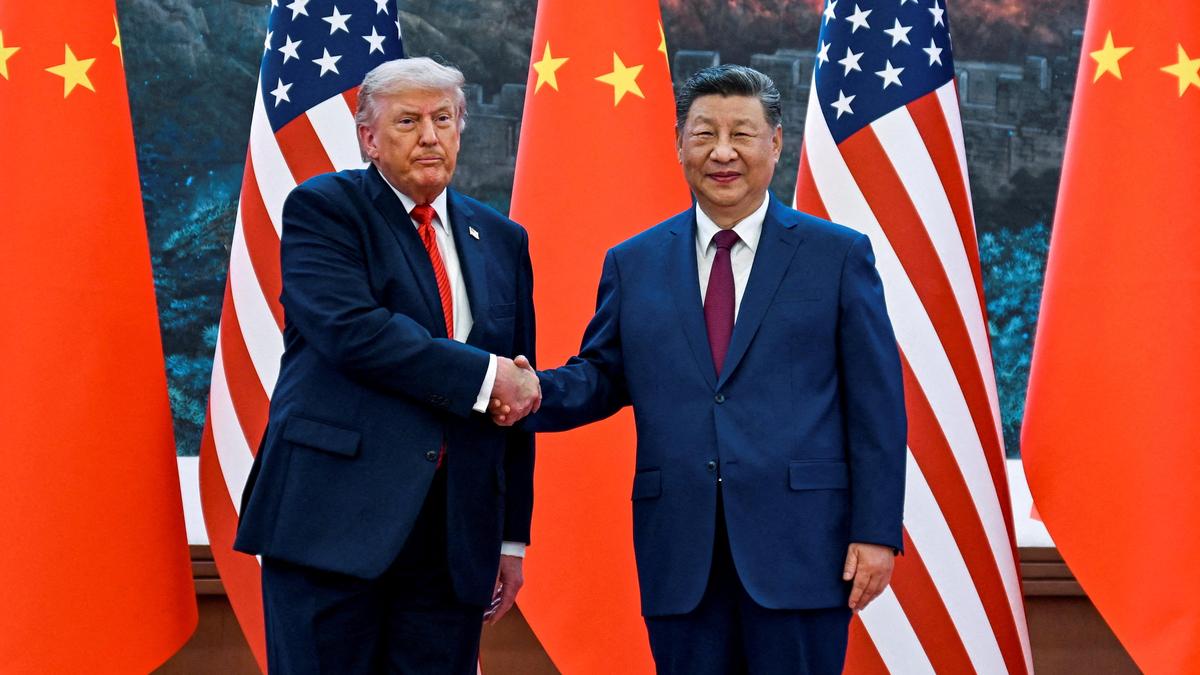
The United States has paused a vital $14 billion arms package to Taiwan. The official reason handed down from the Pentagon is that Washington needs to preserve its deep-magazine munitions for Operation Epic Fury, the military campaign in the Middle East following the outbreak of the Iran war on February 28. Acting Navy Secretary Hung Cao laid this out plainly during a congressional hearing, claiming the pause ensures the American military keeps adequate stockpiles.
It is a convenient explanation. It is also an incomplete one.
While the defense industrial base is undoubtedly under immense pressure after firing thousands of missiles over twelve weeks of intense conflict, the narrative of absolute scarcity is a tactical smoke screen. The freeze on Taiwan’s pre-approved defense package is not merely an engineering or logistics problem. It is a calculated diplomatic pause executed by an administration reshaping American foreign policy into a transactional marketplace.
To understand why these weapons are sitting in American warehouses, one must look past the empty missile tubes in the Middle East and focus on the summit tables of Beijing.
The Empty Magazine Narrative
The White House is preparing to ask Congress for a supplemental funding package between $80 billion and $100 billion to replenish advanced weapons systems. There is no denying that the short, sharp war with Iran drained high-end interceptors and precision-guided munitions at an alarming rate. Tomahawk cruise missiles, Patriot interceptors, and ATACMS ground-based missiles have been expended in numbers that outpace current production capacity.
The Western defense industrial base has spent years operating on a just-in-time manufacturing model. It lacks the surge capacity for prolonged, multi-theater engagement. When a high-intensity conflict erupts, the supply chain chokes.
Yet, top defense officials are actively contradicting the panic. Pentagon Chief Pete Hegseth told house appropriators that the munitions issue has been foolishly and unhelpfully overstated, insisting that the military knows exactly what it has and possesses plenty of what it needs. If the top executive at the Pentagon claims the cupboards are far from bare, the blanket suspension of a critical Indo-Pacific arms package starts to look less like a logistical necessity and more like an executive choice.
The $14 billion package in question is not composed entirely of the exact interceptors currently protecting carrier strike groups in the Persian Gulf. It includes an integrated battle command system, counter-drone assets, and medium-range munitions tailored for asymmetric island defense. These are systems designed to turn Taiwan into a porcupine, making an amphibious invasion by the People's Liberation Army prohibitively costly.
The overlap between what Taiwan needs to deter Beijing and what the Navy needs to counter Iranian asymmetric threats exists, but it is not absolute. The decision to halt the entire shipment under the umbrella of emergency conservation reveals a deeper strategic calculation.
Repercussions of the Transactional Pivot
The traditional foundation of Washington’s cross-strait policy has rested on the Six Assurances established during the Reagan administration. Chief among these principles is a strict rule: the United States will not consult Beijing regarding arms sales to Taiwan.
That precedent has broken.
President Donald Trump openly acknowledged discussing the $14 billion package in great detail with Chinese President Xi Jinping during his recent summit in Beijing. Rather than treating the arms sales as an unnegotiable legal mandate under the 1979 Taiwan Relations Act, the administration has publicly framed the weapons as a negotiating lever. Speaking to reporters, Trump openly mused that he might approve the sale or he might not, explicitly labeling the advanced defense systems a very good negotiating chip.
This transactional approach fundamentally alters the nature of deterrence in the Indo-Pacific. When military hardware migrates from an ironclad security guarantee into a trade-off for bilateral concessions, its value as a deterrent begins to decay. Beijing is hyper-aware of this shift. By tying the delay to the Iran conflict, Washington signals to China that American global commitments are stretching its capacity, creating a diplomatic vulnerability that Beijing is eager to exploit.
Chinese state media and diplomatic channels are already using the pause to chip away at Taipei's confidence in its Western partners. The messaging is deliberate: America is far, the Middle East is volatile, and Washington's promises have an expiration date.
The Self Funding Dilemma in Taipei
Taiwanese officials are attempting to project calm, with the presidential office and defense ministry stating they have received no formal notification of long-term delays. Taipei has done everything Washington asked to secure these weapons. Earlier this month, the Legislative Yuan pushed through a massive $25 billion special defense budget after intense cross-party debates.
This budget was specifically designed to fund both the historic $11 billion arms purchase approved in late 2025 and this pending $14 billion package. Taiwan has the cash, the political consensus, and the immediate need.
Yet, the domestic political cost of this delay is mounting for Taiwan's President Lai Ching-te. The opposition parties agreed to the immense defense spending under the assumption that it would guarantee immediate American hardware. With the package frozen on a desk in Washington, local critics are questioning the wisdom of sending billions of dollars abroad for weapons that can be sidelined by a conflict half a world away.
Furthermore, the legislative compromise required to pass the $25 billion budget came at a steep price. To get the bill through, funding for Taiwan's domestic defense industry and indigenous drone programs was stripped or deferred to regular budget cycles stretching into 2027. By prioritizing ready-made American imports over domestic manufacturing, Taipei gambled its self-reliance on Washington’s dependability.
The current pause leaves Taiwan in a strategic limbo. It has restricted its own domestic military industrial growth to buy American systems that are now held hostage by Middle Eastern geopolitics and transactional diplomacy.
A Broken Pipeline
The structural failure of the Foreign Military Sales pipeline cannot be solved by a simple injection of congressional cash. Even if the current ceasefire with Iran holds and the administration eventually signs off on the $14 billion package, delivery backlogs mean these systems will take years to actually arrive on the island.
The American defense industry is structurally incapable of meeting concurrent spikes in global demand. The United States is trying to supply an active war in the Middle East, backfill European stockpiles, and arm an island democracy facing a looming 2027 deadline from Chinese military planners.
[U.S. Defense Industrial Base]
       │
       ├─► (Active Allocation) ──► Operation Epic Fury (Middle East)
       │
       └─► (Paused/Backlogged) ──► $14 Billion Asymmetric Package (Taiwan)
The executive order outlining an America First Arms Transfer Strategy was meant to streamline this process, prioritizing nations that spend heavily on their own defense. Taiwan met that criteria by raising its defense spending toward 3.3 percent of its GDP, with paths to reach 5 percent. But structural efficiency means nothing when presidential discretion turns the valve completely off.
The administration’s pause risks creating the very vulnerability it claims to be managing. By using a legally mandated defense package as a tactical pawn to secure trade or diplomatic concessions from Beijing, Washington compromises its long-term credibility with regional allies. Tokyo, Seoul, and Manila are watching the standoff with acute attention, calculating whether their own security arrangements could be paused the next time a crisis erupts in a secondary theater.
Deterrence is built entirely on the certainty of action. Once a superpower reveals that its strategic commitments can be deferred for the right price or paused due to peripheral distractions, the illusion of security vanishes, leaving a dangerous power vacuum in the Taiwan Strait.