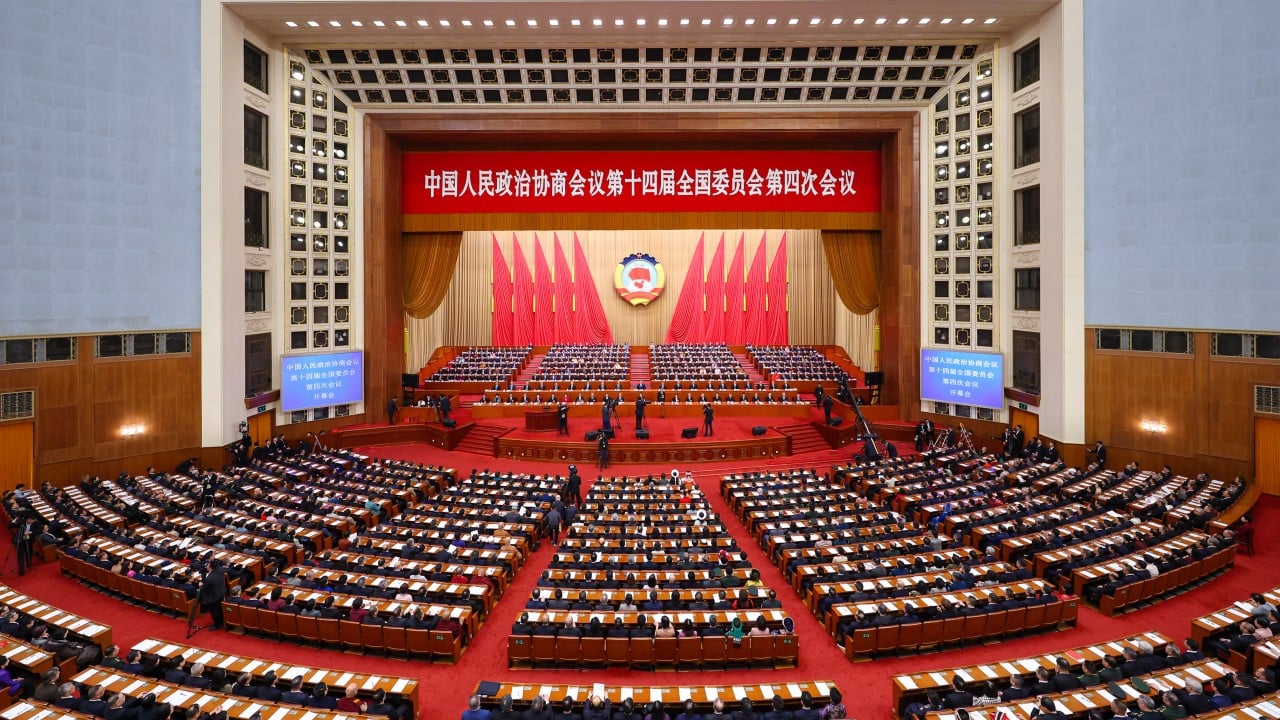
Beijing is officially doubling down on Hong Kong. If you've been watching the "Two Sessions" in Beijing this week, the signal is loud and clear: the central government is satisfied with Chief Executive John Lee's performance and is ready to open the policy floodgates. This isn't just about a pat on the back. It's about a concrete roadmap that will define the city's economy for the next half-decade.
National People's Congress spokesman Lou Qinjian recently confirmed that more measures are coming to support the city. This happens as the country kicks off its 15th Five-Year Plan, a massive blueprint that will guide everything from tech to trade through 2030. For anyone living or doing business here, these aren't just empty political slogans. They're the gears of a massive economic engine starting to turn.
John Lee gets the green light
Success in politics often comes down to one thing: results. Since taking office, John Lee's focused on "result-oriented" governance. Beijing likes what it sees. During his recent visits, state leaders praised him for bringing stability and steering the city back toward growth.
We're seeing a shift from "fixing the house" to "building the future." The initial years of Lee's term were about security and political alignment. Now, the focus has pivoted sharply toward the economy. You can tell by the way the central government talks about his leadership—they aren't just calling him a safe pair of hands anymore; they're calling him a driver of development.
This matters because a "praised" Chief Executive has more political capital. It means when Lee asks for specific support—like more mainland cities to be added to the solo traveler scheme or better financial integration—he's much more likely to get a "yes."
The 15th Five Year Plan is the real story
While the media loves to focus on the praise, the real meat is in the 15th Five-Year Plan. This is where the actual money and policy live. We're looking at a period where Hong Kong's role as a bridge between China and the world is being redesigned.
The plan emphasizes turning the city into an international innovation and technology hub. It's not just about being a "financial center" anymore. Beijing wants the city to lead in high-end talent attraction and deep-tech research.
- Northern Metropolis development: This is the massive project near the border that's finally getting the "state-owned enterprise" backing it needs.
- Talent schemes: More non-local students are being admitted to semi-private schools to build a long-term talent pipeline.
- GBA Integration: The Guangdong-Hong Kong-Macao Greater Bay Area is moving toward "Southbound" travel schemes that could make cross-border movement as easy as a subway ride.
What these new measures actually look like
So, what are these "more measures" everyone's talking about? It's not just one big announcement; it's a steady stream of policy tweaks that add up to a major change.
First, look at the financial side. There’s a push for more government bonds to be issued here. This helps the mainland raise capital while cementing our status as a premier bond market. Then there's the "AI Plus" initiative. Beijing is pushing for AI-related electronic products to drive trade, and they want our port and logistics to be the primary exit point for that tech.
We're also seeing a lot of movement in the "service integration" space. This sounds boring, but it's huge. It means things like mutual recognition of professional qualifications and easier cross-boundary data transfers. If you're a lawyer, an accountant, or a data scientist, the border is basically dissolving.
Why the "Two Sessions" matter to you
The "Two Sessions" (NPC and CPPCC) are where these high-level ideas become law. This year is particularly crucial because it’s the transition year into the new five-year cycle.
When you hear Lou Qinjian say the central government will "make further arrangements," he's talking about specific quotas, tax breaks, and infrastructure funding. The goal is to make the city's economy more resilient. The global trade environment is volatile—we've all seen the tariffs and the geopolitical tension. Beijing's strategy is to use Hong Kong as a "buffer" and a "springboard" simultaneously.
The Northern Metropolis is no longer a pipe dream
For a while, people were skeptical about the Northern Metropolis. It felt like another big project that might just stall. But Lee recently mentioned that the project is now attracting serious interest from mainland state-owned firms.
This is the "Beijing support" in action. When the central government signals that a project is a national priority, the big players move in. We're talking about a $10 billion loan program for the University Town in the Hung Shui Kiu area. This isn't just about building apartments; it's about creating a tech ecosystem that connects directly with Qianhai in Shenzhen.
Stop waiting for the "Old Hong Kong" to return
One mistake people make is waiting for the city to go back to how it was in 2018. That's not the plan. The new version is much more integrated into the national economy.
The 2026 budget, which just moved back into a surplus of roughly $2.9 billion, shows the strategy is working. Stamp duty and profits tax revenue are up, and the city is doubling down on "innovation-led growth." You're going to see more family offices, more biotech listings, and a lot more AI-driven industry.
If you're in business, your next move should be looking at how your operations fit into the 15th Five-Year Plan's goals. Whether it's green finance, tech innovation, or high-end services, the wind is blowing in one direction. You can either set your sails to it or get left behind in the harbor. Keep an eye on the specific policy rollouts following the NPC meetings this month—those will be the tactical details you need to navigate the next four years.