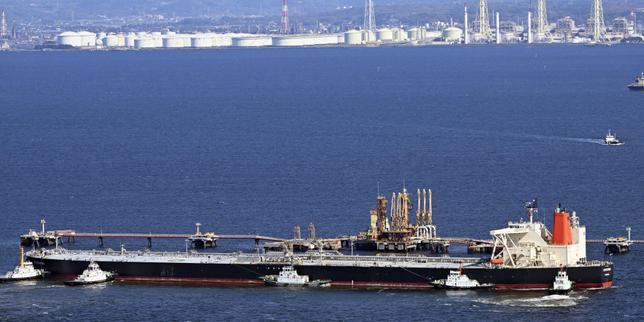
The air inside the bridge of a Very Large Crude Carrier (VLCC) is always the same: filtered, slightly chilled, and smelling faintly of stale coffee and ozone. For a captain positioned at the mouth of the Persian Gulf, the view through the reinforced glass is equally consistent. It is a shimmering, hazy horizon where the desert heat of Oman meets the turquoise of the Arabian Sea. But today, the radar screen tells a story the eyes cannot see.
A tiny green blip, moving at twenty knots, represents a fast attack craft. It isn't a pirate. It isn't a fellow merchant. It is a variable in a geopolitical equation that most shipowners are no longer willing to solve.
The Strait of Hormuz is twenty-one miles wide at its narrowest point. Through this carotid artery flows one-fifth of the world’s liquid energy. We talk about oil prices in cents and dollars on a screen in London or New York, but for the men and women on these ships, the price is measured in tension. It is the sound of a drone overhead. It is the sudden, sharp command over the VHF radio from a naval entity demanding a change in course.
Lately, the silence from the shipping industry has been deafening.
The Arithmetic of Fear
The boardrooms in Copenhagen, Tokyo, and Hamburg operate on a logic that is ruthless and binary. Every voyage is a balance sheet. On one side, you have the freight rate—the payout for moving two million barrels of crude. On the other, you have the "war risk premium."
Insurance is the invisible hand that steers the global fleet. In times of peace, it is a negligible line item. But when a shadow war simmers in the Gulf, those premiums don't just rise. They explode. We are seeing rates that have jumped tenfold in a matter of weeks. When the cost of simply insuring the hull for a single seven-day transit nears the half-million-dollar mark, the "business as usual" facade cracks.
Consider the hypothetical case of a Greek shipowner named Elias. He has a fleet of twenty tankers. A charterer offers him a lucrative contract to pick up a load in Ras Tanura. The profit margin looks healthy. But then Elias looks at the news. He sees images of a sister ship being boarded by commandos descending from ropes. He looks at the "dark fleet"—those ghost ships with transponders turned off, operating outside the law—and he realizes that his legitimate, insured, and tracked vessel is a sitting duck.
He says no. He waits.
He is not alone. The data suggests a growing queue of vessels sitting just outside the danger zone, drifting in the Gulf of Oman, waiting for a signal that the temperature has dropped. They are essentially playing a high-stakes game of musical chairs where the music has stopped, but nobody wants to sit down.
A Chokepoint With No Bypass
We like to think of the modern world as a series of interconnected, redundant systems. If one road is blocked, we take another. But the Strait of Hormuz is a geographical finality.
There are pipelines, yes. Saudi Arabia can move some oil west to the Red Sea. The Emirates can bypass the strait to reach the port of Fujairah. But these are straws trying to do the work of a firehose. The vast majority of the world's spare production capacity is trapped behind a single, narrow gate.
The physical reality of the strait is claustrophobic. Deep-water channels—the "lanes" that these massive ships must stay in to avoid grounding—are only two miles wide. On either side, the Iranian coastline and the Omani Musandam Peninsula loom like the jaws of a trap.
When a shipowner decides to send a vessel through, they aren't just betting on their own luck. They are betting on the restraint of nations. They are betting that a stray missile or a miscalculated boarding won't be the spark that turns a "maritime incident" into a global depression.
The Human Cost of the Waiting Game
While the owners fret over premiums, the crew lives in a different reality.
Imagine being a third mate from the Philippines or an engineer from Ukraine. You are three months into a six-month contract. You haven't seen land in weeks. Your daily life is a grind of maintenance, safety drills, and sleep. Then, the "Ship Security Alert System" (SSAS) briefing changes. You are told to keep all doors locked. You are told to stay away from the railings. You are told that if people in masks land on the deck, you are not to resist.
The psychological toll of being a pawn in a game of regional brinkmanship is rarely captured in the economic reports. There is a specific kind of exhaustion that comes from staring at a radar sweep for twelve hours, wondering if the next fast-moving contact is a fishing boat or a boarding party.
The maritime industry is often called the "invisible industry." It is the reason you can buy fuel at the pump and plastic in the store. It works because it is boring. It works because it is predictable. When it becomes exciting, the world should be very, very worried.
The Mirage of Security
Naval escorts are the traditional solution. Operation Prosperity Guardian and other multinational task forces attempt to provide a "steel umbrella" for the merchant fleet. But the ocean is vast, and the strait is crowded.
A destroyer can protect a convoy, but it cannot be everywhere at once. Furthermore, the presence of more warships often increases the "kinetic" potential of the area. It creates a feedback loop of escalation. For a shipowner, a naval escort is a comfort, but it’s also a red flag. It’s an admission that the waters are no longer sovereign or safe.
So, the ships wait.
The delay isn't just a line on a chart. It’s a ripple effect. It’s a refinery in South Korea that has to slow down production. It’s a heating oil delivery in New England that gets delayed. It’s the invisible friction that slows down the heart rate of global commerce.
We are currently witnessing a silent strike. Not a strike of workers with picket signs, but a strike of capital. When the risk exceeds the reward, the engines stop. The giants of the sea stay at anchor, their prows pointed away from the heat, waiting for a peace that feels increasingly like a memory.
The sun sets over the Musandam Peninsula, casting a long, jagged shadow across the water. The blip on the radar is still there. The captain on the bridge picks up the phone. He calls the owner in London.
"Still too hot," he says.
The engine stays silent. The world waits for its oil, and the oil waits for a courage that no amount of money can currently buy.