The lights in a Tehran hospital don't just illuminate a hallway. They keep a premature infant in an incubator at exactly 37°C. They power the ventilator rhythmicizing the breath of a grandfather. They are the invisible thread holding a modern society back from the brink of the medieval.
But threads can be cut.
When the news broke that Donald Trump had issued a forty-eight-hour ultimatum to the Iranian government, the global markets did what they always do: they spiked. Crude oil prices jumped as if they’d been electrocuted. On paper, it was a geopolitical chess move—a demand to reopen the Strait of Hormuz or face the systematic dismantling of Iran’s power grid. In reality, it was a threat to flip the master switch on eighty-five million people.
The Strait of Hormuz is a narrow stretch of water that carries twenty percent of the world’s petroleum. It is the jugular vein of the global energy trade. When it constricts, the world chokes. But for the people living in the shadow of the Alborz mountains, the threat isn't about the price of gas in a Chicago suburb. It is about whether the water pumps will stop.
The Anatomy of a Darkened City
Modern warfare has moved past the era of carpet bombing. We no longer aim for the ramparts; we aim for the turbines. If you remove a nation’s ability to generate electricity, you remove its ability to function as a coherent state.
Think of a power grid like a human nervous system. Every sub-station is a nerve cluster, every high-voltage line an axon. When a missile hits a transformer, the damage isn't localized. The frequency of the entire grid begins to wobble. If enough nodes fail, the system undergoes a "cascading failure." It is a mechanical cardiac arrest.
Imagine a hypothetical engineer named Reza in a control room outside Esfahan. He watches the dials. He knows that his facility is on a target list sitting in a folder in Northern Virginia. He isn't a politician. He is a man who understands the specific heat of steam and the delicate dance of synchronized generators. If his plant goes dark, the sewage treatment plants stop. Within seventy-two hours, the tap water becomes toxic. Within a week, the pharmacies lose their refrigerated insulin.
This is the "invisible stake" that rarely makes it into the three-minute cable news segment. We talk about "strategic assets," but we are really talking about the cold silence of a dead refrigerator in a family kitchen.
The Geometry of Retaliation
Tehran did not stay silent. The vow of retaliation was swift, sharp, and expected. But the response from the Iranian Revolutionary Guard isn't just about conventional missiles. In the twenty-first century, a threat against a power plant is met with a threat against a network.
Iran has spent a decade honing its asymmetric capabilities. They know they cannot win a carrier-group engagement in the open sea. Instead, they look at the vulnerabilities of the West. They look at the digital architecture of the very financial systems that manage those oil prices.
The tension creates a feedback loop of fear. Washington moves a carrier; Tehran moves a minesweeper. Trump tweets an ultimatum; Tehran prepares a cyber-payload. Every action is designed to prove that the other side has more to lose. It is a game played with the lives of people who just want to be able to charge their phones and drive to work.
The Fragility of the Status Quo
Why now? The Strait of Hormuz has been a flashpoint since the 1970s. It is a recurring nightmare for every sitting president. But the current escalation feels different because the buffer zones are gone.
In previous decades, there were backchannels. There were diplomats in beige suits meeting in neutral hotel bars in Oman, whispering terms to prevent the ultimate catastrophe. Today, those channels are clogged with the silt of a thousand sanctions and a decade of broken trust. We are communicating through public threats and forty-eight-hour countdowns.
It is a high-stakes gamble on the psychology of a regime. The assumption in Washington is that the threat of a total blackout will force a capitulation. The assumption in Tehran is that the West’s thirst for oil makes them too timid to actually pull the trigger.
Both sides are betting on the other's cowardice. History suggests that is a very dangerous way to run a planet.
The Human Cost of a Blown Fuse
Consider what happens when the clock hits zero.
If the attacks move forward, the first thing to go is the internet. Then the cellular towers. Communication dies first. Then comes the physical darkness. In the cities, the high-rises become vertical prisons. Elevators freeze between floors. The air conditioning units—essential in the blistering heat of the Persian Gulf—clatter to a halt.
We often view these conflicts through the lens of a map, with red arrows and blue circles. We forget the sensory reality of the ground. The smell of rotting food. The sound of a city that has lost its mechanical hum. The terrifying orange glow of a facility on fire against the night sky.
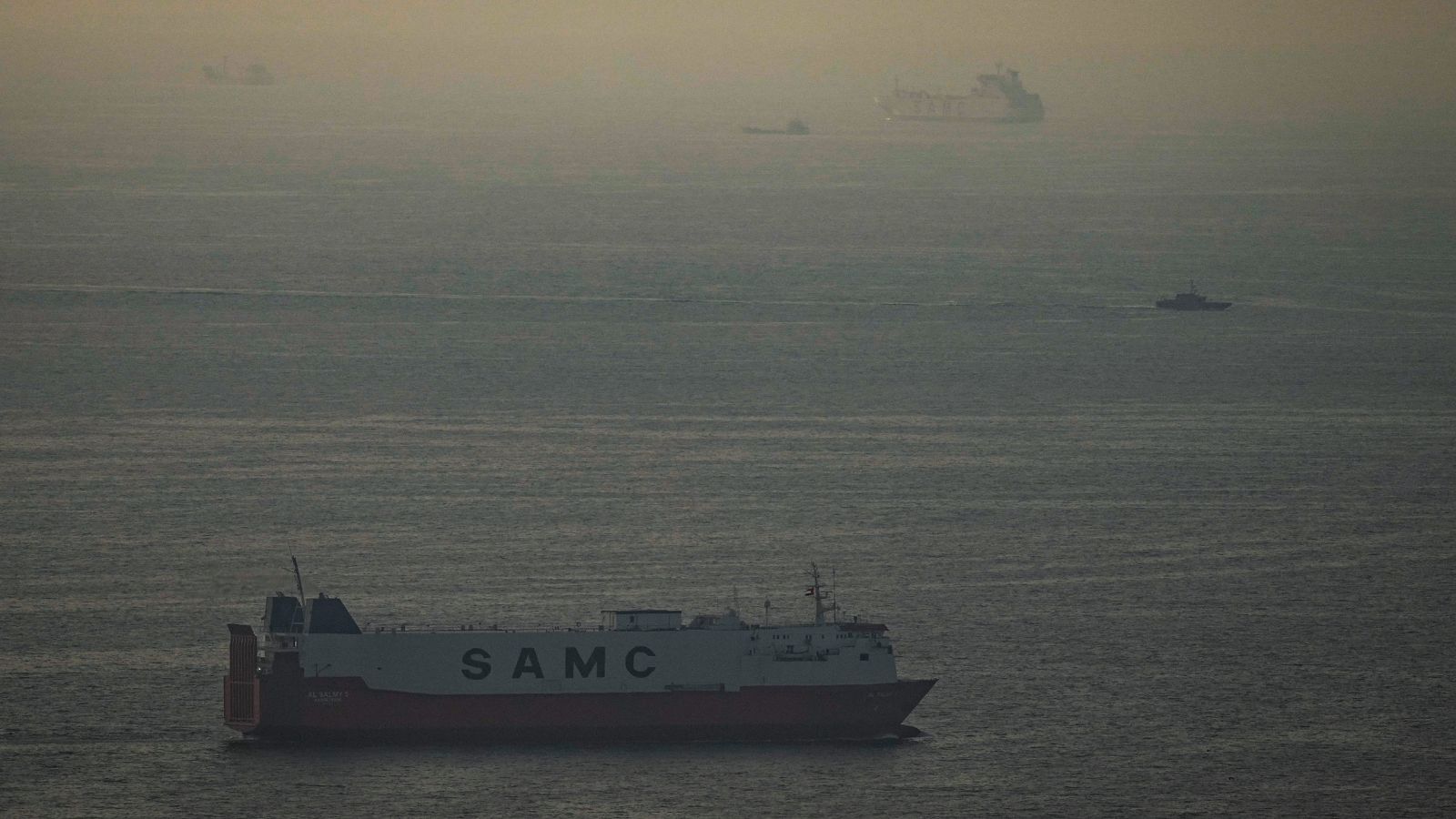
The Iranian government’s promise of retaliation isn't just posturing. They have the capacity to turn the Strait of Hormuz into a graveyard of tankers. If they sink a single VLCC (Very Large Crude Carrier) in the narrowest part of the channel, the global economy enters a recession within a month.
We are looking at a scenario where a local power struggle becomes a global economic heart attack.
Beyond the Ticker Tape
The news reports focus on the "48 hours." They focus on the specific wording of the threat. But they miss the deeper, more haunting question: What happens to the soul of a population when they are told their survival is a bargaining chip?
There is a specific kind of exhaustion that comes from living in a state of perpetual "almost-war." It erodes the ability to plan for the future. You don't start a business, you don't renovate a house, and you don't dream of a career when you aren't sure if the lights will be on next Tuesday. This psychological attrition is perhaps the most devastating weapon of all.
As the deadline approaches, the world waits. We watch the satellite feeds. We monitor the shipping lanes. We wait to see if the rhetoric will solidify into steel and fire.
The tragedy of the modern era is that we have mastered the art of building incredible systems—grids that span continents, tankers the size of islands, networks that connect every human soul—only to use them as levers to break one another.
Somewhere in Tehran, a mother is checking the batteries in her flashlight. In a bunker in the United States, a technician is checking the coordinates of a cooling tower. They are both parts of the same machine, connected by the same forty-eight-hour window, waiting to see if the world stays bright or slips into the long, cold shadow of the silent grid.
The countdown isn't just a number on a screen. It's the sound of a billion hearts skipping a beat, waiting for a switch that might never be flipped back up.