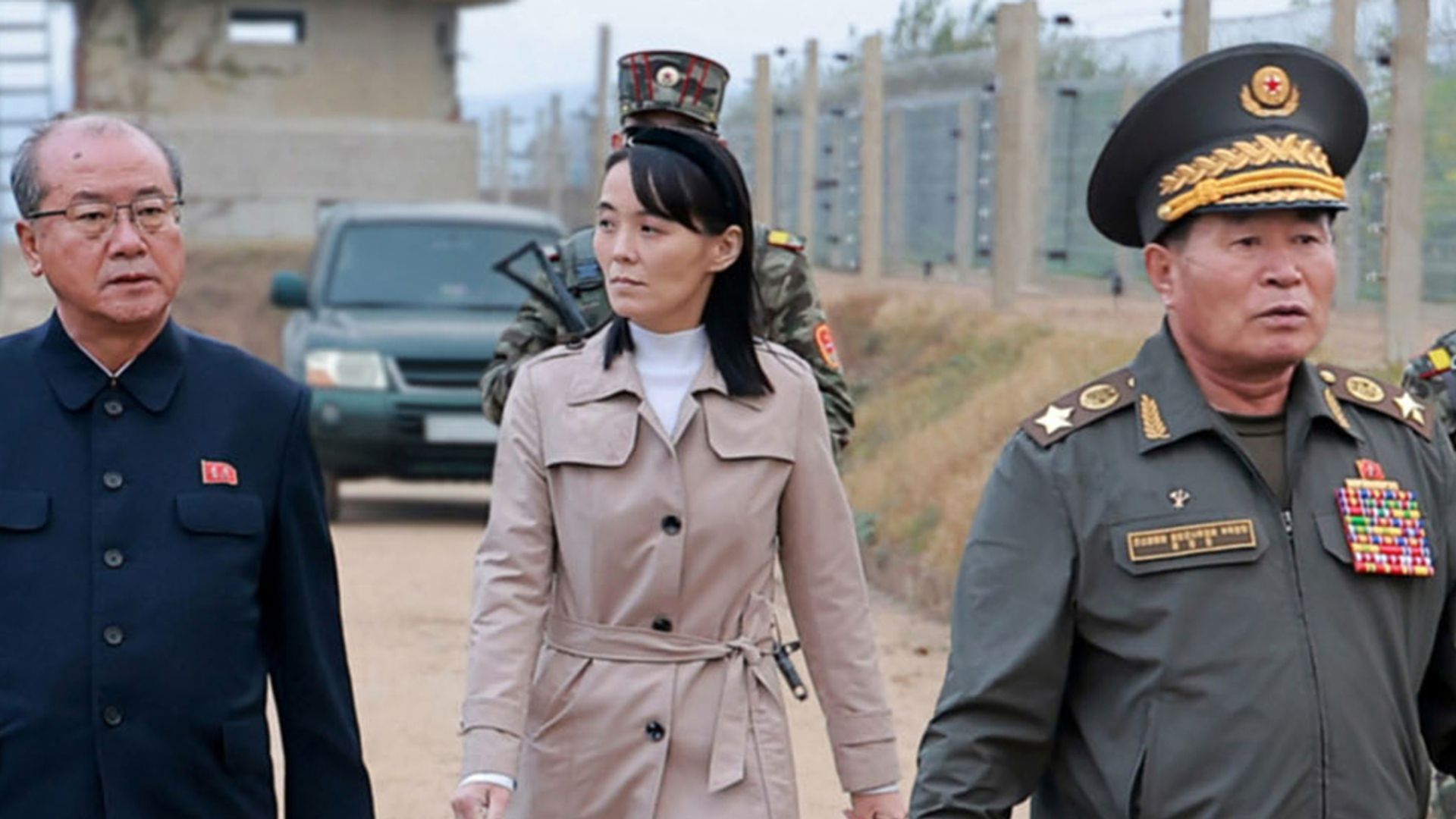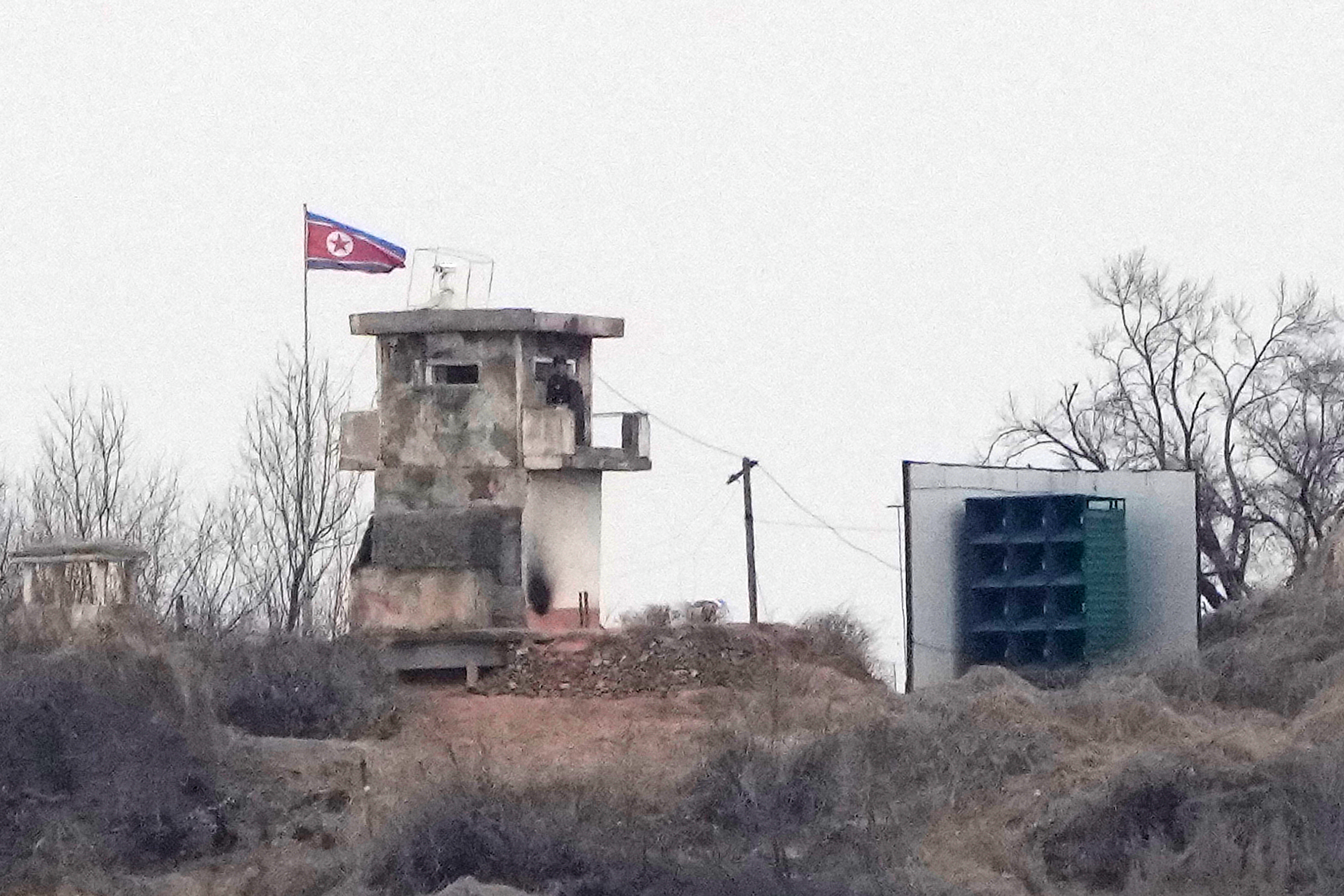
Standard headlines treat Pyongyang's decision to restart loudspeaker broadcasts along the inter-Korean frontier as a routine flare-up of old hostility. That framing misses the structural shift underway. Following Kim Yo Jong's warning that loudspeaker systems would be deployed across the border—paired with inspections of physical fortifications and threats of military retaliation—the resumption of acoustic broadcasts operates as an asymmetric signaling instrument inside a hardened, two-state confrontation.
To analyze what is actually happening on the 250-kilometer Military Demarcation Line, we need to move past surface-level diplomatic phrasing and evaluate the mechanics: the strategic logic driving the broadcasts, the physical and psychological cost structures on both sides, the escalation dynamics tied to border fortification and warning shots, and the operational limits of acoustic coercion.
Deconstructing Standard Coverage and Mapping the Logic
Conventional reporting on inter-Korean loudspeaker announcements typically relies on a predictable sequence: state media or senior officials issue a warning, observers note prior pauses or resumptions, and South Korean officials call for calm or dialogue. While factually accurate as far as it goes, this linear narrative leaves three critical analytical gaps.
First, it treats loudspeaker broadcasts as a standalone political mood swing rather than an adjunct to physical engineering. Pyongyang's renewed push to reactivate border loudspeakers follows intensive fortification work—mines, barbed wire, and anti-tank barriers—after North Korea moved away from reunification rhetoric toward treating South Korea as a hostile state. Second, it blurs the distinction between information persuasion and acoustic harassment. Historically, border loudspeakers have carried two very different payloads: political messaging and defection appeals on one side, and jarring, disorienting noise—sirens, drums, and metallic or wailing sounds—on the other. Third, it understates the tactical friction created when fortification crews approach the demarcation line and draw warning loudspeakers or warning shots from South Korean forces.
Known facts versus educated hypotheses: It is an established fact that North Korean officials signaled plans to place loudspeakers along the border after inspecting fortifications and amid friction over border crossings and warning shots, following prior cycles of suspension and reactivation. It is an educated hypothesis—not a confirmed operational blueprint—that Pyongyang intends to calibrate these broadcasts primarily to raise friction and psychological strain in border zones while shielding its own engineering work from South Korean observation and interdiction.
The Four Pillars of Border Acoustic Escalation
To evaluate why loudspeakers return whenever inter-Korean friction intensifies, break the mechanism into four operational pillars.
1. Low-Cost Asymmetric Signaling
Loudspeakers sit below the kinetic threshold of artillery or missile fire while remaining unmistakable to troops and nearby civilians. Unlike clandestine cyber operations or diplomatic communiqués, physical acoustic hardware creates immediate, sensory proof of intent. When a state pairs border fortification with loudspeaker readiness, it signals that the frontier is being treated as a hardened barrier rather than a temporary truce line awaiting reconciliation.
2. Acoustic Physics and Propagation Limits
Sound is not a precision-guided weapon; it obeys atmospheric acoustics. Acoustic propagation over terrain depends heavily on wind shear, humidity, topography, and thermal gradients. During temperature inversions—common at night, early morning, or under dense cloud cover—air temperature increases with altitude and refracts sound waves back toward the ground, extending audibility over longer distances than during warm, turbulent afternoons.
Because sound attenuates rapidly with distance and terrain obstacles, fixed loudspeakers cannot project uniform volume across an entire 250-kilometer frontier with equal effect. Local valleys, ridges, and buffer zones create pockets of high exposure alongside dead zones.
3. Cognitive Friction and Civilian Spillover
When broadcasts rely on unpredictable volume shifts, sirens, or high-pitched, unsettling sounds rather than intelligible speech, their primary effect is environmental disruption. Prolonged exposure to erratic, high-decibel noise degrades sleep quality, raises stress responses, and disrupts daily routines in nearby communities and forward positions.
From a strategic standpoint, this creates an asymmetric political burden. A democratic government faces domestic pressure to protect border residents from chronic noise disturbance, whereas an authoritarian leadership faces far fewer domestic constraints when imposing acoustic friction on opposing forces or frontier areas.
4. Escalation Coupling With Fortification and Rules of Engagement
Loudspeakers rarely operate in isolation. Along a heavily mined, fortified demarcation line, physical construction brings troops close to contested boundaries. When South Korean forces respond to perceived boundary encroachments with warning broadcasts or warning shots, North Korea can frame its own loudspeaker deployment as a proportionate countermeasure. That tit-for-tat framing narrows the room for quiet de-escalation because each side characterizes its step as reactive defense.
Cause-and-Effect Chains Standard Narratives Miss
A rigorous strategic assessment traces second- and third-order effects rather than stopping at the announcement itself.
- Fortification work triggers proximity friction: Deploying mines, barriers, and wire along a complex border increases the odds of miscalculation or accidental crossings near the demarcation line.
- Proximity friction invites acoustic and kinetic warnings: Frontline units use warning broadcasts or warning shots to deter encroachment, which Pyongyang then cites as justification for activating its own border loudspeakers and threatening "new counter means".
- Acoustic noise shifts the burden onto frontline communities: Even when broadcasts do not cross into physical violence, persistent sound pollution strains civilian morale and local governance near the border, turning a military signaling dispute into a domestic quality-of-life issue.
- Tit-for-tat reciprocity locks in a higher baseline: Each round of suspension and reactivation resets expectations. Even if broadcasts are later paused or muted, the underlying hardware, fortified posture, and adversarial framing remain in place.
Consider a practical frontline scenario: a work crew fortifying a sector near the demarcation line triggers a warning response from the opposing side, followed within days by loudspeaker deployment and harsh rhetoric. An analyst who reads only the headline sees a sudden verbal spike; an analyst tracking the operational chain sees an effort to impose psychological cost and deter interference around active engineering sites.
Answering the Core Questions Behind Border Broadcasts
Why does Pyongyang resume border loudspeakers at specific moments? Broadcast resumptions serve as calibrated pressure levers timed around border fortification, disputes over demarcation line activity, and broader diplomatic deadlocks. They let Pyongyang project resolve without immediately crossing into lethal force.
How do broadcasts affect South Korea in practice? Their impact is split between tactical nuisance and local civilian disruption. While modern information reaches South Koreans through digital media rather than border speakers, communities and troops near the frontier can still experience jarring noise, sleep disruption, and heightened tension when broadcasts run for hours or vary in volume.
Why do loudspeaker disputes carry real military risk? History shows that border loudspeakers have been direct flashpoints—including artillery exchanges in past standoffs—because the physical speaker arrays sit in high-tension zones where miscalculation can escalate quickly.
Operational Playbook for Managing Acoustic Escalation
For defense planners, crisis managers, and security analysts tracking border loudspeaker resumptions, response design requires disciplined sequencing rather than emotional reaction.
- Separate signaling from kinetic threat: Audit whether loudspeaker activation is accompanied by force posture changes, artillery repositioning, or unusual troop concentrations before treating noise alone as an imminent attack indicator.
- Map acoustic and demographic exposure: Overlay terrain profiles, prevailing wind and inversion patterns, and proximity of border villages or forward posts to identify where noise disruption will actually land.
- Standardize rules of engagement around fortification zones: Establish clear, unambiguous triggers for warning broadcasts and warning shots so routine engineering friction does not spiral into an unintended firefight.
- Pair local protection with strategic restraint: Address civilian noise and safety concerns near the border without taking impulsive retaliatory steps that hand the adversary the escalation spiral it wants.
Limitations and trade-offs: None of these measures eliminate risk. Restraint can look like passivity to domestic audiences or embolden an opponent testing boundaries, while aggressive counter-broadcasting risks a cycle of escalating noise and artillery confrontation. Furthermore, external observers face persistent visibility limits inside North Korea, meaning assessments of intent must rely on observable behavior and structural incentives rather than guesswork.
Strategic Recommendation
Treat loudspeaker resumption along the inter-Korean border as a barometer of physical fortification and deterrence signaling, not as a standalone story. Decision-makers should anchor their posture on verifiable ground indicators—engineering activity near the demarcation line, rules-of-engagement discipline, and civilian protection in exposed border areas—while refusing to let acoustic provocation dictate higher-risk military escalation.
North Korea to resume border propaganda broadcasts
This video provides brief visual context on Pyongyang's announcement to restart border propaganda loudspeaker broadcasts and the surrounding tensions along the inter-Korean frontier.