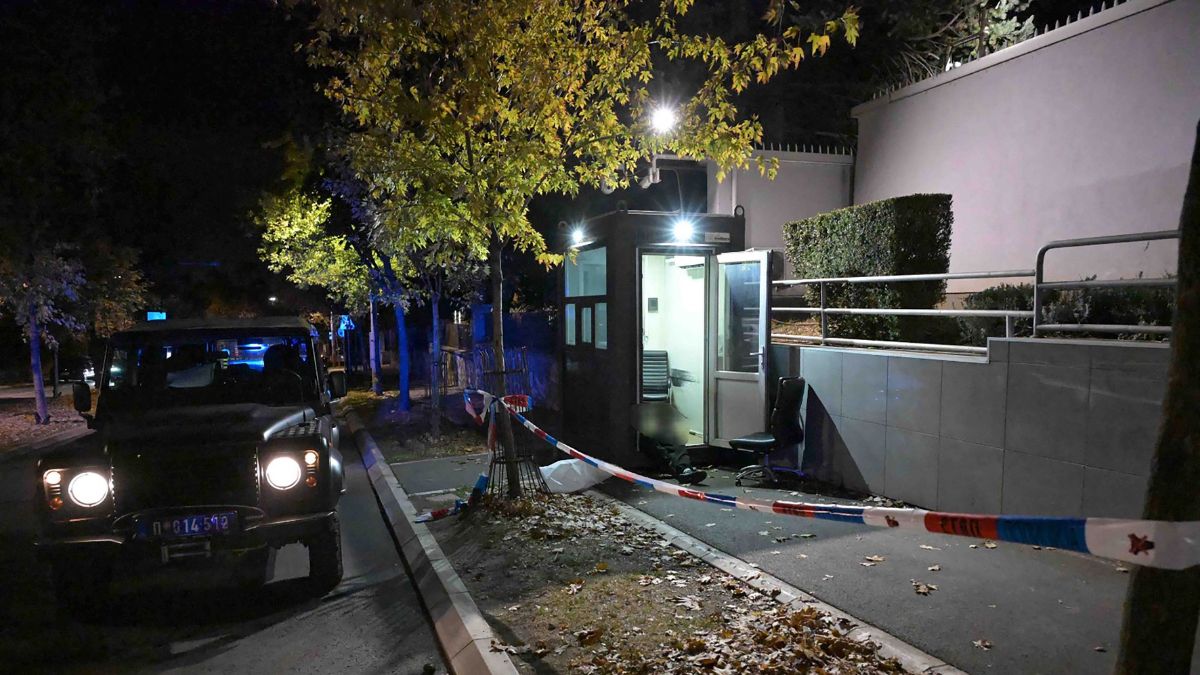
Two years of warning letters went unanswered. On July 24, 2013, an Alvia high-speed passenger train hurtled into a sharp bend outside Santiago de Compostela at more than double the posted speed limit, derailing and killing 79 people while injuring over 140 others.
If you remember the initial headlines from that summer, you probably recall a simple, convenient narrative. A reckless driver got distracted on the phone, missed a braking point, and caused one of Spain's worst rail disasters. That story made for easy tabloid copy, complete with survivor accounts describing blood everywhere inside the mangled carriages. Yet when you look closely at the engineering failures, regulatory blind spots, and decade-long court battles that followed, the real cause of the Santiago de Compostela train crash becomes much harder to pin on a single person.
Honestly, blaming the driver alone was always a massive oversimplification. I've spent years analyzing transportation safety investigations, and one pattern shows up in almost every catastrophic transit failure. When an entire safety net is stripped away, human error doesn't just happen in a vacuum—it gets invited in.
The Night Everything Went Wrong at Angrois
To understand how a modern European train flies off the tracks, you have to look at the exact geography of the crash site. Train 04155 was traveling from Madrid to Ferrol in northwestern Spain, carrying 218 passengers and four crew members on the eve of the feast of Saint James, Galicia's biggest regional festival.
For most of the journey, the hybrid Renfe Class 730 train cruised along a brand-new high-speed corridor. At that speed, the ride feels effortless. Almost silent.
Then comes the A Grandeira curve in the village of Angrois, roughly four kilometers outside the Santiago de Compostela station. This wasn't a gentle sweep designed for high-speed rail. It was an abrupt, tight bend with a strict speed limit of 80 kilometers per hour (50 mph).
Black box data later revealed the train entered that curve at 191 kilometers per hour (119 mph). Even after the driver slammed on the emergency brakes four seconds before impact, the train was still moving at 179 kilometers per hour (111 mph) when the cars left the rails.
The physics were unforgiving. Thirteen carriages jackknifed, slammed into a concrete retaining wall, and piled on top of each other. One carriage was hurled several meters up an embankment onto a parallel street. Diesel fuel from the train's power cars ignited, sending thick black smoke over the neighborhood while local residents ran toward the wreckage with ladders, blankets, and bare hands to pull survivors out before emergency crews could even arrive.
Early death tolls reported by emergency services fluctuated wildly in the chaos—68, then 77, before finally settling at 79 fatalities. Those raw, shifting numbers reflected the sheer violence of the impact.
Why the Braking System Failed to Intervene
Here is the question that baffled international rail experts immediately after the crash. Why didn't the train slow itself down automatically?
Modern European high-speed rail lines rely on ERTMS, the European Rail Traffic Management System. When active, ERTMS constantly monitors a train's speed against the upcoming track geometry. If a driver fails to brake before a sharp curve, the computer overrides human control and applies the brakes automatically. No distraction, no fatigue, no phone call can override that digital guardrail.
Except at Angrois, ERTMS wasn't running.
The high-speed tracks ended just before the curve, transitioning onto an older conventional rail line controlled by a legacy system called ASFA. Unlike ERTMS, the version of ASFA installed on that stretch of track did not enforce continuous speed monitoring or automatic braking for curves. It only checked whether signals were red or green. Because the signals approaching Santiago were green, ASFA registered zero danger.
The transition from a fully automated high-speed safety zone to a manual-braking legacy zone happened right before one of the sharpest curves on the entire route. No physical buffer. No automatic speed enforcement. Just a sudden handoff to a human being traveling at nearly 200 kilometers per hour.
The Phone Call That Distracted Francisco José Garzón Amo
None of this erases what happened inside the cab during those critical seconds. Driver Francisco José Garzón Amo, a veteran operator with three decades of experience at Spain's state rail operator Renfe, was at the controls.
At 8:39 PM, Garzón received a work-related call on his company mobile phone from Antonio Martín Marugán, an on-board ticket inspector. The inspector wanted to confirm which platform the train would pull into at Pontedeume, a station further down the line, so he could help a family with children disembark easily.
The call lasted 100 seconds.
During that minute and forty seconds, the train covered roughly five kilometers. Garzón missed the visual trackside cues indicating he needed to start decelerating from 200 km/h down to 80 km/h. By the time he hung up, realized where he was, and activated the emergency brakes, physics had already sealed the train's fate.
In court, Garzón didn't hide behind excuses. He wept openly during his testimony, telling the judge he couldn't explain how he failed to see the curve coming and apologizing repeatedly to the victims' families.
Yet if you stop the story at that phone call, you miss the systemic negligence that made a 100-second lapse fatal. Human beings lose situational awareness. Pilots do it, surgeons do it, and train drivers do it. Aviation and rail safety protocols exist specifically because humans are fallible. When a single distraction leads directly to 79 deaths, the system design itself is broken.
Warnings Ignored Before the Crash
What turned the Angrois disaster from a tragic accident into a national scandal in Spain was what investigators uncovered inside Adif, the state-owned railway infrastructure administrator.
Months before the line opened in December 2011, a senior Renfe safety chief named José Ramón Iglesias Mazaira sent a formal written warning to his superiors. He pointed out the exact hazard at Angrois—a sudden drop from 200 km/h to 80 km/h with no automatic braking protection and inadequate trackside signage. He explicitly warned that any driver distraction at that spot would end in disaster.
Nothing changed.
Investigators also found that Adif had originally planned to equip the train route with onboard ERTMS up to the station approach. However, due to technical compatibility issues between the onboard equipment and trackside beacons—and pressure to meet political deadlines for opening the Galicia high-speed link—Adif authorized disconnecting the onboard ERTMS system.
Think about that decision. Instead of delaying the line's opening or installing temporary speed-control beacons (known as balises) to force trains to slow down before the curve, officials signed off on running high-speed trains without automated speed protection.
Following the crash, Adif hurriedly installed additional speed-limit signs and automated braking beacons along the approach to Angrois. The fixes cost a fraction of the multi-billion-euro rail project and took days to implement. They could have been installed two years earlier.
The Legal Reckoning and What Changed in European Rail
For years, Spanish authorities tried to keep the blame pinned exclusively on the driver. The initial official report by Spain's Railway Accident Investigation Commission (CIAF) concluded in 2014 that excessive speed and the driver's phone call were the sole causes.
The European Union Agency for Railways rejected that whitewash. In 2016, EU regulators criticized the Spanish investigation for lacking independence and failing to examine the structural safety lapses at Adif and Renfe. That intervention forced Spanish courts to reopen the broader investigation into infrastructure management.
In July 2024—eleven years after the crash—a court in Santiago de Compostela finally delivered its verdict. Judge Elena Fernández Currás sentenced both driver Francisco José Garzón Amo and Adif's former director of traffic safety, Andrés Cortabitarte, to two and a half years in prison for 79 counts of gross negligence manslaughter and 143 counts of negligent injury.
The ruling established a landmark precedent in European transport law. The court found that while the driver committed a fatal lapse in attention, Adif's safety chief failed in his legal duty to evaluate and mitigate an obvious, documented risk on the track.
Lessons From the Angrois Disaster You Should Pay Attention To
Whether you follow railway engineering, corporate risk management, or public infrastructure policy, the Santiago de Compostela crash offers hard truths that apply far beyond Spain's borders.
- Single-point-of-failure systems eventually fail. Anytime a high-speed operation relies entirely on one person's uninterrupted focus without a mechanical or digital backup, a catastrophe is only a matter of time.
- Schedule pressure is the enemy of safety. Rushing infrastructure launches to hit political milestones or ribbon-cutting ceremonies almost always leads to dangerous workarounds, like disabling automated safety systems to avoid delays.
- Internal whistleblowers rarely get heard until after the funeral. Organizations routinely file away internal risk memos because fixing a problem admits a flaw in the original plan. Real safety culture requires treating frontline warnings as mandatory stop-work orders.
- Independent oversight matters. Had the European Union Agency for Railways not challenged Spain's internal investigation, the structural causes behind the Angrois derailment would have been buried permanently behind a single scapegoat.
Today, every train approaching Santiago de Compostela passes over automated braking beacons that physically prevent it from entering the A Grandeira curve above 80 km/h. That simple piece of hardware works silently in the background on every single trip—proving that the 79 lives lost in July 2013 were never the inevitable price of human error, but the direct result of a preventable engineering shortcut.