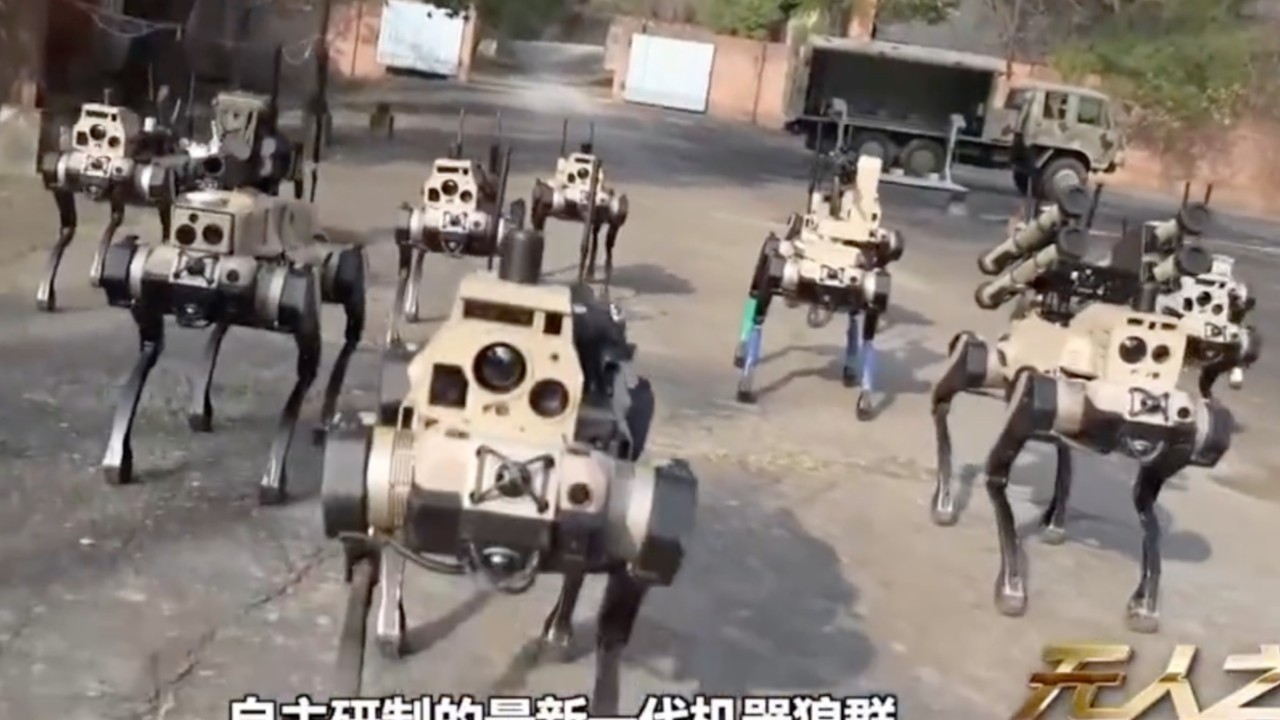
The deployment of Lethal Autonomous Weapon Systems (LAWS) represents a fundamental shift from human-mediated violence to a paradigm of algorithmic attrition. While proponents argue that silicon-based decision-making reduces "noise"—the emotional volatility, fatigue, and prejudice inherent in human soldiers—this perspective ignores the structural incompatibility between machine logic and the ethical architecture of Just War Theory. The core of the crisis lies in the fact that machine learning models optimize for objective functions, whereas the principles of a Just War require the exercise of subjective moral judgment.
This displacement of agency creates a "Responsibility Gap" that cannot be bridged by current technical architectures. When an autonomous system initiates a strike, the causal chain between the political intent and the kinetic outcome is severed by the black-box nature of neural networks. You might also find this connected article insightful: Newark Students Are Learning to Drive the AI Revolution Before They Can Even Drive a Car.
The Triad of Proportionality Measurement
To evaluate whether a kinetic action is "just," military commanders traditionally weigh the expected military advantage against the anticipated incidental loss of civilian life. This calculation is not a simple arithmetic subtraction; it is a context-dependent evaluation of value. Autonomous systems fail this test across three distinct dimensions.
1. The Semantic Gap in Target Identification
Computer vision systems excel at classification—identifying an object as a "tank" or a "uniformed combatant" based on pixel patterns. However, Just War Theory requires the identification of status, not just form. A combatant who is hors de combat (wounded or surrendering) is no longer a legitimate target. As reported in recent reports by CNET, the implications are notable.
Machine learning models lack the capability to interpret the "intent" of a human gesture or the nuance of a surrender. While a human soldier can recognize the psychological shift in an opponent, an algorithm operates on a binary of presence versus absence. If the "surrender" behavior is not explicitly encoded in the training data across every possible environmental permutation, the system will default to its primary objective: neutralization.
2. The Quantification of "Incommensurate" Values
Proportionality requires comparing two fundamentally different units of measure: military necessity (a strategic variable) and human life (a moral constant). In an autonomous framework, these must be converted into a single "cost function" for the algorithm to process.
The moment human life is assigned a numerical weight to be traded against a strategic objective in a real-time optimization loop, the foundational tenet of Just War—the inherent dignity of the individual—is liquidated. The system is not "judging" proportionality; it is solving a multivariate calculus problem where the variables are stripped of their ethical weight.
3. Environmental Entropy and Data Drift
Combat zones are high-entropy environments characterized by what Clausewitz termed "friction." AI models are trained on historical datasets that are inherently static. When the reality on the ground deviates from the training distribution—known as "out-of-distribution" (OOD) scenarios—the system’s confidence scores become unreliable. An autonomous system may execute a strike based on a high-probability match that is actually a hallucination caused by smoke, debris, or unconventional civilian behavior. Unlike a human, the machine has no "common sense" baseline to trigger a manual override when the scenario stops making sense.
The Decomposition of Accountability Chains
The second pillar of a Just War is accountability. For a war to be just, there must be a mechanism to punish violations of jus in bello. Autonomous systems introduce a systemic failure in the legal and moral chain of command.
- The Programmer’s Shield: Software engineers cannot be held liable for the emergent behavior of a deep learning model in a chaotic environment they did not witness.
- The Commander’s Ignorance: A commander who deploys an autonomous swarm cannot foresee the specific tactical "choices" the swarm will make. If the commander cannot foresee the outcome, the legal standard of "intent" or "recklessness" becomes nearly impossible to prove.
- The Machine’s Immunity: A machine cannot be punished. It cannot feel the weight of a war crime, nor can its "termination" serve as a deterrent or a form of justice for victims.
This creates a vacuum where atrocities can occur without an identifiable perpetrator, effectively turning war into a series of "industrial accidents" rather than a governed human activity.
The Erosion of the Moral Threshold for Conflict
The "Cost-of-Entry" for kinetic conflict has historically been gated by the political risk of casualties. By removing the risk to one's own soldiers, autonomous systems lower the inhibition threshold for initiating state-sanctioned violence.
When war becomes a matter of deploying capital (hardware) rather than risking blood (personnel), the democratic and social friction that restrains conflict evaporates. This leads to a state of "perpetual low-intensity friction," where autonomous strikes become a routine bureaucratic function rather than a grave national decision. The "Just" requirement that war be a last resort is undermined by the technical ease with which it can be conducted.
The Feedback Loop of Algorithmic Escalation
A significant risk ignored by proponents of LAWS is the "Flash War" scenario—analogous to the "Flash Crashes" in high-frequency trading. When two opposing autonomous systems interact, they create a feedback loop of reactive optimization.
- System A detects a minor posture change in System B.
- System A preemptively maneuvers to maintain its objective function.
- System B interprets this maneuver as a high-threat escalation and initiates a kinetic response.
- The escalation occurs at microsecond speeds, far exceeding the "OODA loop" (Observe, Orient, Decide, Act) of human political leaders.
In this framework, the war is no longer a tool of policy; it is an autonomous process that has escaped human control. A war that cannot be stopped by the people who started it cannot be considered just.
Operational Recommendations for Strategic Policy
The path forward requires a shift from "meaningful human control" (a vague term) to "Human-in-the-Loop Verification of Intent." This involves three technical and policy mandates:
- Hard-Coded Constraints: Autonomous systems must be restricted to "defensive-only" postures or "targeting of materiel" (e.g., intercepting incoming missiles) where the ethical ambiguity of human status is absent.
- Explainable AI (XAI) Integration: No autonomous strike system should be deployed unless its decision-pathway can be audited in real-time by a human supervisor. If the "why" behind a target classification is opaque, the system is tactically and ethically unfit for use.
- The Doctrine of Inherited Liability: International law must evolve to state that any action taken by an autonomous system is the direct legal responsibility of the highest-ranking officer who authorized its deployment. By removing the "Opaque Logic" defense, states will be forced to internalize the risk of algorithmic failure.
Strategic superiority is not found in the speed of the trigger, but in the precision of the judgment. Weaponizing the lack of judgment is not an advancement; it is a regression into a state of mechanized lawlessness.
State actors must immediately prioritize the development of "Counter-AI" protocols that focus on the electronic disruption of autonomous loops rather than the deployment of competing lethal algorithms. The preservation of the human element in warfare is not a matter of sentimentality; it is the only mechanism that prevents tactical efficiency from becoming a totalizing moral catastrophe.