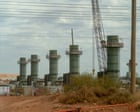
Silicon Valley is building data centers faster than local power grids can handle. To keep the lights on, tech giants and energy companies are turning to an old standby: natural gas. Recent data from Global Energy Monitor reveals that the United States is now building twice as much gas-fired power capacity as China, reversing historical trends where international growth routinely outpaced American fossil fuel development.
The numbers tell a stark story. Total US gas power capacity in development has ballooned by 50% in a short window, hitting 378 gigawatts. If these projects cross the finish line, the country will increase its domestic gas fleet by roughly two-thirds at a capital cost exceeding $647 billion.
The On-Site Power Revolution
Traditional utility connections take years to clear. Transmission queues stretch across half a decade in some regions, creating a massive bottleneck for server farms that need massive amounts of electricity right now.
Tech companies refuse to wait. Roughly a third of the new gas-fired capacity currently in development across the United States is slated to sit directly on-site at data centers. These "captive" power plants operate behind the meter, feeding electricity straight to racks of graphics processing units without relying on public transmission lines.
Texas sits at the absolute center of this stampede. The state accounts for nearly a third of all planned US gas power buildout, boasting over 80 gigawatts of capacity in development. That single state total surpasses the next seven states combined.
The Race for Hardware
Building a power plant sounds simple on paper, but the physical supply chain is hitting a brick wall. Gas turbine manufacturers like GE Vernova, Siemens, and Mitsubishi face order backlogs stretching deep toward the end of the decade.
Global orders for new gas turbines hit a 25-year high recently, driven primarily by American demand. Two-thirds of the projects currently listed in early development stages lack a named turbine manufacturer. Companies are reserving spots in line, hoping equipment becomes available before their capital budgets expire.
This hardware scramble has driven up turbine prices significantly. Yet tech balance sheets are deep enough to absorb these spikes, leaving smaller municipal utilities and traditional power providers competing for the scraps.
Climate Realities Versus Corporate Ambition
Corporate climate pledges are taking a direct hit from this frantic buildout. Independent analysts estimate that if every proposed gas plant gets built, the resulting emissions will add billions of tons of carbon dioxide over their operational lifetimes.
Tech firms often point to future clean energy purchases, but server racks running continuous large language model queries cannot wait for wind speeds to pick up or the sun to shine. Base-load power requirements mean fossil fuels remain the path of least resistance for companies racing to capture market dominance in artificial intelligence.
What Happens When the Bubble Cools
Building hundreds of gigawatts of gas generation on spec carries massive financial exposure. If the projected returns on artificial intelligence fail to materialize or if efficiency gains cut data center power needs drastically, these new plants risk becoming expensive stranded assets.
Energy markets are placing a multi-billion dollar bet that compute demand will keep climbing infinitely. If you are tracking infrastructure investments, watch the regional transmission organization queues and turbine delivery schedules closely. Those two metrics will dictate whether this fossil fuel surge becomes a permanent fixture of the American grid or an expensive overcorrection.