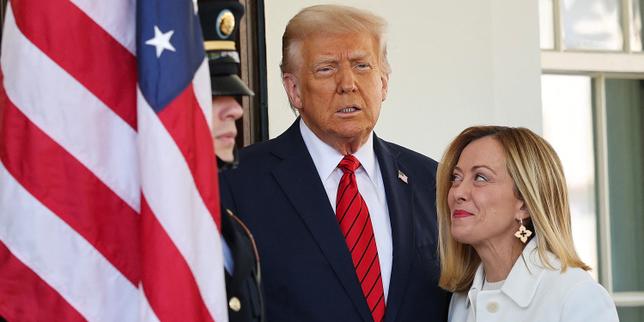
"America First" operates as an instrument of coercive hegemony rather than strategic withdrawal. Reading Donald Trump's foreign posture as isolationism confuses rhetorical framing with institutional mechanics. When Washington demands burden-sharing, levies unilateral tariffs, or presses allies and adversaries through bilateral leverage, it is re-pricing the terms of American primacy, not exiting the global arena. That is the core analytical contention advanced by scholar Gilbert Achcar in arguments surrounding "America First" and imperial power. To evaluate that claim rigorously, analysts must separate four moving parts: the doctrine's coercive mechanics, the historical balance sheet of postwar security arrangements, the shift away from open-ended nation-building toward compliance extraction, and the structural limits that constrain unilateral dominance in a multipolar system.
Deconstructing the Retrenchment Fallacy
Public debate frequently treats "America First" and "retrenchment" as synonyms because both challenge post-Cold War multilateral norms. In operational terms, they describe different behaviors. Retrenchment reduces external commitments, cedes regional security perimeters, and accepts lower relative influence in exchange for domestic consolidation. Coercive hegemony, by contrast, keeps core power projection intact while converting multilateral alliances and open trade regimes into bilateral bargaining arenas where Washington extracts concessions directly.
A useful way to map this distinction is to compare the incentive structure of multilateral stewardship against transactional coercion:
- Multilateral stewardship trades short-term fiscal or diplomatic friction for predictable rules, alliance cohesion, and institutional legitimacy.
- Transactional coercion treats formal treaties, security guarantees, and tariff schedules as variable levers tied to immediate compliance, trade balances, or political alignment.
- Strategic retrenchment lowers external exposure deliberately, even when doing so allows rival powers to fill security or commercial vacuums.
The first limitation of the retrenchment reading is that reducing enthusiasm for costly overseas garrisons or multilateral summits does not automatically mean surrendering leverage. A dominant economy with reserve-currency centrality, deep capital markets, and unmatched power-projection logistics can step back from consensus-building while stepping up pressure on individual states.
Consider a mid-sized ally dependent on a security umbrella and export access to the U.S. market. Under a traditional alliance bargain, shared threat assessments and institutional routines cushion disputes. Under a coercive posture, security assurance and market access become explicit bargaining chips. That shift looks like withdrawal only if one mistakes diplomatic friction for geopolitical exit.
The Burden-Sharing Ledger and Economic History
A central pillar of the "America First" critique of alliances rests on a simple accounting claim: the United States has bankrolled the defense of wealthy partners while absorbing economic losses, and those partners now owe repayment. Evaluating this claim requires separating known historical facts from educated hypotheses about net economic gain.
It is a known fact that the United States has shouldered a disproportionate share of conventional and nuclear deterrence for allies in Europe and East Asia since 1945, and that several U.S. allies have run persistent goods trade surpluses with Washington over decades. It is also a known fact that postwar American hegemony was not purely philanthropic. Security guarantees anchored dollar liquidity, opened foreign markets to U.S. firms, integrated allied industrial bases into American supply chains, and helped prevent regional hegemons from consolidating control over Eurasia.
Where analysis must proceed carefully is on the net ledger. Economists and historians remain divided over how to weigh the direct fiscal cost of forward deployment against the indirect commercial and financial rents of centrality. Treating alliance defense spending purely as a unilateral subsidy ignores the strategic returns Washington collected; treating security guarantees as cost-free ignores real fiscal and political strain inside the United States.
This creates a second analytical trap: confusing gross expenditure with net return. A high defense budget or a bilateral trade deficit is a data point, not by itself proof of exploitation. To assess whether an arrangement is sustainable, analysts have to examine marginal costs, industrial capacity, and whether allies can or will substitute American protection with indigenous capabilities.
From Occupation to Compliance Extraction
Another major shift highlighted in commentary on Trump's statecraft is skepticism toward prolonged military occupations and ideological nation-building paired with a willingness to use sharp, targeted coercion against existing regimes or rivals. Viewed through a strategic lens, this reflects a change in intervention method rather than an abandonment of hierarchy.
Large-scale ground occupations carry high troop exposure, domestic political backlash, and protracted administrative costs—lessons reinforced by two decades of entanglement in Iraq and Afghanistan. Coercive compliance seeks outcomes through sanctions, tariffs, diplomatic isolation, maritime or air pressure, or targeted strikes aimed at forcing existing actors to yield without owning long-term state reconstruction.
| Dimension | Occupation and Nation-Building | Coercive Compliance |
|---|---|---|
| Primary Objective | Reshape domestic institutions and political order | Force policy concessions or regime accommodation |
| Resource Profile | High troop commitment, long duration, heavy reconstruction cost | Lower ground footprint, sharper economic or kinetic pressure |
| Main Failure Mode | Quagmire, insurgency, domestic war fatigue | Escalation spirals, evasion, or fragile compliance |
The third limitation of coercive compliance is that forcing behavior without building durable local institutions often produces brittle results. A government or rival that complies under acute pressure has strong incentives to hedge, diversify trade partners, or defect the moment enforcement slackens.
In regional security disputes—whether involving maritime chokepoints, sanctioned energy producers, or contested borders—coercive pressure can compel tactical pauses while leaving underlying grievances intact. In trade policy, tariffs can raise domestic protection for specific sectors while triggering retaliation, supply-chain rerouting, and higher input costs for downstream manufacturers.
Cause-and-Effect Chains Analysts Often Miss
Standard commentary on "America First" frequently stops at motive or rhetoric—asking whether leaders are imperialists, isolationists, or nationalists. A strategy consultant looks instead at second- and third-order causal chains that reshape the operating environment regardless of slogan.
First, bilateralization weakens collective bargaining. When Washington negotiates security or trade terms one country at a time instead of through bloc frameworks, smaller states face steeper asymmetries. Yet bilateral pressure also encourages third countries to build parallel clearing mechanisms, regional trade pacts, or alternative security arrangements to reduce single-point vulnerability.
Second, conditionality accelerates strategic hedging. When allies suspect that security commitments depend on political alignment or immediate financial concessions, rational defense planners hedge. That hedging may take the form of higher domestic defense spending—which Washington welcomes—but it can also take the form of diplomatic diversification toward rival powers or greater autonomy in regional crises.
Third, economic coercion alters trade elasticity. Short-run tariff shocks can squeeze export-dependent economies quickly, especially those heavily reliant on U.S. consumer demand. Over longer horizons, firms adapt by shifting assembly, sourcing components elsewhere, or absorbing margin compression, which gradually dulls the leverage of any single tariff threat.
Fourth, domestic political cycles compress credibility. Commitments anchored in personal dealmaking or executive decrees carry higher perceived volatility than treaty-backed norms. Foreign capitals price in that volatility by discounting long-term assurances and demanding more immediate, tangible payoffs.
Structural Constraints and Limitations
No coercive strategy operates in a vacuum. Even a superpower faces hard physical, economic, and institutional constraints that limit how far unilateral pressure can go.
- Capital and reserve dynamics: The dollar's global role rests on deep, liquid financial markets and institutional predictability, not coercion alone. Aggressive financial weaponization or erratic fiscal policy carries a trade-off between short-term leverage and long-term attractiveness as a safe asset.
- Industrial and supply-chain bottlenecks: Tariffs and export controls can penalize rivals, but domestic re-industrialization is constrained by skilled labor, permitting timelines, energy costs, and specialized component supply chains.
- Counter-coalitions and multipolarity: Rival powers with significant territorial, industrial, or resource scale—such as China and Russia—can absorb pressure better than smaller states and offer alternative diplomatic or commercial channels.
- Alliance cohesion risk: Pushing allies too hard on financial or territorial demands can fracture coalition unity at the exact moment coordinated deterrence is needed most.
These constraints are why neither pure isolationism nor unrestrained unilateralism is a costless option. Every choice involves trading one set of risks for another.
How Analysts and Decision-Makers Should Operationalize This
For executives, policy analysts, and institutional planners trying to navigate a world of coercive "America First" statecraft, reacting to headlines is a losing workflow. A disciplined analytical sequence replaces guesswork with structured monitoring:
- Map leverage points before reading rhetoric: Identify where Washington holds asymmetric cards—market access, financial clearing, technology chokepoints, or military logistics—and where counterparts hold counter-leverage such as critical minerals, transit routes, or regional security roles.
- Separate treaty commitments from conditional bargains: Track whether a security or economic arrangement rests on institutionalized, multi-year commitments or on executive discretion subject to sudden re-pricing.
- Model second-order retaliation and rerouting: Whenever a tariff, sanction, or ultimatum is announced, trace the immediate price impact, the likely retaliatory target, and the medium-term supply-chain detour.
- Stress-test scenarios against non-linear shocks: Avoid relying on linear extrapolations of current diplomatic posture. Evaluate how alliance cohesion, commodity markets, or domestic political shifts would alter enforcement capacity over a two- to five-year horizon.
The strategic move for any organization or government exposed to this environment is to build optionality across supply chains, financing channels, and diplomatic relationships before a crisis forces a binary choice. Treating "America First" as a retreat leaves institutions underprepared for sharp coercive pressure; treating it as omnipotent leaves them blind to its structural limits. Real strategic advantage belongs to those who price the leverage accurately, hedge the friction early, and keep multiple exit paths open.