That familiar, sulfurous smoke hits your nose before you even see the grand finale. Your chest vibrates with every thud. For two and a half centuries, Americans have gathered in parks, on beaches, and on asphalt driveways to watch things blow up in the night sky. It is a loud, messy, expensive tradition.
We are marking 250 years since the Continental Congress adopted the Declaration of Independence. Millions of people will look up at the sky tonight to watch synchronized explosions. It's a ritual older than the country itself. John Adams famously predicted this exact phenomenon in a letter to his wife, Abigail, on July 3, 1776. He wrote that the occasion ought to be solemnized with pomp and parade, shows, games, sports, guns, bells, bonfires, and illuminations from one end of this continent to the other.
He got his wish. The very next year, on July 4, 1777, Philadelphia threw the first official anniversary bash, complete with a 13-gun salute and a vibrant display of fireworks. We have been hooked ever since. But behind the nostalgia and the patriotic soundtrack lies a massive world of precision chemistry, dangerous logistics, and generational family empires that most people never think about while eating a melted popsicle.
The Brutal Chemistry of the Perfect Boom
Fireworks aren't just gunpowder stuffed into a cardboard tube. They are highly engineered physics packages. If a pyrotechnician messes up the chemical ratios by even a fraction of a percent, you don't get a beautiful shimmering willow. You get an expensive, dangerous dud. Or worse, a premature explosion on the launchpad.
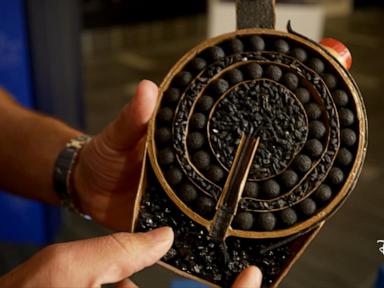
Every aerial shell relies on a basic black powder mixture to get off the ground. That mixture hasn't changed radically since ancient Chinese alchemists mixed charcoal, sulfur, and potassium nitrate over a thousand years ago. The real magic happens inside the shell, where small, doughy pellets called stars are arranged. These stars determine the color, shape, and timing of what you see in the sky.
Creating these colors requires intense chemical mastery. Pyrotechnicians use specific metal salts to produce distinct hues when heated.
- Strontium carbonate creates deep, vibrant reds.
- Barium chloride produces bright, neon greens.
- Sodium nitrate gives you that classic, brilliant yellow.
- Calcium chloride generates warm oranges.
Then there's blue. Ask any master pyrotechnician about the color blue, and they will likely sigh. Blue is the white whale of the fireworks industry. To get a true blue, you need copper acetoarsenite or copper chloride. The problem is that copper compounds are unstable at high temperatures. If the flame gets too hot, the color washes out into a dull white. If it's too cool, you see nothing. Balancing that temperature window requires extreme precision. When you see a rich, deep blue sky-burst, you are watching a chemist pull off a high-wire act.
Anatomy of an Aerial Shell
To understand how these things don't just explode randomly, you have to look at the internal architecture of a standard display shell. The whole unit is shaped like a heavy sphere or a cylinder. It sits inside a mortar tube made of high-density polyethylene or steel.
At the very bottom sits the lift charge. This is a precise amount of fast-burning black powder. When ignited by an electric match, it creates a massive buildup of gas that launches the shell out of the tube at speeds exceeding 150 miles per hour.
A slow-burning internal fuse starts counting down the moment the shell leaves the mortar. This internal fuse is calculated perfectly based on the altitude the shell needs to reach. If the shell needs to explode at 600 feet, the fuse burns for exactly three seconds.
Once the fuse burns down to the core, it hits the break charge. This is the explosive center that bursts the outer cardboard casing wide open. This ignition simultaneously ignites the surrounding stars, throwing them outward in a specific pattern. If the stars are packed randomly, you get a chaotic burst. If they are packed in concentric rings with cardboard dividers, you get a perfect peony, a palm tree, or a Saturn ring.
The Families Who Control the American Sky
You don't just buy a truckload of commercial explosives and start a fireworks company. The American skies are dominated by a handful of legendary, multi-generational families who have guarded their secret formulas for over a century. Names like Zambelli, Grucci, and Rozzi are royalty in this business.
Take Fireworks by Grucci, based in New York. They have been doing this since 1850, originating in Italy before bringing their trade to the US. They are the ones responsible for massive events like presidential inaugurations and epic displays over the Las Vegas Strip. For these families, pyrotechnics is a lifestyle passed down through dinners, late-night warehouse shifts, and strict mentorship.
They don't use handheld torches to light big shows anymore. Everything is digital. Modern displays use sophisticated firing software like ShowSim or FireOne. Designers sit at computers weeks in advance, matching individual shell bursts to the exact millisecond of a musical track.
An electric match, or e-match, connects every single mortar to a central control computer. The computer sends a tiny pulse of electrical current down the wire, heating up a tiny filament that ignites the lift charge. This digital precision allows for incredible choreography. A designer can create a wave of red bursts that ripples from left to right across a two-mile span of water, perfectly timed to the beat of a bass drum.
Why Drones Wont Kill the Firework Tradition Anytime Soon
Every year, headlines pop up claiming that synchronized drone light shows are going to replace traditional fireworks. Critics point to the environmental benefits. Drones don't leave behind plastic casings, sulfur smoke, or heavy metal residues. They don't terrify dogs, and they don't trigger PTSD in military veterans.
Those are valid points. Cities in wildfire-prone regions, particularly across the American West, have shifted toward drone displays out of sheer necessity. A single stray spark in a dry July forest can destroy thousands of acres.
But drones cannot replicate the visceral punch of a real firework. A drone show is a visual medium. It's essentially a giant television screen in the sky. Fireworks, however, are a full sensory assault.
When a heavy eight-inch shell breaks directly overhead, you feel the displacement of air in your lungs. The sound waves bounce off your chest. The smell of burnt powder triggers a deep, nostalgic emotional response linked to summers past. Drones are quiet, calculated, and polite. Fireworks are loud, dangerous, and intoxicating. For most communities, the raw energy of an explosion wins every single time.
The Logistics of a Twenty Minute Show
People complain when a local town display lasts only fifteen minutes. What they don't see are the hundreds of hours of manual labor, regulatory hurdles, and safety checks required to make those fifteen minutes happen.
Planning for a major Fourth of July show starts in January. The company has to secure permits from local fire departments, the Federal Aviation Administration, and the Coast Guard if the show is over water. The Bureau of Alcohol, Tobacco, Firearms and Explosives tracks every single commercial shell from the moment it enters the country or leaves a factory.
Setting up a medium-sized town show takes days of hard physical labor. Crew members spend hours in the hot sun loading heavy mortar tubes into wooden racks. They drop the shells in one by one, wire up the electric matches, and run hundreds of yards of cables back to the firing modules.
If it rains, they have to wrap every single mortar rack in plastic wrap. The shells can handle getting launched through thin plastic, but they can't handle getting soaked by water, which ruins the black powder. After the show ends, the crew can't just go home. They have to wait for the mortars to cool down, then inspect every single tube to ensure there are no unexploded shells left behind. It's grueling, dirty work for a temporary reward.
How to Get the Best View This Year
If you want to actually enjoy a show rather than staring at it through a grainy smartphone screen, you need to change your strategy.
First, drop the phone. No one wants to watch a shaky, distorted video of fireworks on Instagram. Enjoy the moment with your own eyes.
Second, pay attention to the wind direction before you pitch your lawn chair. Check a local weather app. You want to sit upwind of the launch site. If the wind is blowing from the launchpad toward your face, you will be covered in smoke by the fifth minute, completely obscuring the rest of the performance. You want the wind at your back or blowing sideways to keep the sky clear.
Finally, give your eyes time to adjust. Avoid looking at bright phone screens or flashlights for twenty minutes before the show starts. Your night vision will improve, making the subtle color gradients of the copper blues and strontium reds look infinitely sharper against the dark sky. Pack some ear protection for the kids, keep your pets safe indoors at home, and appreciate the fact that you're participating in a 250-year-old American science experiment.