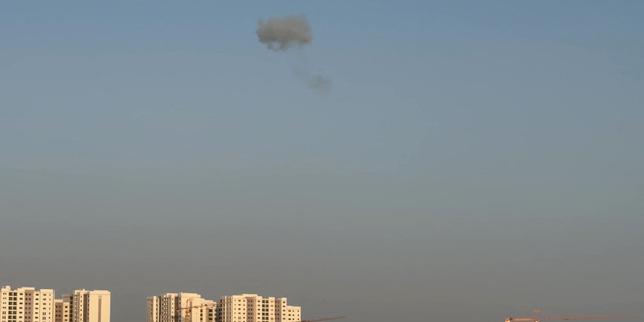
When Tehran claims responsibility for a kinetic strike against a United States military installation in Bahrain, the primary objective is rarely the physical destruction of concrete and steel. Standard geopolitical reporting treats these announcements as binary events—either a successful military operation or empty propaganda. Both interpretations fail because they ignore the underlying strategic calculus of asymmetric warfare. A claimed strike against a hardened naval hub like Naval Support Activity Bahrain operates as an information-warfare lever designed to alter the risk-reward equation for Washington, Manama, and regional energy markets without triggering a full-scale conventional war.
To evaluate the operational reality of an Iranian claim regarding a strike in Bahrain, analysts must separate the physical mechanics of power projection from the psychological mechanics of deterrence. The Persian Gulf functions as a compressed battlespace where sensor-to-shooter timelines are measured in minutes, yet the diplomatic fallout spans decades.
The Structural Reality of the Bahrain Battlespace
Bahrain is not merely a host nation for American forces; it is the command-and-control nexus for Western maritime security in the Middle East. Housing the headquarters of the U.S. Navy’s Fifth Fleet and U.S. Naval Forces Central Command (NAVCENT), the island nation represents a high-value, geographically constrained target.
Understanding the feasibility and impact of any claimed attack requires mapping three distinct operational variables:
- Geographic Compression: Approximately 200 kilometers of water separate the Iranian coastline from Manama. At this distance, short-range ballistic missiles (SRBMs) and one-way attack unmanned aerial vehicles (UAVs) require minimal flight time. This compression severely limits early warning windows for ground-based radar arrays.
- Multi-Layered Air Defense Saturation: The defensive architecture protecting Fifth Fleet assets relies on an integrated network of Patriot batteries, ship-borne Aegis combat systems, and close-in weapon systems. A single projectile cannot penetrate this envelope under normal readiness conditions. Claiming a successful hit implies either a coordinated saturation attack—which leaves an undeniable forensic trail—or a covert, localized launch utilizing proxy cells operating within or near Bahraini territory.
- Political Fragility: Unlike larger Gulf states with vast strategic depth, Bahrain’s domestic stability is tightly coupled with its security guarantees from Washington and Riyadh. Any kinetic event on Bahraini soil immediately tests the resilience of the ruling Al Khalifa family and forces a recalculation of internal security protocols.
When an announcement emerges from Tehran or an affiliated proxy network claiming a strike on this specific node, the claim itself becomes a strategic munition. If the physical strike occurred, it demonstrates an intelligence failure or a defensive gap. If the strike was intercepted or fabricated, the claim still forces U.S. Central Command (CENTCOM) into a reactive posture, expending operational bandwidth to verify, deny, or manage allied anxiety.
The Four Pillars of Asymmetric Attribution
Standard media coverage fails when it takes a claim at face value or dismisses it entirely due to a lack of immediate satellite imagery. In modern gray-zone conflict, attribution is intentionally blurred to maximize strategic ambiguity. The mechanics of an Iranian claim follow a predictable four-stage operational framework.
1. The Deniability-Attribution Paradox
Tehran consistently operates through a dual-track communication model. Direct claims by the Islamic Revolutionary Guard Corps (IRGC) signal supreme leadership authorization and carry the highest risk of direct U.S. retaliation. Conversely, claims routed through decentralized proxy networks—such as Saraya al-Ashtar in Bahrain or the broader Islamic Resistance in Iraq—allow Tehran to project capability while maintaining plausible deniability. When Iran directly claims an attack on a U.S. base in Bahrain, it signals a deliberate abandonment of ambiguity, shifting the posture from covert harassment to overt deterrence.
2. Kinetic vs. Cognitive Payload
Every military operation carries both a physical payload (explosive yield) and a cognitive payload (the intended shift in adversary behavior). In the Persian Gulf, the cognitive payload is consistently weighted higher than the kinetic effect. Damaging a pier or a radar dome in Manama has a temporary, repairable impact on Fifth Fleet operations. Convincing commercial maritime insurers, regional investors, and Gulf monarchs that the U.S. security umbrella has developed holes produces immediate, compounding economic friction.
3. The Verification Asymmetry
A state actor making a claim faces a low burden of proof in the initial news cycle; a single low-resolution video or an official communiqué suffices to dominate regional headlines. The defending military apparatus, however, faces a high burden of proof. CENTCOM cannot simply deny an event without exposing the operational parameters of its air defense networks or revealing sensitive intelligence-gathering capabilities. This asymmetry guarantees that the claimant controls the narrative tempo during the critical first 24 to 48 hours.
4. Escalation Dominance Calibration
Escalation dominance is the ability to increase the costs of a conflict in ways the opponent cannot match without risking unacceptable losses. Iran cannot achieve escalation dominance against the U.S. Navy in a conventional force-on-force engagement. Instead, Tehran seeks escalation dominance in the sub-threshold space—the zone below the trigger point for a massive American retaliatory campaign. A claimed strike on Bahrain tests where that threshold sits at any given geopolitical moment.
Economic and Maritime Ripple Effects
The true target of an attack on a U.S. base in Bahrain is rarely the military hardware sitting at Mina Salman. The target is the global energy supply chain that relies on the perception of security maintained by that hardware.
Bahrain sits directly astride the shipping lanes leading to and from the Strait of Hormuz, through which roughly one-fifth of the world’s petroleum liquids pass. When kinetic activity—or the credible threat of it—touches the headquarters of the naval force tasked with keeping those lanes open, three immediate market mechanisms activate:
- War Risk Insurance Premiums: Maritime underwriters in London and New York price risk based on kinetic frequency. Even an intercepted projectile or a verified near-miss near Manama triggers immediate upward revisions in war risk premiums for vessels transiting the central and southern Persian Gulf. These costs are passed directly to global consumers, functioning as an indirect tax imposed by Tehran without requiring a blockade.
- Routing and Bunkering Delays: Commercial tankers and container vessels alter speeds, delay port calls, or reroute to avoid perceived exclusion zones. Because the Fifth Fleet coordinates naval escorts and maritime domain awareness from Bahrain, any disruption to its operational rhythm creates friction across the entire regional logistics network.
- Capital Flight and Sovereign Risk: Bahrain relies heavily on regional financial services and sovereign debt markets to sustain its economy. Kinetic instability directly elevates the yield spreads on Bahraini sovereign bonds, forcing regional allies like Saudi Arabia and the United Arab Emirates to underwrite financial stability alongside military defense.
The Verification Protocol for Intelligence Analysts
Because the original competitor source lacks empirical grounding—providing neither casualty figures, weapon system specifications, nor independent satellite verification—analysts must apply a strict verification protocol before adjusting threat models. Relying on unverified communiqués leads to analytical failure.
To determine whether a claimed strike represents a genuine kinetic breach or an information operation, examine four observable indicators:
- NOTAM and Maritime Warnings: Authentic kinetic events near major naval bases generate immediate, unscheduled Notices to Airmen (NOTAMs) and maritime navigational warnings. If airspace over Manama remains uninterrupted and commercial flight paths into Bahrain International Airport do not divert, the claim likely lacks a major aerial kinetic component.
- Thermal Anomaly Detection: NASA’s Fire Information for Resource Management System (FIRMS) and commercial synthetic aperture radar (SAR) satellites detect high-heat events and structural deformations within hours. The absence of thermal signatures within the perimeter of Naval Support Activity Bahrain rules out large-warhead ballistic impacts.
- Force Posture Shifts: Monitor the movement of high-value naval assets. If U.S. destroyers, minesweepers, or command ships stationed in Bahrain rapidly sortie out of port into open water following a claim, it indicates an active, credible threat environment rather than a resolved minor incident.
- Diplomatic Backchannel Telemetry: Genuine cross-border strikes by state actors trigger immediate, observable diplomatic surges—emergency UN Security Council consultations, urgent evacuations of non-essential embassy personnel, or overt warnings issued through Swiss diplomatic channels in Tehran.
Limitations of Deterrence by Denial
The strategic vulnerability exposed by any credible threat to Bahrain highlights a fundamental limitation in American military doctrine in the Middle East: the high cost of deterrence by denial.
Deterrence by denial relies on convincing an adversary that their attack will fail to achieve its objective, primarily through superior defensive technology. However, the economics of air defense heavily favor the offense. A one-way attack drone costs tens of thousands of dollars to manufacture; the surface-to-air missile required to intercept it costs between one and four million dollars.
If Tehran can force the United States and its Gulf partners to expend high-end interceptors to defend static bases in Bahrain—or even force them into high-alert readiness cycles based on credible claims—Iran achieves a favorable cost-exchange ratio. Defensive perfection is mathematically impossible over an extended timeline. Relying solely on kinetic interception creates a brittle security architecture where a single failure produces disproportionate political shockwaves.
Furthermore, hardened bases cannot shield regional partners from the diplomatic fallout of hosting foreign forces. Every claimed strike intensifies internal political pressure on the Bahraini government, testing the limits of the Abraham Accords framework and complicating broader regional integration efforts.
Strategic Execution for Risk and Security Planners
Organizations, maritime operators, and geopolitical risk teams monitoring the Persian Gulf must move past reactive headline tracking. Treating every Iranian claim as an isolated news event obscures the broader operational pattern.
- Decouple Kinetic Reality from Market Impact: Do not wait for Pentagon confirmation of physical damage to adjust operational risk postures. Financial markets, insurance underwriters, and regional currencies react to the credibility of the escalation signal, not the forensic battle damage assessment. Trigger contingency hedging protocols the moment state-level attribution occurs.
- Shift Monitoring to Command-and-Control Nodes: Expand intelligence collection beyond the Strait of Hormuz chokepoint. The operational center of gravity for Gulf maritime security is the command infrastructure in Bahrain. Indicators of disruption in Manama—such as localized GPS jamming, AIS spoofing, or heightened base security levels—serve as leading indicators for wider regional maritime friction.
- Model for Sub-Threshold Attrition: Build supply chain and security models around persistent, low-level attrition rather than binary war-or-peace scenarios. The strategic objective of claiming strikes on Bahrain is to normalize the vulnerability of Western bases, steadily eroding deterrence over time. Security postures must account for continuous gray-zone pressure, prioritizing distributed operations and redundant communication pathways over reliance on single, static regional hubs.