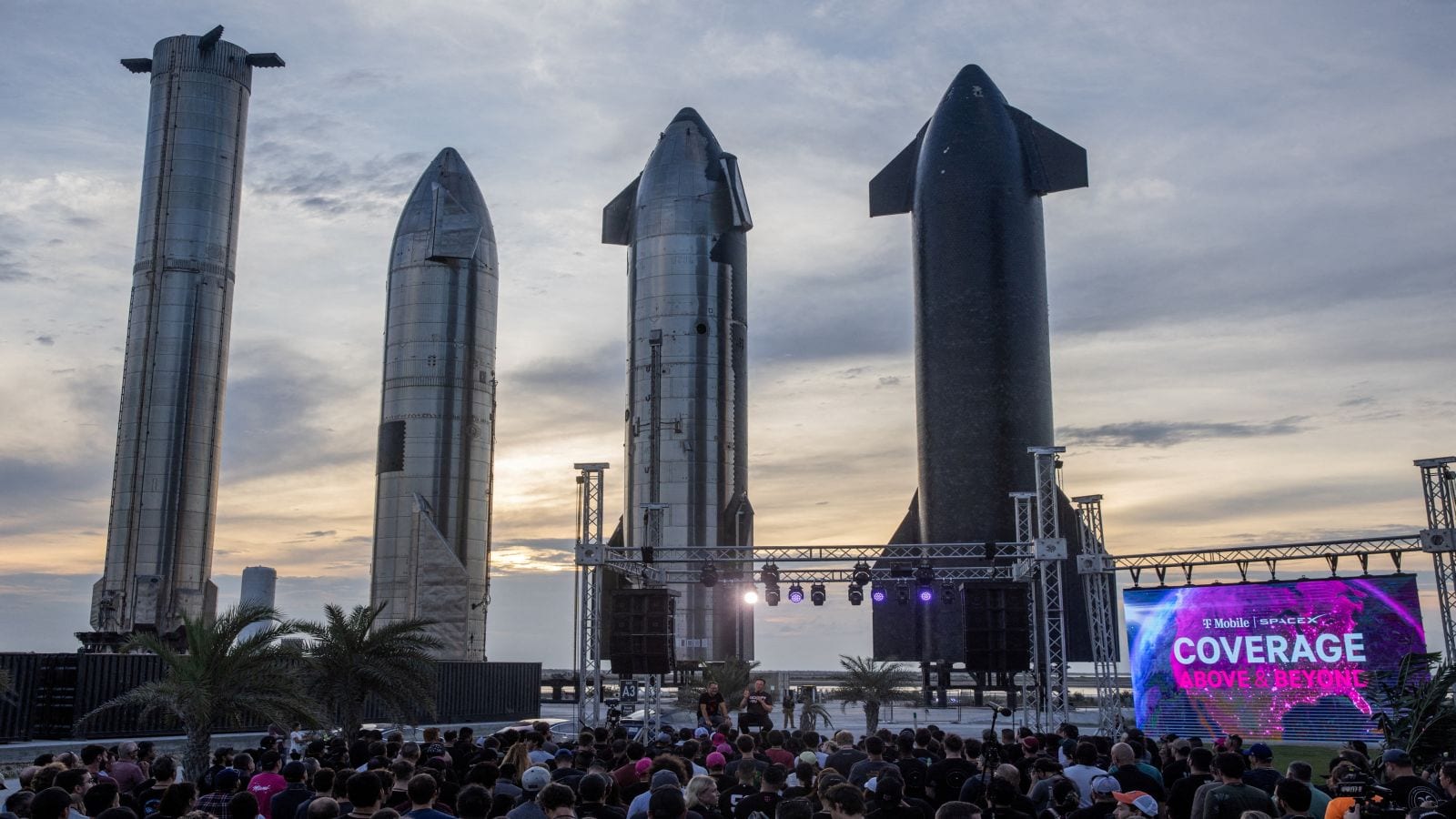
Entering the aerospace sector requires navigating an unforgiving cost structure where capital expenditure precedes operational revenue by years. When an industrial conglomerate establishes a specialized aerospace subsidiary and secures a launch window within twenty-four months of incorporation, the move demands structural scrutiny rather than superficial applause. VinSpace, an offshoot of Vietnam’s Vingroup, has contracted with SpaceX to deploy its maiden satellites on a 2027 Transporter rideshare mission. This development represents a calculated entry into the space value chain, utilizing external launch providers to bypass the prohibitive fixed costs of native rocket development.
The Economic Mechanics of the Rideshare Model
Traditional satellite deployment required dedicated launch vehicles, imposing a massive financial barrier that restricted space access to sovereign states and heavily capitalized legacy defense contractors. The commercial maturation of rideshare programs, such as the SpaceX Transporter architecture, fundamentally alters this cost function.
By aggregating payloads from multiple commercial and institutional entities onto a single rocket, operators divide the marginal cost of flight across dozens of customers. For a newly formed entity like VinSpace, capitalized initially at a modest fraction of traditional aerospace budgets, securing space access via rideshare eliminates capital allocation toward launch vehicle engineering.
- Fixed Cost Avoidance: Eliminates the requirement to design, test, and manufacture propulsion systems.
- Variable Cost Scaling: Aligns launch expenditure directly with payload mass and volume requirements.
- Risk Mitigation: Transfers flight-vehicle reliability risks to an established launcher with high flight frequency.
This structural shift allows capital to concentrate entirely on payload design, sensor integration, and downstream data monetization rather than burning capital on launch infrastructure.
Vertical Integration versus Component Specialization
The stated strategy of VinSpace spans the complete satellite lifecycle, covering research, design, assembly, integration, testing, launch management, and downstream data services. Attempting simultaneous execution across every tier of the space value chain introduces severe operational hazards.
In aerospace engineering, component design and manufacturing operate under extreme reliability constraints. Hardware sent into low Earth orbit cannot be easily serviced, meaning design flaws result in total asset loss. While vertical integration protects intellectual property and reduces supply chain dependencies, it spreads engineering talent thin across disparate domains:
- Upstream Segment: Nanosatellite manufacturing, thermal protection systems, and power generation arrays.
- Midstream Segment: Telemetry tracking, command networks, and orbital positioning control.
- Downstream Segment: Analytics pipelines, image processing, and enterprise data delivery.
A new market entrant attempting to build competency simultaneously in hardware fabrication and algorithmic data processing faces severe execution bottlenecks. The 2027 timeline provides an aggressive forcing function, compelling the organization to validate its hardware manufacturing capabilities under operational stress.
Strategic Realignment in the Regional Aerospace Market
Vietnam’s historical trajectory in space technology has been characterized by sporadic, state-led initiatives rather than continuous commercial scaling. Previous sovereign telecommunications satellites relied entirely on foreign prime contractors for manufacturing and launch, positioning local entities as passive operators rather than active innovators.
The entry of a private conglomerate into this space signals a transition toward market-driven aerospace development. This shift aligns with broader national objectives to elevate domestic manufacturing capabilities and transition out of low-cost assembly economies.
However, transitioning from a terrestrial manufacturing empire to an orbital technology provider exposes the organization to distinct regulatory and technological frictions. Export controls, orbital slot coordination through international bodies, and radio frequency allocation present complex compliance hurdles that capital alone cannot instantly clear.
The Operational Reality of Early Orbital Deployments
First-generation satellites launched by nascent operators typically serve as technology pathfinders rather than immediate revenue generators. The 2027 mission serves an empirical validation function, testing power systems, attitude determination, and onboard computing architectures in the vacuum of space.
Space environment exposure introduces thermal cycles, radiation degradation, and atomic oxygen erosion that ground-based simulation chambers can only approximate. Flight heritage is the single most valuable currency in aerospace markets; without it, securing institutional clients or insurance underwriting remains mathematically improbable.
The primary objective of the upcoming deployment is not commercial profitability, but data acquisition. Telemetry gathered during the initial operational months will dictate design iterations for subsequent satellite generations.
Allocate capital toward rigorous environmental testing facilities on the ground to minimize hardware failure rates prior to integration with the rideshare vehicle, while simultaneously building modular software architectures capable of processing downstream data streams regardless of minor hardware anomalies aloft.