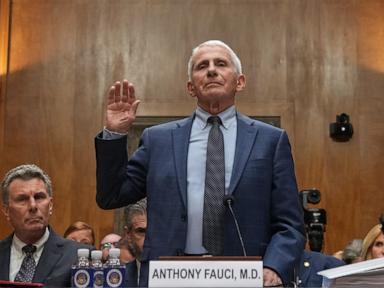
When a high-profile figure invokes the Fifth Amendment during a congressional inquiry, the immediate public discourse typically collapses into partisan posturing. Observers either view the constitutional shield as an admission of guilt or celebrate it as a necessary defense against overreach. Both perspectives miss the structural mechanics at play. The intersection of congressional subpoena power, executive or administrative immunity, and the self-incrimination clause establishes a high-stakes game-theoretic environment with severe legal and political externalities.
Understanding this dynamic requires dissecting the legislative branch's enforcement mechanisms, the explicit boundaries of constitutional protections, and the cost function of political non-compliance. A witness invoking the privilege against self-incrimination is not merely dodging a question; they are triggering a complex procedural cascade that pits institutional oversight against individual constitutional rights, with the threat of a contempt citation acting as the primary weapon of legislative enforcement.
The Jurisdictional Mechanics of Congressional Subpoenas
Congressional investigative authority is an implied power rooted in the constitutional necessity of legislation. The Supreme Court has repeatedly affirmed that the power to legislate includes the power to investigate, gather information, and compel testimony. However, this power is bounded by the Bill of Rights. A congressional committee is not a court of law, but its subpoenas carry the force of federal law, backed by statute under Title 2 United States Code, Section 192.
When a committee issues a subpoena, the recipient faces a binary operational choice: comply or resist. Resistance takes multiple forms, ranging from outright non-appearance to selective compliance or the assertion of recognized privileges.
- Executive Privilege: Asserts that internal executive branch communications must remain confidential to ensure candid advice.
- Attorney-Client Privilege: Protects confidential communications between legal counsel and client, though its application in congressional hearings remains legally distinct from judicial proceedings.
- The Fifth Amendment Privilege: A personal constitutional right protecting individuals from being forced to incriminate themselves.
The Fifth Amendment creates an immediate friction point within legislative oversight. Committees rely on voluntary testimony or cooperative depositions to build a public record and shape legislative narratives. When a witness declines to answer by invoking the privilege, the investigative momentum stalls. The committee cannot compel speech that carries criminal exposure without granting immunity, a step that requires formal coordination with the Department of Justice through an order under Title 18 United States Code, Section 6002.
The Calculus of Contempt
If a witness refuses to answer questions after asserting the Fifth Amendment—or refuses to appear entirely—the committee can initiate contempt proceedings. This operational pathway follows two distinct legal tracks: criminal contempt and civil enforcement.
Criminal contempt under Section 192 makes willful refusal to comply with a congressional subpoena a misdemeanor punishable by a fine and imprisonment. To execute this, the issuing committee must report the contempt to the full chamber. The House or Senate votes on a resolution to certify the contempt, which is then transmitted to the United States Attorney for the District of Columbia.
The institutional bottleneck in this process lies within the executive branch. The U.S. Attorney operates under the authority of the Department of Justice. If the executive branch declines to prosecute—often due to internal policy memoranda regarding executive privilege or competing priorities—the legislative branch's criminal enforcement mechanism fails completely. This creates a structural vulnerability where congressional leverage depends entirely on the cooperation of the executive branch it may be investigating.
Civil enforcement offers an alternative route. Instead of criminal referral, the committee or the full chamber files a civil lawsuit in federal district court seeking a judicial order compelling compliance. While this avoids the Department of Justice bottleneck, it introduces judicial delay. Resolution can take months or years, often outlasting the legislative session or the political relevance of the inquiry itself.
The Constitutional Boundaries of the Self-Incrimination Shield
The Fifth Amendment states that no person shall be compelled in any criminal case to be a witness against themselves. The Supreme Court has long established that this protection applies in legislative investigations just as it does in criminal trials.
A witness cannot blanketly refuse to appear; they must appear, be sworn, and invoke the privilege in response to specific, incriminating questions. The legal test centers on whether the truthful answer to a question could furnish a link in the chain of evidence needed to prosecute the witness for a federal crime.
This requirement introduces strategic friction. A blanket refusal is legally invalid and can form the basis of a contempt citation. The witness's legal counsel must meticulously evaluate each inquiry, balancing the risk of waiving the privilege against the optics of appearing uncooperative.
- The Appearance Mandate: The witness must physically or virtually present themselves before the committee. Failure to appear strips away the technical defense of asserting the privilege.
- The Specificity Requirement: The privilege must be claimed question by question, or within clearly defined operational categories of inquiry where criminal exposure is continuous and manifest.
- The Waiver Risk: Answering selective questions about a topic can be interpreted by courts as a waiver of the privilege regarding the entire subject matter, exposing the witness to rigorous cross-examination.
When high-profile figures invoke this protection, public perception often equates silence with culpability. Legally, however, the Supreme Court has ruled that juries in criminal trials cannot draw an adverse inference from a defendant's silence. In the court of public opinion and congressional politics, no such judicial rule applies. The political cost of the invocation is immediate, while the constitutional protection remains absolute.
The Institutional Power Asymmetry
The recurring clashes over subpoenas and contempt votes highlight a fundamental tension in the separation of powers. The legislative branch possesses investigative jurisdiction but lacks an independent police force or self-contained enforcement apparatus for criminal penalties. It relies on the executive branch to prosecute criminal contempt and on the judicial branch to enforce civil subpoenas.
When the target of an investigation is a current or former government official whose actions intersect with executive branch policies, the separation of powers creates a circular dependency. The legislature investigates the executive, but the executive decides whether to prosecute legislative contempt citations against those who stonewall the inquiry.
This structural reality forces congressional committees to rely on alternative tools of leverage when formal contempt votes stall. These tools include public hearings designed to shift political sentiment, withholding budgetary approvals for related agencies, or escalating rhetoric to pressure the Department of Justice. None of these mechanisms carry the immediate punitive weight of a direct criminal prosecution.
Strategic Outlook and Institutional Reform
The recurrent deployment of the Fifth Amendment in congressional hearings signals a degraded legislative-executive equilibrium. As congressional investigations increasingly function as public accountability theaters rather than purely legislative fact-finding missions, the incentives for witnesses to stonewall or invoke constitutional shields multiply.
Resolving this structural friction without violating constitutional rights would require legislative overhauls. Proposals to grant Congress independent litigating authority or standalone civil contempt fines enforceable through automated judicial mechanisms are frequently debated by legal scholars. Granting Congress the direct power to assess civil financial penalties for non-compliance would bypass the Department of Justice bottleneck, shifting the burden of appeal to the recalcitrant witness.
Until structural reforms alter the enforcement architecture, the invocation of the Fifth Amendment will remain a reliable defensive mechanism for targets of congressional inquiries. It exploits the inherent gaps between legislative oversight authority and executive prosecution discretion. The resulting political theater obscures the underlying constitutional machinery, but the mechanical reality remains unchanged: power in Washington is defined not just by who can ask the questions, but by who holds the keys to enforcement.