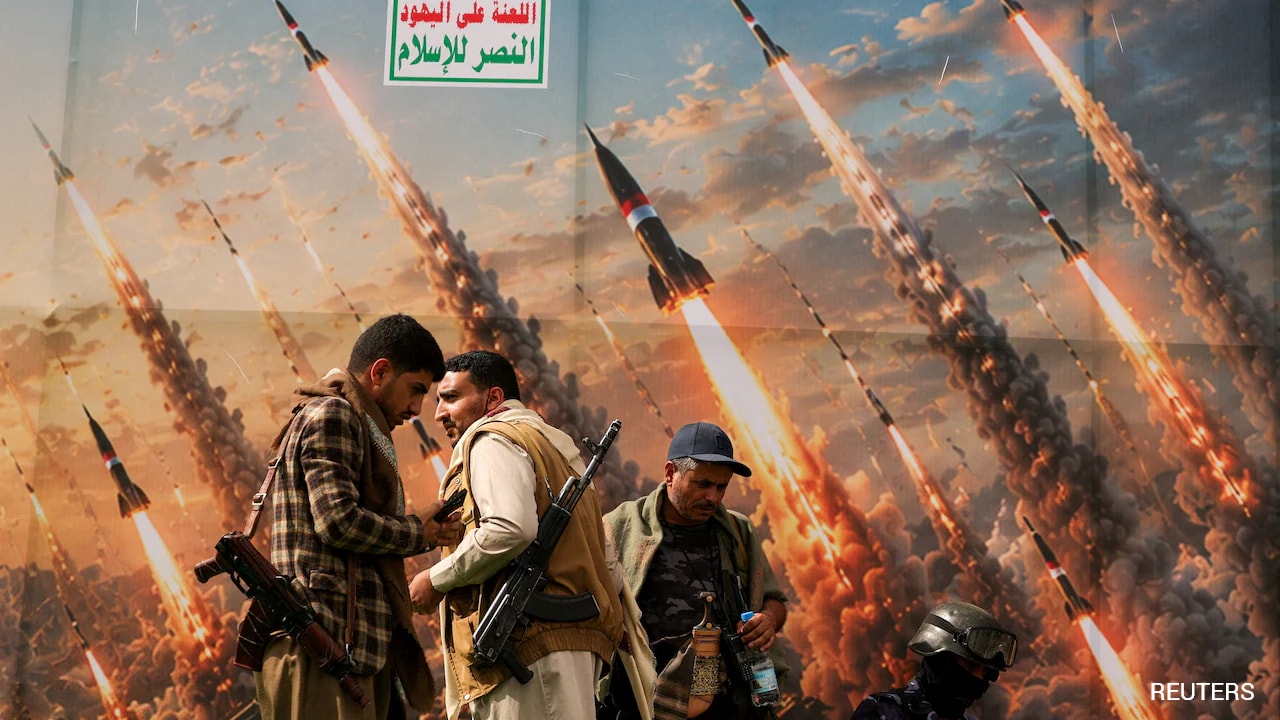
When the Saudi-led coalition announced it had intercepted and destroyed an explosive-laden drone targeting Mecca, the official statement followed a familiar wartime script. Within hours, spokespeople for Yemen’s Houthi movement dismissed the claim as a complete fabrication, accusing Riyadh of manufacturing an existential threat to rally international sympathy and Muslim solidarity. For observers tracking the conflict in Yemen and the broader Arabian Peninsula, the incident represents far more than a routine military skirmish. It sits at the intersection of asymmetric drone warfare, high-stakes geopolitical messaging, and the weaponization of religious symbolism.
To understand why a single disputed aerial interception near Islam’s holiest city triggers immediate diplomatic shockwaves, one must look past the binary claims of both belligerents. In modern Middle Eastern conflict, the physical battlefield and the information space operate as a single integrated theater. Whether a drone was actually shot down over the skies of Mecca Province or whether the narrative was amplified for strategic effect, the resulting diplomatic fallout achieves measurable political objectives.
The Anatomy of Asymmetric Aerial Warfare
Over the past decade, the proliferation of unmanned aerial vehicles (UAVs) has altered the military balance across the Middle East. Historically, projecting power across hundreds of kilometers required expensive ballistic missile batteries, manned fighter jets, and sophisticated logistics networks. Today, low-cost, long-range loitering munitions—often assembled from commercially available components combined with specialized guidance systems—allow non-state actors to threaten high-value infrastructure deep inside neighboring territory.
According to defense analysts and United Nations Panel of Experts reports, the Houthi movement has steadily expanded its arsenal from short-range tactical drones to long-range variants capable of flying over 1,000 kilometers. Models such as the Samad-3 and the Qasef-2K are designed specifically to fly at low altitudes, hugging terrain to evade traditional high-altitude radar sweeps.
Air defense is expensive. A single Patriot interceptor missile can cost upward of three million dollars, while the target it destroys might cost less than twenty thousand. This economic asymmetry forces defending militaries into a grueling posture of constant vigilance. When Saudi air defense units report an interception over western Saudi Arabia, they are operating within an environment saturated by legitimate threat vectors, previous attacks on oil facilities, and frequent cross-border launches.
Yet, the technical realities of radar detection and aerial interception leave substantial room for ambiguity, particularly when debris falls in remote mountainous terrain or when no independent verification is permitted on the ground.
How Radar Interceptions Create Information Gray Zones
Modern integrated air defense systems (IADS) rely on a network of early-warning radars, command centers, and surface-to-air missile batteries. When an unidentified aerial track enters restricted airspace, operators have seconds to classify the threat and authorize engagement.
In the aftermath of an engagement, however, proving what happened to an international audience becomes a complex evidentiary challenge:
- Fragmentation and Debris Fields: High-speed kinetic interceptions often pulverize lightweight composite airframes, leaving scattered fragments that are difficult to distinguish from older strikes or unrelated military hardware without forensic inspection.
- Geographic Ambiguity: In official military communiqués, locations are frequently cited by administrative region rather than exact coordinates. An interception occurring in the broader Mecca Province—which stretches hundreds of kilometers from the Red Sea coast deep into the interior—can be framed in headlines as an attack "on Mecca," dramatically escalating the perceived severity of the threat.
- Lack of Independent Access: Active military zones and sensitive religious areas are heavily restricted. Without access for neutral UN monitors or independent journalists to inspect crash sites and radar logs, external observers are left weighing competing state and non-state narratives.
The Strategic Value of Mecca in Geopolitical Messaging
Mecca is not merely a city; it is the spiritual epicenter for nearly two billion Muslims worldwide. As the Custodian of the Two Holy Mosques, the Saudi leadership derives a foundational pillar of its domestic legitimacy and international standing from its ability to guarantee the safety and security of the pilgrimage sites in Mecca and Medina.
Any military threat directed toward Mecca crosses a profound psychological and religious red line. Historically, allegations of attacks near the holy city have provoked immediate, unified condemnation from the Organization of Islamic Cooperation (OIC), the Gulf Cooperation Council (GCC), and Western allies.
For Riyadh, highlighting an intercepted drone near Mecca serves multiple strategic functions simultaneously:
- Moral and Diplomatic Isolation: Framing the Houthi movement as a group willing to target Islam’s holiest sanctuary undercuts their ideological standing across the Muslim world and reinforces Saudi characterizations of the group as reckless extremists.
- Justification of Defensive Posture: Demonstrating an active, ongoing threat to civilian and religious centers bolsters Riyadh’s position in international diplomatic forums, countering criticism regarding the humanitarian toll of the conflict in Yemen.
- Demonstration of Military Competence: Successfully intercepting an inbound threat before it reaches its target reassures domestic populations and international visitors that Saudi air defenses remain impenetrable.
Conversely, the Houthi leadership recognizes the devastating political cost of being seen as attacking Mecca. Throughout the conflict, Houthi military spokespeople have routinely claimed responsibility for strikes on Saudi airports, refineries, and military bases, viewing such announcements as demonstrations of deterrence and reach. When accused of targeting Mecca, however, their posture shifts immediately to categorical denial.
In previous disputes involving ballistic missiles and drones intercepted near the region, Houthi officials have argued that their forces were targeting military installations in nearby Jeddah or Taif, accusing the Saudi coalition of deliberately shifting the reported trajectory toward Mecca to manipulate public opinion. By labeling the Saudi announcement a "fabrication," the group seeks to neutralize the religious backlash while portraying Riyadh as an unreliable narrator.
Verification Challenges in the Fog of Information War
For investigative analysts, evaluating competing claims from active war zones requires a disciplined forensic methodology. Neither official military press releases nor insurgent media channels operate as neutral reporting agencies; both are instruments of statecraft and psychological operations.
When a claim of a contested interception emerges, analysts cross-reference several independent indicators to establish a baseline of probability:
- Satellite Imagery and Thermal Anomalies: Commercial satellite providers and NASA’s Fire Information for Resource Management System (FIRMS) can sometimes detect heat signatures from ground impacts or large intercept explosions, though small drone debris rarely leaves a visible scar from orbit.
- Open-Source Intelligence (OSINT) and Social Media: Local residents in densely populated areas like Mecca or Jeddah frequently upload smartphone footage of contrails, air defense launches, or sonic booms within minutes of an event. The absence of citizen video in a major urban center does not prove an event did not happen—especially if an interception occurred far outside city limits—but it serves as a critical data point.
- Serial Numbers and Component Forensics: When debris is recovered and displayed to the press, weapons researchers examine circuit boards, gyroscopes, fuel pumps, and engine markings. Tracing these components helps determine whether the hardware matches known Houthi procurement networks or originates from entirely different incidents.
The difficulty lies in the timing. Diplomatic reactions happen within hours, driven by press releases and emotional resonance. Forensic verification, if it occurs at all, takes weeks or months, long after the news cycle has moved on to the next crisis.
The Broader Consequences for Regional Stability
The recurring cycle of contested strikes and denials underscores a dangerous structural reality in the Arabian Peninsula. Even as diplomatic backchannels, ceasefires, and peace negotiations fluctuate between Riyadh and Sanaa, the underlying military architecture remains on a hair-trigger.
When every radar anomaly or border skirmish carries the potential to be framed as an existential assault on a sacred site, the space for quiet de-escalation shrinks dramatically. Political leaders face intense pressure to respond forcefully to perceived provocations, while armed groups rely on deniability and ambiguity to maintain leverage without triggering overwhelming retaliation.
Ultimately, the truth behind a specific aerial engagement over Mecca Province often remains locked inside classified radar telemetry and restricted military zones. What remains entirely visible is the machinery of modern conflict itself, where a single contested blip on a radar screen can be transformed into an instrument of international diplomacy before the smoke has even cleared from the sky.


