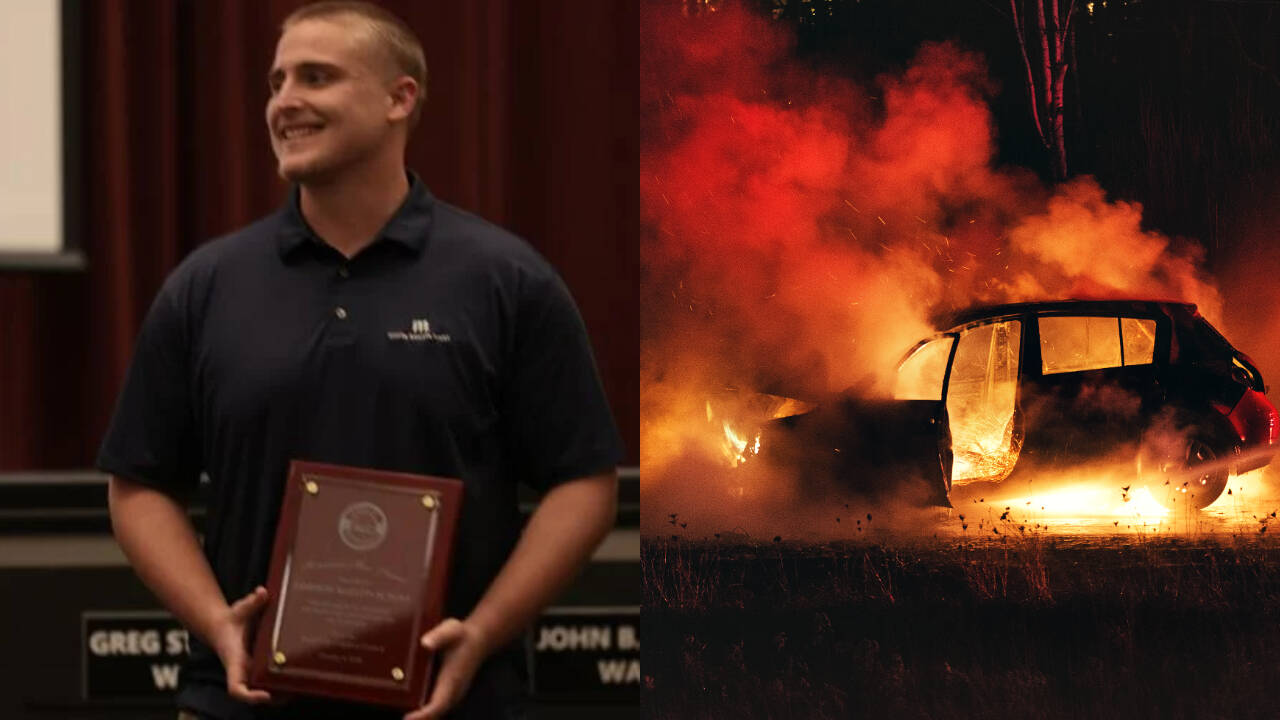
Crisis response in decentralized environments relies heavily on individual agency rather than institutional speed. When a vehicular fire or high-velocity emergency occurs, formal emergency medical services face structural friction, including transit latency, geographic dispersion, and resource allocation bottlenecks. Consequently, civilian intervention operates as the primary variable determining survival probability during the initial phase of an incident.
Examining emergency intervention through a structural lens requires deconstructing the event into specific operational phases: incident recognition, initial kinetic response, resource constraint management, and post-event stabilization. Each phase introduces specific friction points that dictate the overall efficacy of the intervention.
The Chronology of Kinetic Intervention
In any sudden thermal or traumatic event, time operates as a strict decay function against survival outcomes. The timeline of an emergency can be modeled in distinct intervals:
- The Latency Window: The duration between the initiation of the hazard (such as a collision resulting in a fuel ignition) and the first cognitive registration by an observer.
- The Decision Threshold: The transition from passive observation to active kinetic decision-making. In high-stress environments, cognitive overload frequently triggers analysis paralysis, extending this phase.
- The Execution Phase: The physical deployment of force to alter the environment, such as extracting an individual from a compromised cabin or suppressing a localized fire vector.
- The Stabilization Gap: The interval between the immediate resolution of acute danger and the arrival of professional emergency infrastructure.
When a civilian intervenes successfully, they compress the execution phase and bridge the stabilization gap before institutional resources arrive. This intervention alters the survival curve by intercepting the hazard before cellular hypoxia or thermal trauma reaches irreversible thresholds.
Cognitive and Physical Constraints in High-Stress Environments
The execution of a high-stakes rescue demands the override of innate biological preservation instincts. The human autonomic nervous system responds to acute crises with an acute sympathetic surge, characterized by elevated heart rates, tunnel vision, and cognitive narrowing.
Structured analysis of bystander behavior reveals three primary variables that influence whether an individual acts or remains inert:
- Proximity to the Hazard: Physical nearness increases the sensory salience of the event, overriding psychological dissociation.
- Clarity of Role: Individuals who possess a defined mental model of the required action navigate the decision threshold faster than those lacking a structured framework.
- Perceived Agency: The belief that one's physical capabilities match or exceed the mechanical demands of the intervention.
In scenarios involving structural entrapment, such as a deformed vehicle frame enclosing an occupant, physical resistance introduces a severe mechanical bottleneck. The rescuer must apply structural leverage or brute force against compromised materials while managing environmental hazards like radiant heat, smoke inhalation, and unstable vehicle dynamics.
Institutional Dependency and Civilian Buffer Capacity
Modern emergency response architectures are built on centralized dispatch models. Police, fire, and emergency medical services operate under economies of scale, meaning stations are positioned to cover wide geographic radii efficiently under normal conditions. However, this model creates structural vulnerability during peak demand or remote incidents.
Civilian interventions function as an informal buffer capacity within the broader public safety network. When an individual intervenes locally, they absorb the latency penalty of the institutional response system.
Quantifying the value of this buffer involves assessing the delta between the time of injury and the time of definitive care. Every minute shaved off the extraction phase through immediate peer intervention exponentially increases the physiological headroom available to the victim once trauma care begins.
Systemic Optimization of Emergency Preparedness
Scaling the effectiveness of localized crisis response requires moving away from reliance on erratic altruism toward structured preparedness frameworks. Communities that systematically train populations in foundational triage, basic extrication mechanics, and hazard assessment flatten the distribution curve of emergency outcomes.
The strategic imperative is clear: treating crisis response as a predictable logistical challenge rather than an unpredictable anomaly transforms civilian bystanders from passive witnesses into reliable first-line operational assets. Aligning individual capability with the realities of emergency latency remains the single most effective lever for reducing catastrophic harm in decentralized incidents.