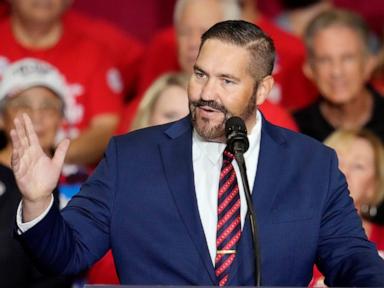
The resolution of the year-long legal warfare between Maricopa County Recorder Justin Heap and the county’s Board of Supervisors is not a triumph of administrative harmony. It is a legally mandated, highly expensive partition of a critical civic utility.
Rather than integrating operations to leverage economies of scale, the settlement creates a structural "firewall" between early voting and Election Day operations. To achieve this political truce, taxpayers will fund a redundant, $15 million sovereign IT infrastructure. This is a clinical analysis of the operational bottlenecks, structural inefficiencies, and systemic risks created by the balkanization of the United States' most scrutinized county election apparatus.
The Structural Mechanics of Partition
Under the prior Shared Services Agreement (SSA) framework, Maricopa County relied on an integrated, co-managed model. The Recorder’s Office and the Board of Supervisors shared data systems, IT personnel, and physical logistics to manage a continuous voting cycle. The July 2026 settlement dismantles this collective model, replacing it with a strict, chronologically segregated system of governance.
                [ MARICOPA COUNTY ELECTION PIPELINE ]
                                 │
         ┌───────────────────────┴───────────────────────┐
         ▼                                               ▼
  [ EARLY VOTING PERIOD ]                       [ ELECTION DAY & EMERGENCY ]
  Administered by: Recorder's Office            Administered by: Board of Supervisors
  • Mail Balloting & Drop Boxes                 • In-Person Precinct Voting
  • Early Voting Site Selection                 • Centralized Ballot Tabulation
  • 12 New Dedicated Staff                      • Emergency Voting Delegation (to 2028)
The split operates on a strict temporal and functional division of labor:
- The Recorder’s Domain (The Front End): Justin Heap’s office retains absolute authority over the front-end components of the cycle. This includes voter registration, early mail-in ballot processing, signature verification, and early in-person voting logistics (such as site selection and early-voting poll-worker staffing).
- The Board’s Domain (The Back End): The Board of Supervisors, through its Elections Department, retains exclusive command over Election Day precinct voting, machine maintenance, and—most critically—the centralized tabulation of all physical ballots.
- The Emergency Voting Exception: Emergency in-person voting (conducted between the close of early voting and Election Day) has been formally delegated by the Recorder to the Board through the 2028 cycle to prevent operational collapse during the transition.
While this division appears clean on paper, it introduces severe operational friction. An election is not a series of discrete batches; it is a continuous data pipeline.
The $15 Million IT Redundancy and Data Security Risks
The most stark structural cost of this partition is the mandated dismantling of the county’s unified election IT infrastructure. Previously, IT personnel were centralized to maximize data security, server uptime, and configuration management. Under the settlement terms, this efficiency is discarded.
The Capital Cost of Sovereign Systems
The Board of Supervisors will transfer up to $21 million in county funds to the Recorder’s Office. Of this, $15 million is earmarked specifically to build a completely independent IT system for the Recorder. The remaining funds will cover the immediate hiring of 24 dedicated IT personnel and 12 early voting staff members under the Recorder's direct chain of command.
The Operational Friction of Split Databases
Until the separate system is constructed, both offices must co-manage the existing shared voter registration and election database under a joint-custody protocol.
This creates a structural dual-key bottleneck:
- Synchronization Lag: Changes made to registration records, early ballot statuses, or signature verifications on the Recorder’s side must sync perfectly with the Board’s tabulation databases. Any latency during high-volume periods (such as the 11th-hour drop-off of mail ballots on Election Day) increases the risk of discrepancies.
- Split Cyber-Defenses: Dividing a highly secured, hardened infrastructure into two independent networks doubles the potential attack surface. Instead of defending one highly integrated perimeter, the county must now secure two separate networks, as well as the API linkages connecting them.
Staffing Inefficiencies and Training Divergence
An election system relies heavily on temporary, highly trained community labor. Historically, poll workers were trained under a single curriculum to ensure consistency, whether they worked an early voting site or an Election Day center.
This settlement bifurcates the workforce. The Recorder's Office will recruit, hire, and train staff for early voting locations, while the Board’s Elections Department will do the same for Election Day.
This creates a high probability of procedural drift. If early voting staff use different intake, identification verification, or ballot-handling protocols than their Election Day counterparts, it introduces systemic variance. Voters visiting an early voting site may face a materially different operational experience than those voting on Tuesday, potentially leading to confusion, longer wait times, and administrative disputes at the margins.
The Dispute Escalation Framework
Recognizing that this artificial partition invites ongoing conflict, the settlement establishes an extraordinary administrative escalation protocol.
[ Dual Liaison Resolution: Recorder & Board Representatives ]
                          │
                          ▼ (If Unresolved)
[ Special Master Intervention: Judge Christopher Coury ]
                          │
                          ▼ (If Disagreed)
[ Arizona Supreme Court Appeal (Final, Non-Appealable Decision) ]
The introduction of a permanent, judicial referee—specifically Superior Court Judge Christopher Coury acting as a "Special Master"—highlights the lack of institutional trust. It embeds the judiciary directly into the day-to-day execution of county logistics. Rather than resolving issues through standard executive management, administrative disagreements are fast-tracked to the Arizona Supreme Court.
This legalistic fallback loop introduces systemic latency. In a fast-moving general election environment, waiting for a Special Master's ruling or a Supreme Court intervention on a technical operational dispute (e.g., the exact placement coordinates of a ballot drop box) could delay critical administrative actions by hours or days, directly impacting voter access.
The Long-Term Strategic Risk Profile
This settlement does not solve the underlying polarization of election administration; it merely codifies it into the county budget.
The long-term risk profile of this arrangement reveals three primary vulnerabilities:
- Voter Experience Disruption: If early voting sites (controlled by the Recorder) are scaled down or relocated separately from Election Day sites (controlled by the Board), voters may struggle to find consistent physical locations. While the settlement mandates that early voting sites must equal at least 20% of scheduled Election Day centers, the geographical distribution remains subject to bureaucratic tug-of-war.
- Fiscal Bloat: The $15 million system split and the recurring salaries for 36 newly created redundant positions represent a structural inflation of the election budget. These funds are being diverted to solve internal jurisdictional warfare rather than modernizing ballot-counting hardware or improving physical precinct security.
- Implementation Sincerity: As Recorder Justin Heap noted, the success of this agreement will be measured entirely by its "faithful implementation". In an environment where supervisors admit they do not trust the Recorder, any minor operational hiccup during the upcoming 2026 midterms will be weaponized politically, potentially undermining public trust in the certified results.
To navigate this highly segregated operational reality, Maricopa County’s technical teams must immediately prioritize strict data-synchronization protocols and establish clear, pre-negotiated service-level agreements (SLAs) between the two newly sovereign departments. Failing to align these parallel tracks before the high-volume general election cycle begins will turn an expensive administrative truce into a major operational bottleneck.
For an objective, ground-level look at the escalating tensions and court arguments that preceded this historic settlement, watch this Arizona local news broadcast on the Maricopa County election dispute, which captures the intense legal and political standoff just before the state's high court intervened.