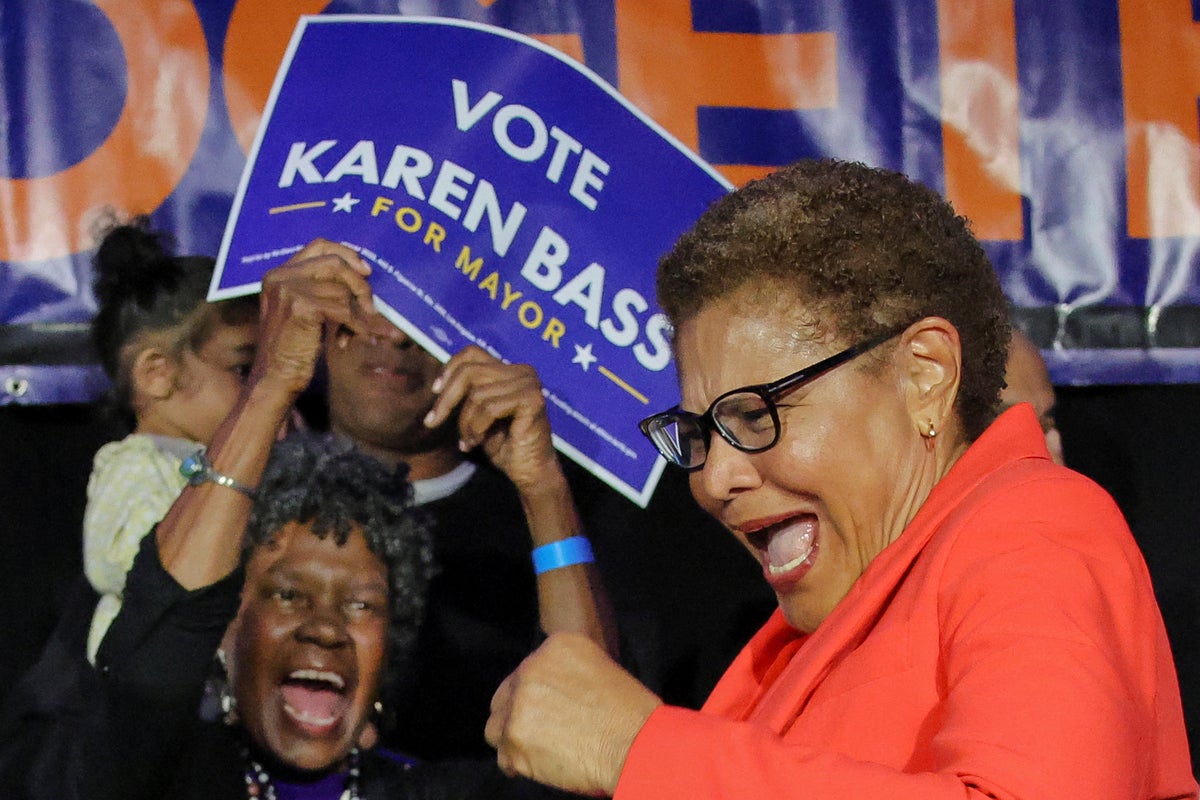
Incumbent Los Angeles Mayor Karen Bass failed to secure the outright majority required to bypass a general election runoff, finishing with approximately 26% of the primary vote. This creates a high-stakes, multi-front general election strategy for November 2026. Rather than a routine reelection, the primary outcome reveals structural vulnerabilities in the incumbent's policy execution framework, exacerbated by a sudden exogenous shock. The competitive ascent of reality television personality Spencer Pratt (22%) and progressive City Councilmember Nithya Raman (25%) demonstrates how systemic administrative failures can rapidly destabilize an incumbent's base.
To evaluate the trajectory of the general election, analysts must look past personality-driven media coverage. Instead, they must examine the quantitative metrics, operational bottlenecks, and structural variables driving the Los Angeles electorate.
The Three Pillars of Incumbent Vulnerability
The primary collapse of the incumbent’s margin from a historic 2022 victory to just over a quarter of the electorate stems from three specific policy and operational failure points.
1. The Crisis Management Penalty
Incumbents face an immediate penalty when operational readiness fails during an environmental disaster. The January 2025 Palisades and Eaton Fires served as the primary catalyst for the current political volatility. Bass’s absence on an international trade mission to Ghana during the initial ignition phase created an insurmountable narrative bottleneck. This was further compounded by historical budgetary constraints impacting fire department deployment velocities. The political cost of this operational friction was direct: it created an entry point for non-traditional candidates to mobilize a frustrated electorate.
2. The Capital-to-Outcome Disconnect in Homelessness Policy
The administration’s flagship initiative, Inside Safe, was designed as a rapid-housing mechanism to clear street encampments and transition individuals into interim motel rooms. While the administration reported a 6% reduction in unhoused populations over a 24-month period, the program encountered a severe scalability problem.
High per-capita daily operational costs for temporary lodging, low permanent housing transition rates, and ongoing disputes regarding the statistical validity of the annual point-in-time count have diminished voter confidence. Voters are increasingly tracking the capital allocation against visible street conditions, revealing a clear performance deficit.
3. Macroeconomic Bottlenecks and Structural Deficits
The city government is managing a structurally complex, near $1-billion budget deficit. This fiscal constraint limits the executive branch's ability to deploy new social services or expand public safety personnel without triggering visible cuts elsewhere. Combined with a decline in Hollywood production volume—an economic pillar of local tax revenues—the city’s underlying financial health has become a key target for fiscal conservatives and reform-minded outsiders.
The Asymmetric Challengers: A Framework of Electoral Sorting
The primary split demonstrates a clear ideological and demographic sorting of the Los Angeles electorate, divided between two distinct challenger archetypes.
                  [Los Angeles Electorate]
                             |
         -----------------------------------------
        |                    |                    |
[Center-Left Establishment]  [Progressive Left]   [Populist / Right]
   - Karen Bass (26%)        - Nithya Raman (25%) - Spencer Pratt (22%)
   - Inside Safe             - Structural Reform  - Public Safety Law
   - Institutional Base      - Staffing Upgrades  - Digital Media Engine
The Progressive Counter-Weight
Nithya Raman’s 25% primary showing proves that the progressive wing of the local Democratic coalition remains highly organized. Raman’s strategy relies on a structural critique of city management, opposing short-term anti-camping ordinances and focusing on permanent, state-funded housing infrastructure. By positioning her platform against both the establishment status quo and the populist right, Raman captures younger, urbanist, and highly ideological voters who view the current administration's policies as insufficient.
The Populist Social Media Engine
Spencer Pratt’s emergence as a viable mayoral candidate with 22% of the vote shows how political outsiders can optimize modern digital distribution networks. Pratt’s campaign bypassed traditional institutional gatekeepers by leveraging a massive social media following and converting his personal loss in the Palisades Fire into a potent anti-incumbent narrative. His platform focuses tightly on public safety, retail theft reduction, and strict enforcement of quality-of-life laws.
Pratt’s fundraising efficiency is also notable. He raised $3.74 million in primary funds, outspending Bass’s $3.21 million by leveraging an affluent donor base that includes real estate interests and high-profile entertainment executives. Furthermore, his use of artificial intelligence in campaign advertising and a decentralized digital media strategy allowed him to scale his message with minimal traditional field infrastructure.
The Runoff Map: Strategic Realignment for November
The upcoming general election runoff demands a complete realignment of voter coalitions. Because the nonpartisan primary split the electorate into three roughly equal segments, the candidate who successfully wins over the remaining unaligned voters will win the mayor's office.
The Path for the Incumbent
To secure a second term, the Bass campaign must execute a two-part stabilization strategy:
- Consolidate the Center-Left Establishment: Re-engage the institutional coalition of organized labor, business associations, and federal-state Democratic endorsements (such as Governor Gavin Newsom) to drive turnout in high-propensity voting blocs.
- Shift to Operational Metrics: Pivot the campaign narrative away from high-level promises and toward concrete operational achievements. This means proving the scalability of housing programs and showing measurable progress in municipal hiring ahead of the 2028 Olympic Games.
The Path for the Challenger
Whether Pratt or Raman secures the final spot alongside Bass, the challenger's strategy must focus on building a broad anti-incumbent coalition. For Pratt, the challenge lies in expanding his appeal beyond a conservative, populist base in a city that leans heavily Democratic. He must translate his social media reach into a disciplined field operation capable of winning over moderate, center-left voters who are dissatisfied with current civic conditions but wary of outsider candidates.
The final phase of this election will serve as a direct test of municipal governance. It will decide whether voters favor institutional continuity despite fiscal and environmental challenges, or if they are ready to pivot toward a disruptive structural change.
This deep analytical breakdown of the Los Angeles mayoral primary details how Spencer Pratt managed to disrupt the traditional political landscape and challenge incumbent Karen Bass, forcing a high-stakes runoff.