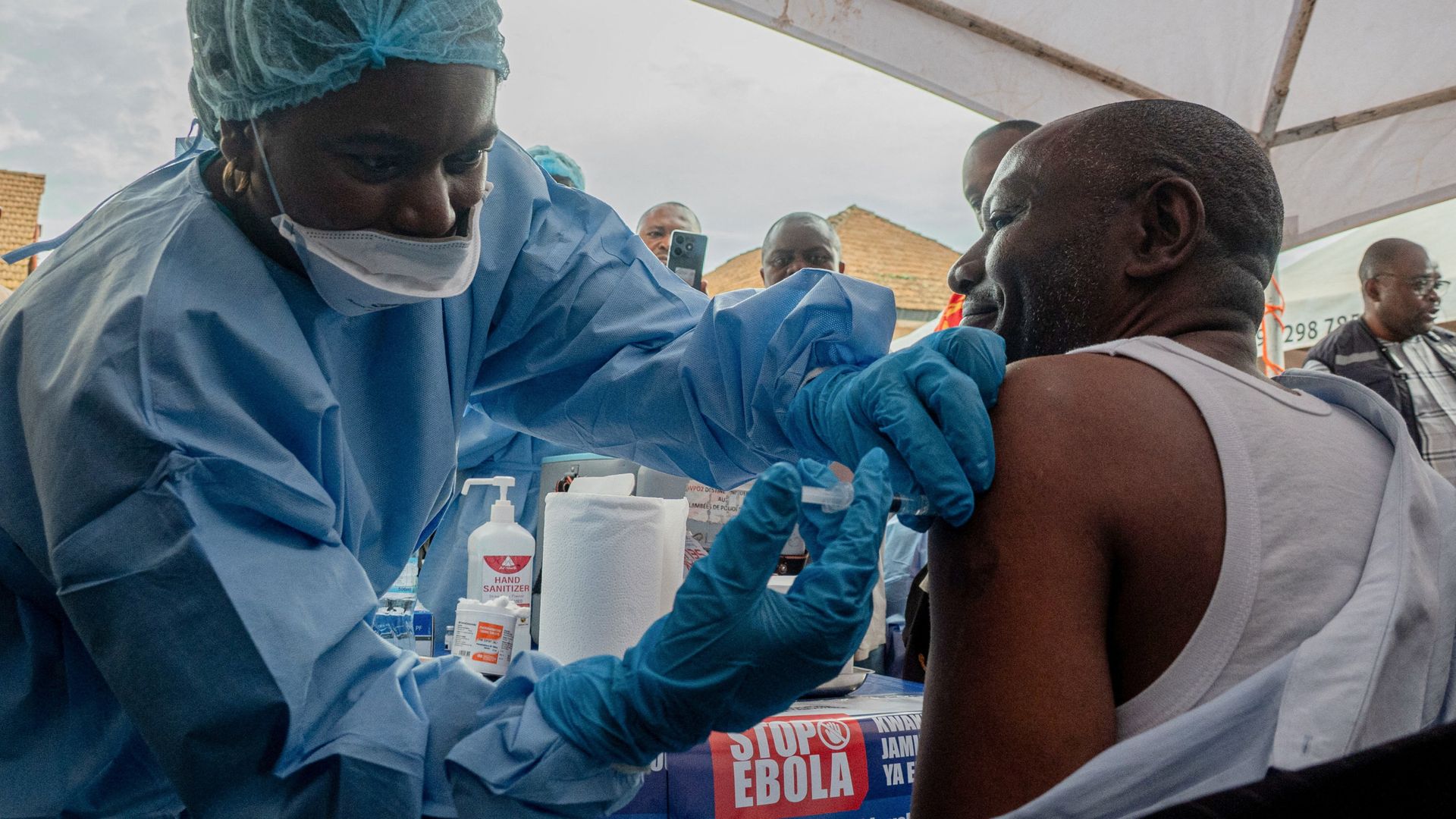
When cumulative Ebola virus disease (EVD) mortality in the Democratic Republic of the Congo (DRC) breaches a threshold like 5,000 deaths—a figure representing the aggregated human cost across multiple distinct outbreaks rather than a single isolated event—standard epidemiological reporting fails to capture the underlying operational breakdown. Conventional media coverage treats the death toll as a static scoreboard. In reality, an escalating fatality count in the DRC is the lagging indicator of a complex system failure where viral transmission dynamics collide with armed conflict, fractured public trust, and logistical bottlenecks. Understanding why Ebola remains uniquely lethal in Central Africa requires deconstructing the outbreak response into its mechanical components: the biological constraints of the pathogen, the friction of conflict-zone field operations, and the economic and behavioral drivers of community resistance.
The Accounting of Mortality Aggregated Risk Versus Single-Event Outbreaks
To analyze a 5,000-death milestone with precision, one must first separate cumulative historical mortality from single-outbreak lethality. Since the identification of the Ebola virus near the Ebola River in 1976, the DRC has experienced over a dozen distinct outbreaks. The 2018–2020 Kivu epidemic alone accounted for 2,287 deaths out of 3,470 confirmed and probable cases, making it the second-largest Ebola outbreak in history behind the 2014–2016 West African epidemic. When combined with the 1976 Yambuku outbreak, the 1995 Kikwit outbreak, the 2018 Équateur outbreak, and subsequent recurrences, total DRC mortality crosses into the multi-thousand range.
The critical metric is not the raw sum of fatalities, but the Case Fatality Rate (CFR). Historically, Zaire ebolavirus—the predominant species in the DRC—exhibits an average CFR of roughly 50%, though it has fluctuated between 25% and 90% depending on the timing and quality of clinical intervention.
When a mortality figure climbs into the thousands, it signals a failure in time-to-isolation. In Ebola epidemiology, the time elapsed between symptom onset and admission to an Ebola Treatment Center (ETC) governs two variables:
- Individual survival probability: Early supportive care—specifically aggressive intravenous fluid resuscitation, electrolyte balancing, and secondary infection management—drops mortality rates significantly. When patients arrive at an ETC five to seven days after symptom onset, hypovolemic shock and multi-organ failure are frequently irreversible.
- Community transmission velocity: Viral load in bodily fluids increases exponentially as the disease progresses. A patient remaining in the community during the late-stage wet phase (characterized by severe vomiting and diarrhea) generates an exponential spike in secondary infections compared to a patient isolated during the initial dry febrile phase.
The Three Pillars of Operational Friction
Epidemiological containment relies on a straightforward mathematical objective: driving the effective reproduction number ($R_t$) below 1.0. Achieving this requires executing four core interventions simultaneously: rapid case identification, exhaustive contact tracing, safe and dignified burials, and targeted ring vaccination. In stable environments, these protocols contain filovirus outbreaks within weeks. In the eastern DRC, three structural barriers systematically degrade each intervention.
1. Kinetic Conflict and Security Perimeters
The epicenter of modern DRC Ebola transmission—specifically the provinces of North Kivu and Ituri—operates as an active war zone populated by dozens of fragmented non-state armed groups. Standard public health architecture is not designed to function under kinetic threat.
When health workers require armed escorts to enter a health zone, operational efficiency collapses. Security protocols restrict movement to narrow daylight windows, limit the number of personnel deployed to the field, and force rapid evacuations whenever gunfire erupts. During the Kivu epidemic, hundreds of targeted attacks on health facilities and response teams forced repeated suspensions of surveillance activities. Every 48-hour pause in contact tracing creates a blind spot in the transmission chain. Because the incubation period of Ebola ranges from 2 to 21 days, a lost contact who becomes symptomatic during a security lockdown can seed multiple untraced transmission chains before field teams regain access.
2. The Trust Deficit and Asymmetric Information
A containment strategy depends entirely on voluntary compliance from the affected population. Individuals must willingly report symptoms, disclose their close contacts, surrender infected family members to isolated treatment wards, and abandon traditional burial rites that involve washing and touching the corpse.
In the DRC, decades of state neglect, predatory governance, and protracted conflict have produced a baseline of deep institutional skepticism. When an international response apparatus arrives with vast financial resources, fleets of vehicles, and specialized protective gear to combat a single pathogen—while ignoring endemic killers like malaria, measles, and cholera that claim far more lives annually—local populations interpret the intervention through a lens of suspicion.
This creates a fertile environment for misinformation. Rumors that Ebola is a fabricated pretext for resource extraction, political disenfranchisement, or organ harvesting are not merely superstitious anomalies; they are rationalized narratives built upon pre-existing grievances. When communities view ETCs as facilities where relatives go to die behind opaque plastic walls, families hide sick members at home. Home care without personal protective equipment transforms households into amplification chambers for the virus.
3. The Ring Vaccination Bottleneck
The deployment of the rVSV-ZEBOV-GP vaccine altered the tactical landscape of Ebola response by creating a biological firewall around confirmed cases. Ring vaccination operates by identifying an index case, tracing all primary contacts (individuals who had direct physical contact with the patient or their bodily fluids), and tracing secondary contacts (contacts of contacts), then immunizing the entire ring.
The operational flaw in this model is its absolute dependence on high-resolution contact tracing. Ring vaccination is a precision tool, not a mass-immunization campaign. If fear or security restrictions cause an index case's family to withhold the names of 30% of their contacts, the biological ring contains structural gaps. The virus exploits these unimmunized pathways, jumping across health zones faster than vaccination teams can establish new perimeters. Furthermore, cold-chain logistics—maintaining the vaccine at temperatures between -60°C and -80°C in regions lacking reliable electrical grids—imposes severe physical limits on how rapidly teams can scale deployment into remote forested areas.
The Economics of Outbreak Response and Nosocomial Amplification
A critical blind spot in mainstream reporting is the internal distortion created by the outbreak response economy itself. A major Ebola intervention injects tens of millions of dollars into a localized, impoverished economy within a matter of months.
This sudden capital influx triggers predictable market distortions:
- Labor displacement: International organizations hire local doctors, nurses, and administrators at salaries orders of magnitude higher than standard Ministry of Health pay scales. This drains human capital from routine primary care clinics, causing secondary mortality spikes from untreated malaria, maternal complications, and pediatric infections.
- Perverse incentives: When daily hazard pay and logistical contracts are tied to the active status of an outbreak, friction emerges between international coordinators, national ministries, and local contractors regarding the transition of operations.
Simultaneously, weak primary healthcare infrastructure acts as an engine of nosocomial transmission (hospital-acquired infection). In the DRC, patients experiencing early febrile symptoms rarely suspect Ebola; they present at informal private clinics or under-resourced health posts seeking treatment for malaria or typhoid. These facilities frequently lack running water, basic gloves, and sterilization equipment. A single unrecognized Ebola patient receiving an intramuscular injection via a reused syringe, or being treated by unprotected staff, can infect dozens of patients and healthcare workers in a single afternoon. Once healthcare workers become infected and die, the local medical system collapses entirely, severing the primary surveillance network needed to detect new cases.
Viral Persistence and the Reservoir Problem
Even when human-to-human transmission chains are severed and an outbreak is declared over after 42 days (twice the maximum incubation period) without a new case, the DRC faces a dual threat of resurgence that invalidates traditional containment timelines.
First is the zoonotic reservoir. Fruit bats of the family Pteropodidae are widely hypothesized to be the natural hosts of the Ebola virus, carrying the pathogen without developing fatal disease. Hunting, butchering, and consuming bushmeat, alongside human encroachment into previously undisturbed forest ecosystems due to logging and mining, ensure continuous spillover risk at the human-animal interface.
Second—and operationally more complex—is viral persistence in survivors. Hard clinical evidence demonstrates that the Ebola virus can remain hidden in immune-privileged sites within the human body long after a patient has recovered and cleared the virus from their bloodstream. These sites include the testes, the interior of the eye, and the central nervous system.
Genomic sequencing of recent outbreaks in the DRC and Guinea has proven that flare-ups occurring months or even years after an epidemic's official end are not always new zoonotic spillovers. In multiple documented instances, outbreaks were reignited via sexual transmission from a male survivor carrying persistent viral RNA in seminal fluid, or through viral relapse in a previously infected individual. This biological reality transforms Ebola from a discrete emergency into a chronic surveillance requirement.
Limitations of Current Containment Frameworks
No tactical intervention currently deployed in the DRC serves as a comprehensive solution. Every tool carries distinct operational trade-offs:
- Monoclonal Antibody Therapeutics (e.g., mAb114 and REGN-EB3): Clinical trials conducted during the Kivu outbreak proved that targeted monoclonal antibodies dramatically reduce mortality compared to older therapies. However, their efficacy is strictly time-dependent. Administered within 72 hours of symptom onset, survival rates exceed 85%. Administered after viral load has peaked and organ damage has begun, efficacy plummets. Therapeutics cannot compensate for a surveillance failure that delays patient presentation.
- Community-Based Surveillance (CBS): Training local community health workers to detect illness and death alerts bypasses the distrust directed at external teams. Yet CBS networks suffer from high false-positive rates—because early Ebola symptoms mimic dozens of endemic febrile illnesses—which can overwhelm rapid response teams and exhaust diagnostic laboratory capacity (GeneXpert machines).
- Decentralized Treatment Centers: Moving away from massive, centralized ETCs toward smaller, community-integrated transit centers reduces patient transport times and alleviates family fears of disappearance. The trade-off is an increased risk of infection control breaches; maintaining strict biosafety protocols across 30 small, dispersed facilities is vastly more difficult than securing three centralized hubs.
The Strategic Mandate for Outbreak Architecture
Treating each Ebola flare-up in the Democratic Republic of the Congo as an isolated humanitarian emergency guarantees that cumulative mortality will continue its upward trajectory. A 5,000-death milestone is the mathematical certainty of applying temporary, vertical emergency responses to permanent, horizontal structural deficits.
To permanently alter the mortality curve, international health agencies and national ministries must execute a structural pivot from reactive outbreak response to permanent health system integration:
- Eliminate Vertical Silos: Terminate standalone Ebola response structures. Integrate filovirus surveillance, GeneXpert diagnostic capacity, and infection prevention and control (IPC) training directly into routine primary healthcare facilities that treat malaria, maternal health, and childhood vaccinations. Communities accept surveillance when it is delivered alongside care for the diseases killing them every day.
- Institutionalize Survivor Programs: Shift post-outbreak funding from emergency demobilization to multi-year longitudinal monitoring of survivor cohorts. Provide continuous access to semen testing, ophthalmology, and primary care to neutralize the threat of viral resurgence before a single secondary transmission occurs.
- Decentralize Biosafety and Triage: Equip peripheral clinics with rapid triage protocols and localized isolation pods so suspect cases are stabilized and tested within their own health zones, eliminating the logistical friction and community resistance triggered by long-distance medical evacuations.
Until containment architecture is built around the permanent realities of conflict, primary care deficits, and viral persistence, raw death tolls will remain a grim metric of operational lag rather than a solved epidemiological problem.