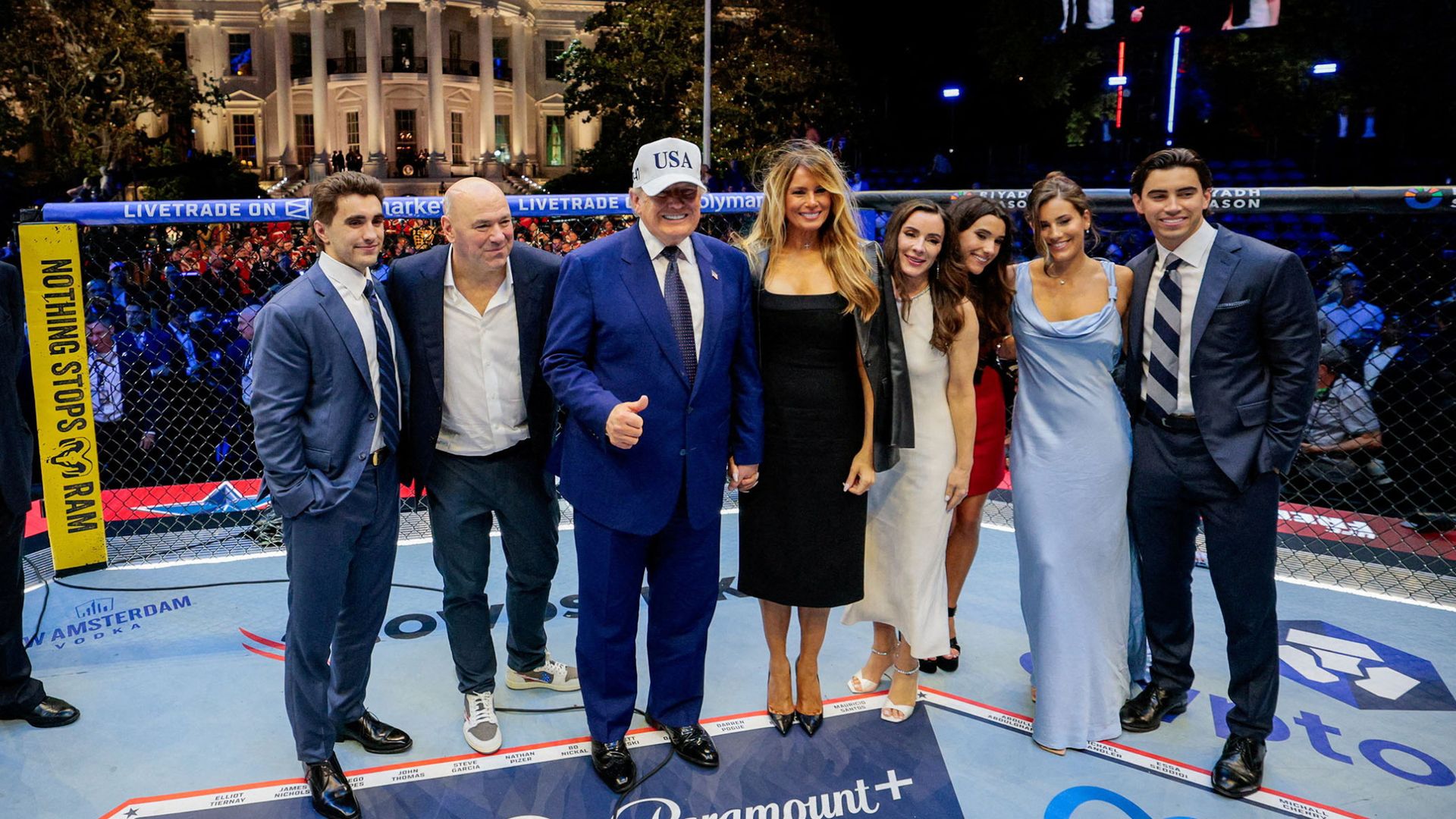
The convergence of a multi-agency state event, a commercial sports franchise operation, and an international diplomatic breakthrough on the South Lawn of the White House provides a clear case study in asymmetric political strategy. On June 14, 2026, the executive branch executed a dual-track operation: the announcement of an initial diplomatic agreement to end the three-month military conflict with Iran, followed immediately by UFC Freedom 250, a commercial mixed martial arts event staged on federally protected grounds. This coordination was not coincidental; it represents a calculated effort to optimize executive positioning during a period of macroeconomic stress.
By analyzing this event through standard institutional, economic, and strategic communication frameworks, we can isolate the operational mechanics at play. The primary objective is to understand how the administration neutralized domestic liabilities—specifically persistent inflation, historic high fuel prices, and declining public approval metrics—by executing a high-stakes geopolitical resolution simultaneously with a high-visibility cultural spectacle.
The Operational Mechanics of the Dual-Track Event
The execution of this dual event relies on three distinct pillars of executive leverage, each designed to maximize domestic impact while shifting the administrative cost burden onto external and public entities.
                      ┌─────────────────────────────────────────┐
                      │   Executive Leverage Strategy Matrix    │
                      └─────────────────────────────────────────┘
                                           │
         ┌─────────────────────────────────┼─────────────────────────────────┐
         ▼                                 ▼                                 ▼
┌──────────────────┐              ┌──────────────────┐              ┌──────────────────┐
│   Geopolitical   │              │ Financial-Asset  │              │  Administrative  │
│    Arbitrage     │              │   Repositioning  │              │    Asymmetry     │
├──────────────────┤              ├──────────────────┤              ├──────────────────┤
│• Conflict        │              │• Private cap /   │              │• Semiquincen-    │
│  resolution      │              │  Public space    │              │  tennial rule    │
│• Reopen Strait   │              │• Co-branding     │              │  justification   │
│  of Hormuz       │              │  incentives      │              │• State resource  │
│• Deflate energy  │              │  (Crypto bonus)  │              │  allocation      │
│  risk premium    │              │                  │              │  (7 agencies)    │
└──────────────────┘              └──────────────────┘              └──────────────────┘
Geopolitical Arbitrage
The timing of the Iran agreement served as a macroeconomic circuit breaker. A ninety-day blockade of Iran and subsequent kinetic strikes had driven global energy markets into high volatility, pushing domestic inflation to its highest baseline since April 2023. By declaring the agreement complete hours before the sports broadcast, the executive branch achieved immediate market decompression.
The announcement that the United States would terminate its naval blockade and reopen the Strait of Hormuz targeted the global energy risk premium. This move was designed to force a downward correction in crude futures, directly addressing the administration’s most significant polling vulnerability: consumer-facing fuel costs.
Financial Asset Repositioning
The financial structure of UFC Freedom 250 demonstrates a complex model of private-capital integration into public infrastructure. While the executive stated that the Ultimate Fighting Championship fully funded the event, data from National Park Service court disclosures reveal a different fiscal footprint:
- Capital Expenditure: Over $60 million in temporary structural capital outlays, notably for the construction of "The Claw," a 92-foot technical steel arch framework housing production assets.
- Labor Allocation: Tens of thousands of public-sector labor hours distributed across seven distinct federal agencies.
- Commercial Co-Branding: The addition of World Liberty Financial—a digital asset entity closely tied to executive family interests—as an official partner. This partnership established a specialized $250,000 cryptocurrency incentive pool for combatants, directly integrating private financial platforms with state-hosted media real estate.
Administrative Asymmetry
To bypass standard statutory bans on utilizing federal land for commercial, hyper-personalized entertainment, the administration utilized a specific legal pivot. The event was integrated into the broader federal framework governing the United States Semiquincentennial—the 250th anniversary of the Declaration of Independence. By framing a commercial mixed martial arts card featuring an international fight lineup as a state-sanctioned celebration of national history on Flag Day, the executive branch created a defense against litigation from oversight groups. This strategy survived a final federal court challenge just 48 hours prior to the event.
The Divergent Cost Function of Political Pageantry
The structural innovation of the June 14 event lies in how it successfully decoupled financial costs from political returns. In standard public choice theory, a political actor faces a balanced trade-off when allocating state resources for personal or partisan gain: the risk of public backlash over wasteful spending usually offsets the visibility benefits. The administration bypassed this constraint by engineering an asymmetric cost function.
$$C_{\text{total}} = C_{\text{public}} + C_{\text{private}}$$
Where the public cost component ($C_{\text{public}}$) includes the operational budgets of seven federal agencies, public land depreciation, and the opportunity cost of delaying multilateral statecraft, such as shifting the G7 summit schedule in France to accommodate the executive's travel timeline.
Conversely, the private return function ($R_{\text{private}}$) accrued directly to the executive’s political brand and commercial partners. The UFC secured unprecedented global media placement inside the White House gates, converting the Blue Room Balcony and the Oval Office into promotional staging grounds. Simultaneously, the executive transformed a standard age liability—marking an 80th birthday—into an intentional display of physical vitality, explicitly contrasted against the private celebration models of political predecessors.
This creates a distinct bottleneck for institutional norms. When the physical real estate of the state is successfully leased to private enterprise under the guise of national commemoration, the traditional dividing lines within the executive branch blur. The operational mechanics of this transition follow a clear sequence.
Structural Path to Institutional Commercialization
┌────────────────────────────────────────────────────────┐
│ 1. Legal Reclassification                              │
│    Utilize broad national anniversary frameworks to    │
│    reclassify commercial ventures as state-sanctioned. │
└───────────────────────────┬────────────────────────────┘
                            │
                            ▼
┌────────────────────────────────────────────────────────┐
│ 2. Infrastructure Assimilation                         │
│    Deploy multi-agency federal assets to construct     │
│    heavy commercial production facilities on public land.│
└───────────────────────────┬────────────────────────────┘
                            │
                            ▼
┌────────────────────────────────────────────────────────┐
│ 3. Commercial Asset Integration                        │
│    Embed private financial instruments and commercial │
│    logos into official executive branch backdrops.     │
└───────────────────────────┬────────────────────────────┘
                            │
                            ▼
┌────────────────────────────────────────────────────────┐
│ 4. Diplomatic Synchronization                          │
│    Time major foreign policy breakthroughs to optimize  │
│    domestic media viewership and market sentiment.     │
└────────────────────────────────────────────────────────┘
Market Implications and Resource Constraints
While the short-term political objectives of the event were achieved—namely, generating massive cultural media coverage and signaling an easing of energy market pressures—the underlying strategic model contains structural vulnerabilities that limit its repeatability.
First, the diplomatic breakthrough with Iran remains an unrefined asset. The declaration that the conflict is resolved lacks negotiated structural details regarding long-term enrichment caps, regional proxy management, or verified enforcement mechanisms. By prioritizing the announcement to match the timeline of a television broadcast, the administration sacrificed diplomatic leverage. This choice risks creating a secondary market correction if subsequent negotiations stall over technical specifics in the coming weeks.
Second, the operational strain on federal resources creates friction within the civil service apparatus. The diversion of security personnel, logistics teams, and park maintenance crews away from standard operations to service a private entertainment entity exposes the administration to ongoing legislative scrutiny and inspector general audits.
Finally, the overt commercialization of executive spaces presents a distinct risk of diminishing returns. The unique value of the White House as a political backdrop depends entirely on its historical exclusivity. Staging recurring combat sports events or corporate partnerships risks reducing a symbol of sovereign state authority to a standard commercial venue. This transformation could lower the impact of future executive communication strategies.
Strategic Direction for Institutional Navigation
Firms and market analysts tracking political risk must look past the cultural performance of the event to focus on its structural outcomes. The real consequence of the White House combat sports event is not the spectacle itself, but the operational precedent it establishes for executive power and regulatory workarounds.
Corporate strategists must anticipate a regulatory landscape where traditional distinctions between official state actions and private corporate interests continue to overlap. Organizations navigating federal compliance or state-backed contracts should adjust their risk models to account for an executive branch that favors unconventional, high-impact cultural alignment over standard institutional processes.
The immediate operational priority for market participants is to hedge against the unnegotiated details of the Iran deal. Look for short-term energy stabilization followed by heightened volatility once formal treaty text faces legislative and international pushback.