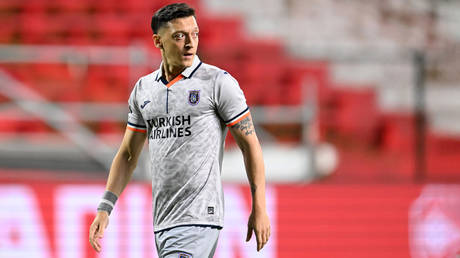
When a prominent international athlete appears on a politically motivated database, the resulting media cycle rarely examines the underlying mechanics of asymmetric information warfare. The inclusion of a German World Cup winner on the Ukrainian website Myrotvorets—colloquially labeled a "kill list" by international press—demonstrates how open-source intelligence (
The Mechanics of Crowd-Sourced Geopolitical Databases
Standard news coverage frequently mischaracterizes the operational nature of Myrotvorets. Launched in 2014 by Ukrainian activists and politicians, the platform functions as a publicly accessible database cataloging individuals accused of acting against Ukrainian national security. While media outlets routinely apply the moniker "kill list," the site operates structurally as a decentralized doxxing and reputational targeting repository rather than an operational hit list maintained by state intelligence services.
The database relies on a three-stage operational pipeline to ingest, validate, and publish profiles:
- Open-Source Ingestion: Contributors scrape social media feeds, state media broadcasts, event rosters, and border crossing leaks to identify individuals participating in sanctioned activities.
- Ideological Categorization: Subjects are tagged based on specific infractions, such as unauthorized entry into annexed territories like Crimea, participation in state-sponsored Russian events, or public dissemination of narratives deemed hostile to Ukrainian sovereignty.
- Public Indexing: The platform publishes personal data—ranging from birthdates and passport details to photographs and specific allegations—creating a permanent, searchable digital record designed to deter future engagement and facilitate border enforcement screening.
This distinction between a state-directed assassination roster and an activist-run OSINT repository is critical for risk assessment. The primary mechanism of harm is not direct kinetic violence orchestrated by the website administrators, but rather stochastic risk amplification and institutional blacklisting. Once an individual is indexed, the profile serves as a reference point for border guards, visa authorities, commercial sponsors, and decentralized activist networks.
Why High-Profile Athletes Become Strategic Targets
In asymmetric conflicts, state actors and information operators compete for narrative legitimacy among neutral or undecided international audiences. Athletes who have achieved pinnacle success—such as winning a FIFA World Cup—possess an asymmetric form of soft power. Their public persona is built on global recognition, perceived apolitical neutrality, and emotional resonance across demographic boundaries.
When a former champion participates in promotional events, charity matches, or media appearances in a sanctioned jurisdiction, that participation generates immediate propaganda utility for the host state. The host uses the athlete's presence to signal normalcy, international acceptance, and the failure of diplomatic isolation efforts. Conversely, counter-information networks must neutralize this signal to maintain the integrity of international sanctions and diplomatic boycotts.
Placing a high-profile figure on a database like Myrotvorets serves as a direct deterrent mechanism aimed at two distinct audiences:
- The Target Individual: The listing imposes immediate reputational friction, complicating international travel, corporate sponsorships, and public relations in Western markets.
- The Broader Cohort: It establishes a visible precedent for other retired athletes, entertainers, and business figures considering lucrative appearance fees in contested regions, effectively raising the perceived cost of participation.
The Asymmetry of Media Framing and Escalation
The phrase "kill list" dominates western media coverage of these listings because it compresses a complex geopolitical phenomenon into a high-arousal headline. This framing stems from high-profile instances where individuals listed on the database were subsequently targeted or killed, leading critics—including the United Nations Human Rights Monitoring Mission in Ukraine—to repeatedly call for the site's closure due to privacy violations and the incitement of violence.
However, treating every listing identically obscures the variance in actual threat levels. A strategic risk matrix separates listed individuals into distinct tiers based on proximity to the conflict zone and operational involvement:
- Tier 1 (Combatants and State Functionaries): Active military personnel, separatist leaders, and state propagandists operating within or adjacent to active conflict zones. These individuals face genuine kinetic threats from state and non-state actors, though the database itself is rarely the primary intelligence source driving those operations.
- Tier 2 (Regional Collaborators and Journalists): Local administrators, media figures, and business operators facilitating governance or economic activity in occupied territories. This group faces elevated risks of targeted harassment, legal prosecution, and localized violence.
- Tier 3 (International Figures and Celebrities): Foreign athletes, musicians, and politicians residing outside the conflict theater whose infractions consist entirely of public appearances or controversial statements. For this cohort, the primary exposure is reputational, financial, and administrative—such as entry bans to Ukraine—rather than physical violence in their home jurisdictions.
By failing to differentiate between Tier 1 and Tier 3 exposures, standard reporting inflates panic while underanalyzing the actual mechanisms of damage: contract cancellations, loss of institutional ambassadorships, and permanent search-engine association with geopolitical extremism.
The Economics of Post-Career Appearance Fees
To understand why elite athletes repeatedly walk into predictable geopolitical traps, analysts must examine the economic incentives governing post-retirement athletic careers. Unlike active players bound by strict league schedules, club morality clauses, and national team oversight, retired champions operate as independent commercial entities.
Peak earning potential during an active playing career is compressed into a narrow window, typically ten to fifteen years. Upon retirement, revenue streams shift toward broadcasting, brand ambassadorships, coaching, and paid appearances at exhibition matches or corporate events. Emerging markets and state-backed sporting initiatives frequently offer appearance fees significantly above standard Western market rates precisely because they are compensating talent for the associated reputational friction.
This dynamic creates a classic principal-agent and information asymmetry problem:
- Inadequate Due Diligence: Talent agencies and booking intermediaries often optimize for immediate fee extraction rather than long-term geopolitical risk modeling.
- The "Apolitical Sport" Fallacy: Many athletes operate under the outdated assumption that participating in a charity match, youth clinic, or legends tournament is universally viewed as a benign cultural exchange. In reality, state-sponsored sporting events in sanctioned territories function as direct instruments of statecraft.
- Delayed Reputational Feedback: The financial reward is immediate and guaranteed via escrow, whereas the reputational penalty—indexing on blacklists, media backlash, and sponsor attrition—manifests weeks or months later, long after the event concludes.
Structural Limitations of Reputation Management
Once an athlete is indexed on a decentralized OSINT database, traditional public relations crisis management frameworks fail. Standard corporate PR relies on direct negotiation with editorial boards, legal cease-and-desist mechanisms, or algorithmic search engine suppression. None of these tools function effectively against an entity operating outside standard Western legal jurisdictions with decentralized hosting infrastructure.
Legal challenges rarely succeed because the servers and administrators operate across multiple jurisdictions, often shielded by wartime emergency postures or sympathetic local authorities. Search engine optimization (
Issuing a standard apology or clarification often exacerbates the situation. Retracting participation or condemning the host state after accepting an appearance fee alienates the paying client and invites counter-campaigns from state-aligned media, while failing to satisfy the activists maintaining the database, who rarely remove entries once published.
Tactical Protocol for High-Profile Talent and Agencies
Mitigating exposure to geopolitical blacklisting requires shifting from reactive crisis communication to proactive, intelligence-led due diligence prior to contract execution. Talent agencies, legal counsel, and family offices representing high-profile figures must implement a rigid pre-engagement vetting protocol:
- Beneficial Ownership Tracing: Before accepting any international appearance fee, legal teams must trace the corporate structure of the event organizer to identify state-owned enterprises, sanctioned individuals, or sovereign wealth entities funding the appearance.
- Jurisdictional Conflict Mapping: Cross-reference the event location and the nationality of co-participants against current international sanctions lists (OFAC, EU, UK) and active geopolitical conflict zones. Any event occurring in or adjacent to disputed territories carries an automatic red-flag designation.
- Narrative Audit: Evaluate how the host entity will frame the athlete's attendance in domestic media. If the event coincides with national holidays, political anniversaries, or diplomatic summits, the appearance will inevitably be weaponized for domestic propaganda.
- Contractual Force Majeure and Morality Clauses: Insert explicit clauses allowing unilateral withdrawal without financial penalty if the geopolitical status of the host region deteriorates or if undisclosed state-actor involvement surfaces prior to travel.
- Pre-Emptive Media Framing: If an appearance proceeds in a politically sensitive region, issue an independent, verifiable statement prior to departure defining the strictly humanitarian or commercial scope of the visit, depriving state media of a monopoly on the narrative.
High-profile athletes can no longer rely on the protective shield of sporting neutrality. In an environment where every public appearance is digitized, indexed, and weaponized by competing information networks, geopolitical risk assessment is a mandatory operational requirement for preserving long-term commercial viability.