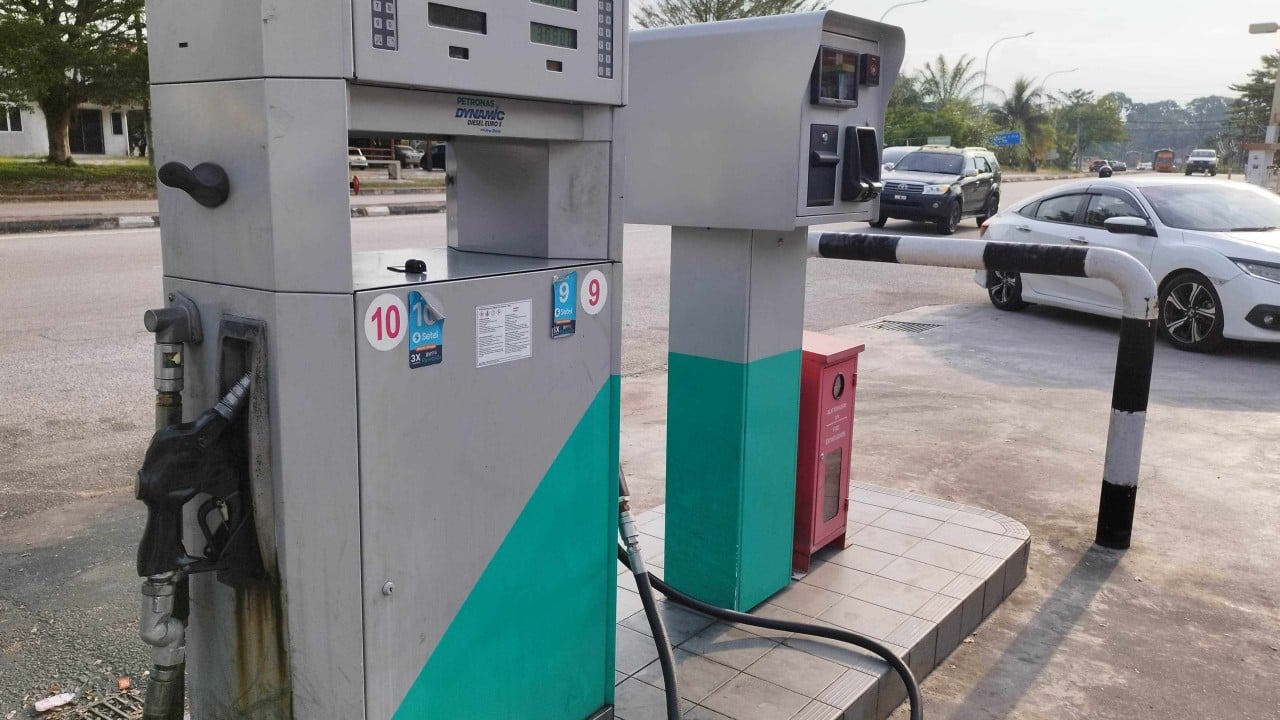
Malaysia’s restructuring of its fuel distribution network exposes a fundamental pivot from blanket fiscal security to targeted point-of-sale data verification. The decision to lower the subsidised retail price of diesel to RM2.10 per litre across all territories from July 2026 represents more than a political calibration to ease household cost-of-living strains. It constitutes an aggressive integration of national biometric identification systems (MyKad) with end-point retail supply chains to resolve a chronic economic hemorrhage: cross-border smuggling and fiscal capital leakage.
Understanding the operational blueprint of this initiative requires evaluating the structural friction of the old subsidy architecture, the engineering of the new MyKad verification mechanism, and the macro-fiscal constraints imposed by external geopolitical disruptions.
The Dual-Price Arbitrage Function
The primary economic vulnerability of Malaysia’s historical fuel subsidy regime lay in regional price differentials. In Peninsular Malaysia, the market-driven, unsubsidised price of retail diesel stood at RM4.37 per litre, while the eastern states of Sabah and Sarawak maintained a static, heavily subsidised rate of RM2.15 per litre. This pricing asymmetry generated an immediate dual-market arbitrage scenario.
The incentive structure for illicit fuel diversion can be modeled by analyzing the net margin available to cross-border smugglers. When the domestic subsidised price ($P_s$) is less than half of the domestic market price ($P_m$), and significantly lower than the market price of neighboring nations ($P_n$), the profitability of illegal export overrides standard regulatory deterrents.
$$\text{Arbitrage Margin} = P_n - (P_s + C_t)$$
Where $C_t$ represents the total transaction and logistical cost of illicit transport. Because the absolute value of $P_s$ was fixed globally by geography rather than individual eligibility, non-citizens, commercial fleets, and transnational networks exploited the physical points of sale along national borders. This structural loophole generated multi-billion-ringgit leakages annually, transforming a domestic social welfare tool into an unintended subsidy for regional commercial entities.
The July 2026 intervention neutralizes regional price variance by establishing a baseline retail price of RM2.10 per litre for eligible citizens nationwide. By matching the price point in Peninsular Malaysia with the East Malaysian states, the state eliminates localized domestic price-hunting. Non-citizens and unqualified commercial entities across all regions face the uniform, unsubsidised floating rate of RM4.37 per litre, immediately deflating the domestic-to-domestic arbitrage incentive.
Point-of-Sale Biometric Integration Architecture
Shifting the enforcement mechanism from a geographic barrier to an identity-based gateway requires substantial technological synchronicity at the pump. The framework leverages the existing infrastructure established by the BUDI MADANI RON95 (BUDI95) petrol programme, utilizing the national MyKad smart card as a cryptographic token for entitlement verification.
The data flow during a standard refueling transaction executes through three distinct architectural layers:
- The Identity Layer: The consumer inserts their MyKad at the outdoor fuel terminal or point-of-sale terminal. The embedded chip confirms biometric validity and citizenship status via an offline or near-real-time verification handshake with the National Registration Department database.
- The Asset Verification Layer: The system queries the Road Transport Department (JPJ) ledger to confirm that the individual possesses an active registration for a qualified diesel vehicle. This prevents non-vehicle owners from acting as structural proxies to extract subsidized fuel for industrial or illicit resale.
- The Ledger and Allocation Layer: Upon verification of identity and asset ownership, the terminal calculates the remaining monthly volume quota allotted to that specific citizen. If the transaction falls within the volume threshold, the dispenser releases fuel at the RM2.10 rate. Any volume exceeding the established quota defaults automatically to the unsubsidised market rate.
The strategic bottleneck shifts from physical border enforcement to system latency and processing reliability at remote retail stations. The micro, small, and medium enterprise sectors—particularly tow-truck operators, small-scale maintenance contractors, and agricultural logistics providers—rely on minimal downtime. A breakdown in terminal connectivity forces businesses to absorb the raw market price of RM4.37 per litre, instantly disrupting short-term cash flows and driving up operational costs.
Volatility Corridors and Macroeconomic Imperatives
The transition to a targeted MyKad framework is executed under severe fiscal constraints. The Ministry of Finance noted that prolonged instability in West Asia has introduced persistent pressure on global crude supplies, creating volatile swings in Brent benchmarks. For an oil-producing but net fuel-importing nation like Malaysia, these global price swings distort the national budget through expanding subsidy bills.
The fiscal pressure curve can be evaluated by examining the net treasury outflow required to sustain a capped retail price. When global crude prices spike, the gap between the market price ($RM4.37$) and the targeted citizen price ($RM2.10$) widens. Even with a targeted mechanism restricting access to citizens, a sustained macro-environmental price surge forces the treasury to allocate increasing volumes of capital to cover the structural deficit per litre.
The policy mitigation strategy shifts from an open-ended financial commitment to a closed-loop volume cap. By rationing the specific number of litres a citizen can purchase at the RM2.10 rate each month, the government caps its maximum fiscal exposure.
$$\text{Maximum Subsidy Liability} = \sum_{i=1}^{N} (P_{m} - P_{s}) \times Q_{max}$$
Where $N$ is the total number of verified eligible citizens and $Q_{max}$ represents the monthly volumetric quota allocated per individual. This formula ensures that even if global supply disruptions push market prices significantly higher, the state’s financial liability scales linearly with market fluctuations rather than exponentially with unmetered public consumption.
Operational Friction and Industry-Specific Volatility
While individual consumers and small-scale traders experience direct immediate relief from the RM2.10 price point, the broader logistics ecosystem faces variable operational friction. The core vulnerabilities within this implementation scheme center on quota allocation accuracy and downstream economic transmission.
The primary risk manifests in the determination of consumption quotas. Industrial sectors, large-scale commercial transport, and cross-border haulers do not scale evenly with individual consumer parameters. For example, commercial passenger bus operators utilize separate, pre-existing frameworks like the Subsidised Diesel Control System (SKDS) to manage fuel costs. The MyKad-driven system explicitly targets individual pickup truck owners, small vans, and independent commercial operators.
Independent operators present a profound tracking challenge. A commercial transport operator running a multi-regional delivery service consumes 100 litres of diesel within a narrow operational window. If the state’s monthly quota configuration underestiates real-world industrial consumption profiles, these micro-enterprises will rapidly exhaust their subsidized allocations mid-month.
The downstream impact of quota exhaustion is an immediate step-up in transportation overhead. Logistics firms operating on razor-thin margins pass these input costs directly to wholesalers and retailers. The consumer price index (CPI), therefore, remains vulnerable to fuel-driven inflation even within a targeted subsidy framework. If the system fails to dynamically adjust quotas based on business type, vehicle weight, and geographical operating distances, it will trigger localized supply-chain blockages.
A secondary challenge is the emergence of a domestic grey market. While the MyKad system successfully bars non-citizens and foreign vehicles from direct access at the pump, it introduces an incentive for structural proxy purchasing. Eligible citizens who do not exhaust their monthly volumetric quotas can theoretically purchase fuel at RM2.10 and illegally resell it to ineligible commercial operators or non-citizens at a premium below the RM4.37 market rate. Curbing this secondary domestic leak requires the Ministry of Finance to implement automated anomaly detection models within the point-of-sale ledger, flagging high-frequency, low-volume purchases that do not align with typical vehicle usage patterns.
The Strategic Path Forward
The long-term success of the Madani government's subsidy rationalization depends on transforming this localized fuel intervention into a broader data-driven economic platform. The implementation must move beyond a static identity check at the pump toward an integrated, responsive pricing model.
The state must prioritize the transition from fixed volumetric caps to a dynamic, income-indexed quota allocation system. By cross-referencing MyKad data directly with real-time tax filings from the Inland Revenue Board (LHDN) and household wealth metrics within the Central Database Hub (PADU), the system can adjust the monthly subsidized volume ($Q_{max}$) relative to an individual's verified economic baseline. High-income individuals driving luxury diesel vehicles should see their quota allocations compressed or eliminated, while low-income logistics providers receive expanded volumetric allocations to prevent supply-chain cost pass-through.
Furthermore, retail fuel stations must be mandated to upgrade terminal hardware to support offline cryptographic validation. In rural zones of Sabah, Sarawak, and the northern peninsular interior, telecommunication network disruptions will inevitably sever real-time database links. If the point-of-sale system defaults to blocking the subsidy during a network outage, it penalizes the vulnerable demographics the policy is engineered to protect. Implementing localized, chip-based secure storage on the MyKad that records transaction balances offline allows the pump to update the central ledger asynchronously once connectivity is restored.
Ultimately, this targeted diesel reform serves as the structural testbed for the imminent rationalization of RON95 petrol. If the execution architecture successfully dampens cross-border leakage, stabilizes fiscal outflows, and maintains supply-chain velocity through the third quarter of 2026, it will provide the definitive operational blueprint for complete national fuel subsidy reform. The government’s fiscal resiliency will no longer be held hostage by geopolitical shocks in global energy corridors; instead, it will be dictated by the processing efficiency of its own data infrastructure.
For a deeper dive into the technological implementation of these systems, you can view this Detailed broadcast on Malaysia's nationwide diesel price adjustment which covers the live ministerial press briefings detailing the transition timelines and MyKad integration protocols across local distribution networks.