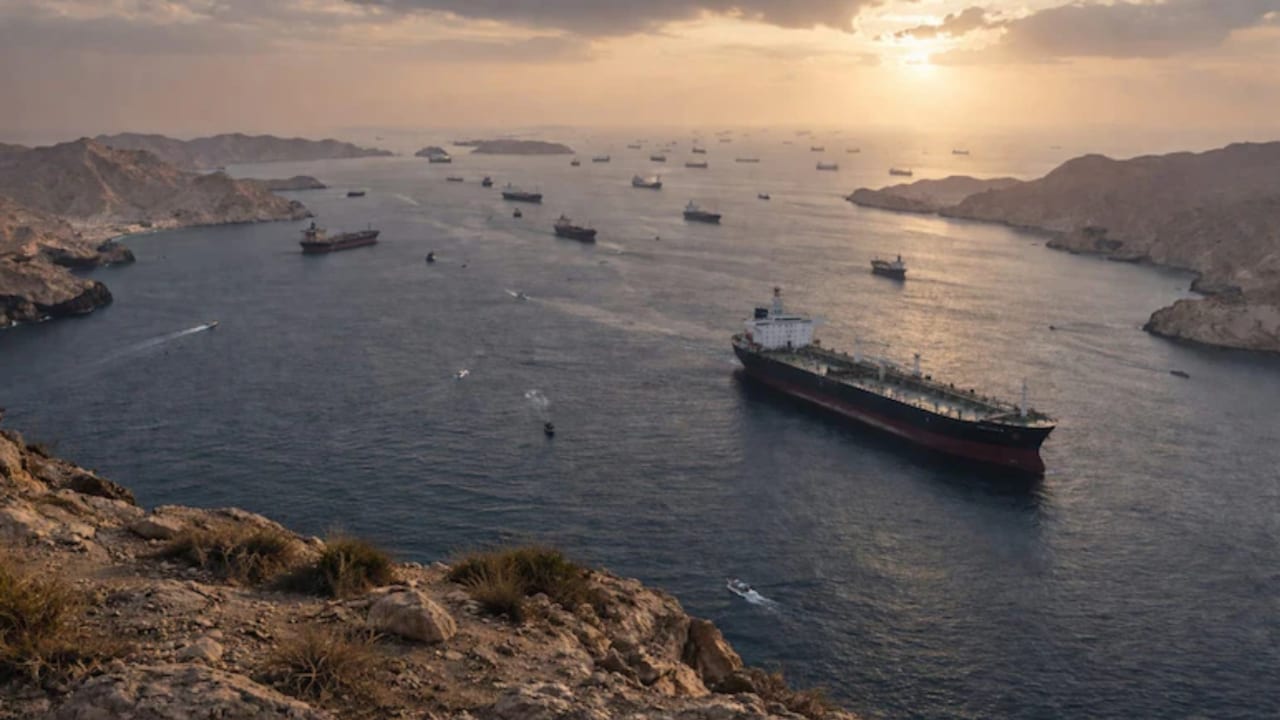
Commercial navigation through the Strait of Hormuz functions on an ultra-thin margin of geopolitical tolerance. When a merchant vessel sustains engine-room structural damage from an unidentified projectile during an outbound transit, the operational calculus for global trade instantly recalibrates. This analysis deconstructs the structural mechanics of the current United States-Iran deadlock, examining how localized kinetic strikes translate directly into macroeconomic friction, insurance pricing shocks, and systemic supply chain reorganization.
The Tripartite Failure of Maritime Security
The modern security architecture governing the Persian Gulf relies on an assumption of open commons. That baseline is fractured. The operational failure decomposes into three distinct vectors: intelligence lag, asymmetrical weaponization, and jurisdictional vacuum.
Commercial fleet operators possess minimal utility in detecting low-signature aerial or surface threats. When the United Kingdom Maritime Trade Operations logs an incident involving an unknown projectile breaching a vessel's machinery spaces, the response is reactionary. Insurance underwriters process these variables by immediately adjusting war risk premiums.
The security deficit stems from an asymmetrical cost equation. Deploying high-end naval defense systems to escort every bulk carrier and crude tanker is economically unviable. Conversely, utilizing low-cost uncrewed aerial systems or shoreline projectiles imposes catastrophic financial risks on commercial targets. This structural imbalance prevents naval patrols from achieving total deterrence.
The Omani territorial waters corridor, where many of these incidents concentrate, introduces a jurisdictional friction point. Local coast guards manage search, rescue, and evacuation protocols, but lack the power projection required to police or stabilize the broader strategic waterway.
The Economic Cost Function of Transit Contraction
Before active hostilities and subsequent Iranian restrictions, throughput averaged over one hundred and thirty vessels daily. Current tracking data reveals daily crossings compressed into single digits. This collapse is governed by a strict cost function where the risk of total hull loss or crew casualties outweighs the marginal revenue of the voyage.
Tanker operators face a binary choice: absorb exorbitant premiums or suspend operations. The economic transmission mechanism operates through three distinct channels:
- Insurance Premiums: Hull and machinery war risk insurance rates scale exponentially with every confirmed strike, turning marginal routes into loss-making ventures.
- Alternative Routing: Rerouting around the African Cape introduces massive ton-mile inefficiencies, expanding transit durations by weeks and burning excess bunker fuel.
- Downstream Energy Pricing: Physical crude markets react instantly to supply restriction signals, keeping Brent crude anchored near elevated thresholds as market participants price in long-term structural deficits.
The deadlock persists because both Washington and Tehran derive strategic utility from the status quo. The United States maintains a posture of enforcement and blockade, while Iran asserts sovereign control over regional access points. Diplomatic channels exchange draft proposals via regional mediators such as Qatar, Oman, and Pakistan, but these talks stall because neither side can compromise on freedom of navigation without signaling weakness.
Systemic Vulnerabilities in Energy Logistics
The global economy remains structurally dependent on the narrow waterway, through which roughly one-fifth of internationally traded petroleum supplies historically transit. When physical transit bottlenecks occur, inventory buffers in consumer nations act as temporary shock absorbers. However, these buffers degrade rapidly.
Refineries optimized for specific heavy or medium sour crudes sourced from the Persian Gulf cannot instantly switch input slates without undergoing capital-intensive retooling. Consequently, a kinetic strike on a single bulk carrier or tanker produces disproportionate panic across global energy futures markets. The pricing mechanism does not merely reflect the loss of a single cargo; it prices in the statistical probability that the next transit will also be interdicted.
Physical logistics cannot be easily substituted by pipeline alternatives. Regional pipeline capacities possess finite throughput ceilings, leaving maritime transit as the only viable mechanism for high-volume export scaling. As long as uncrewed aerial vehicles and unidentified projectiles threaten engine rooms and crew accommodations, the structural capacity of the global energy transport network remains artificially throttled.
Shift operational focus away from speculative diplomatic breakthroughs and model logistics networks around permanent high-risk baselines, locking in long-term multi-hemispheric storage hubs and shifting charter party agreements to incorporate mandatory force majeure indemnities that transfer kinetic risk entirely off the balance sheet of independent shipowners.
Vessel struck by unknown projectile in Strait of Hormuz
This video provides comprehensive on-the-ground reporting and analysis regarding the recent projectile strike on a commercial vessel in the Strait of Hormuz and its immediate impact on regional maritime safety.
http://googleusercontent.com/youtube_content/1
.jpg?itok=SRbAAThA)