Strategic posture shifts in geopolitical conflict zones rely on predictable signaling mechanisms, credibility thresholds, and deterrence economics. When public statements from figures such as Donald Trump reference severe military intervention options against heavily fortified nuclear installations like Iran’s Fordow or Natanz facilities, analysts must strip away political rhetoric to examine the structural mechanics of such threats. This analysis breaks down the actual cost functions, technical bottlenecks, military feasibility constraints, and systemic repercussions of preemptive strikes against hardened subterranean nuclear assets.
The Deterrence Calculus and Signaling Mechanics
External actors utilize verbal escalation as a substitute for or precursor to kinetic action. In the context of Iranian nuclear advancement, threatening total site destruction serves dual purposes: domestic political posturing and international boundary setting.
The mechanics of this signaling operate on a threshold model. If an adversary perceives that enrichment activities have crossed a specific technical line—such as accumulating quantities of uranium enriched to weapons-grade levels—the credible threat of a preventive strike increases. However, verbal warnings must clear high credibility hurdles to alter adversary behavior. Tehran evaluates these statements through the lens of prior military restraint, domestic political vulnerability in Washington, and the operational readiness required to execute such missions.
When a leader hints at utilizing heavy munitions against deep underground sites, military planners assess the statement not for its rhetorical value, but for the resource allocation it implies. Executing operations against hardened facilities requires specialized equipment, prolonged staging periods, and substantial logistical backing. Without visible force posture adjustments, verbal threats remain low-cost instruments with diminishing returns on deterrence.
Technical Constraints of Hardened Subterranean Targeting
Destroying deeply buried facilities demands specialized conventional ordinance or alternative strategic methods. Standard tactical explosives lack the kinetic energy and penetration depth necessary to neutralize installations carved deep into mountain ranges, such as the Fordow Fuel Enrichment Plant.
The primary engineering variable in this equation is rock overburden and reinforced concrete integrity. Neutralizing these targets requires heavy penetrating munitions capable of descending dozens of meters through reinforced barriers before detonation. The logistical chain for deploying these assets involves specific bomber aircraft with limited operational ranges, requiring regional basing rights or extensive mid-air refueling capabilities.
Beyond physical penetration, secondary effects govern operational feasibility. Subterranean nuclear facilities are rarely single-chamber rooms; they represent distributed networks with redundant power supplies, air filtration systems, and localized security rings. A successful strike must account for partial containment failures, potential radioactive dispersion risks if material is present, and the speed at which centrifuges can be relocated or repaired if buried under rubble rather than vaporized.
Economic and Regional Cost Functions
Evaluating a military strike requires examining the full cost function, which extends far beyond the immediate ordnance expenditure. The secondary and tertiary economic shocks create a multi-variable equation involving energy markets, regional alliance stability, and asymmetric retaliation vectors.
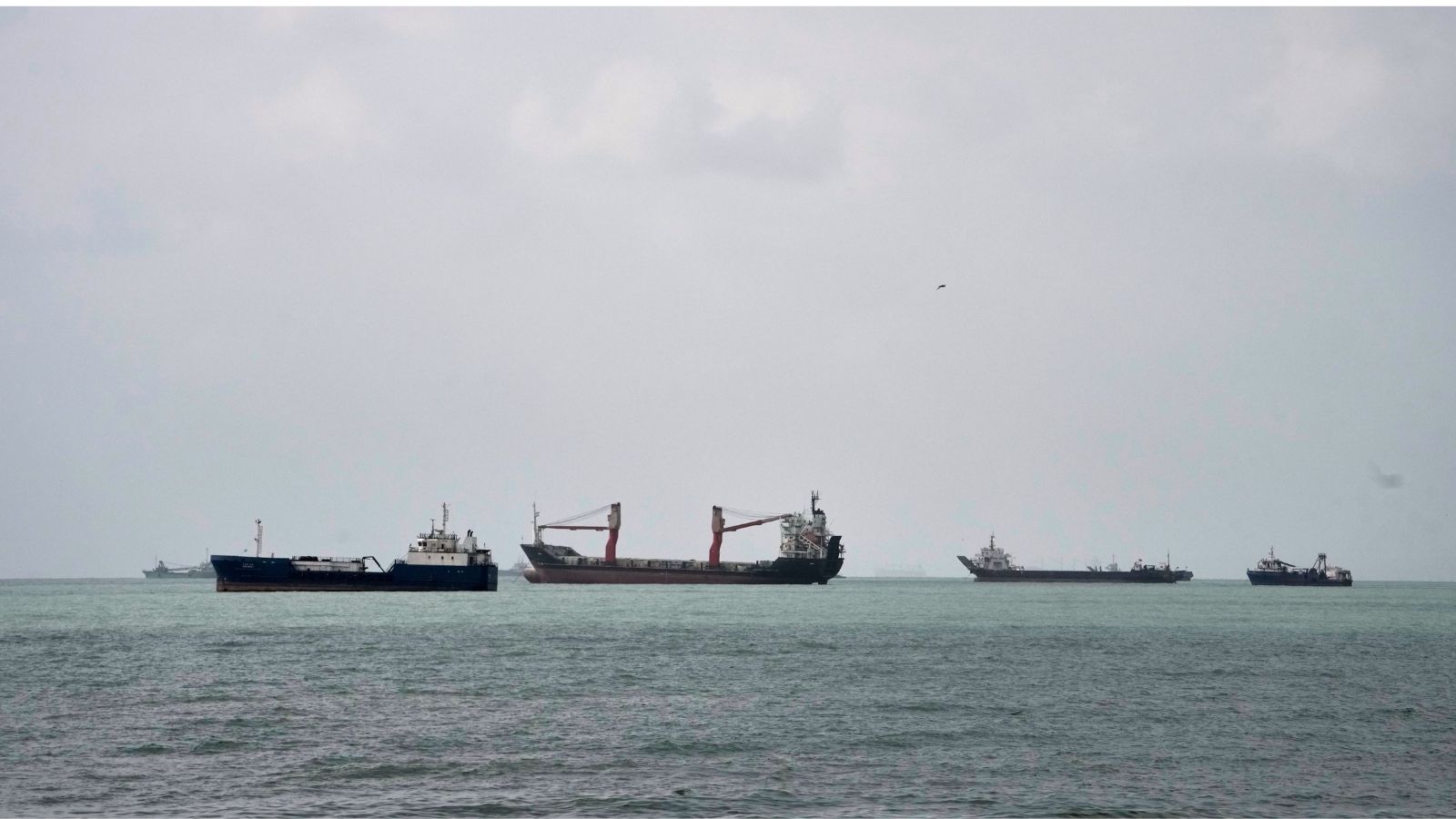
Strait of Hormuz transit security represents the most immediate economic vulnerability. Iran maintains the capability to disrupt commercial shipping lanes through naval mines, fast-attack craft, and anti-ship missile batteries. A temporary constriction of this maritime chokepoint drives instantaneous spikes in global crude oil pricing, transmitting inflationary shocks through Western economies.
Regional escalation pathways introduce further friction. Tehran relies on a network of non-state actors across the Middle East, spanning Lebanon, Iraq, Yemen, and Syria. A direct kinetic assault on sovereign Iranian territory triggers a coordinated response from these aligned factions, increasing security expenditures for allied regional states and forcing the deployment of defensive missile intercept systems at scale.
The Bureaucratic Inertia of Enrichment Programs
A common strategic fallacy assumes that destroying physical infrastructure permanently halts a nuclear weapons program. Nuclear technology is fundamentally an informational asset rather than a purely physical one.
Once domestic research and development cycles achieve mastery over uranium gas centrifugation, isotope separation physics, and detonator design, the knowledge base becomes decentralized. Physical facilities can be rebuilt, and components can be manufactured across decentralized, dual-use industrial networks.
Consequently, kinetic intervention acts as a temporal delay mechanism rather than a permanent terminal solution. Planners must calculate the exact duration of delay purchased by a military strike against the cost of initiating regional war. If a bombing campaign sets back enrichment timelines by two to three years while simultaneously accelerating the adversary political motivation to pursue a dash-to-breakout strategy once covertly reconstituted, the net strategic value approaches zero or turns negative.
Intelligence Gathering and Target Verification Challenges
Precision warfare relies on high-fidelity intelligence architectures. Assessing the operational status of clandestine nuclear programs requires continuous signals intelligence, human intelligence networks on the ground, and overhead imagery analysis.
Discrepancies between visible infrastructure and hidden laboratories create operational blind spots. If intelligence assessments miscalculate the inventory of operational centrifuges or the existence of secondary, undiscovered subterranean sites, a military campaign risks expending high-value ordnance on decoy structures while primary assets remain intact.
The verification problem compounds post-strike. Without boots on the ground to conduct forensic radiological assessments, determining whether a facility has been rendered permanently inoperable relies on remote sensing and intercepted communications, both of which are susceptible to deliberate adversary deception tactics.
Strategic Execution Framework
To counter advanced proliferation efforts without incurring catastrophic regional fallout, decision-makers must balance kinetic options with targeted economic strangulation and cyber-physical sabotage.
Intelligence agencies have historically demonstrated higher long-term effectiveness in delaying covert programs through targeted supply chain disruptions and malicious code deployment than through brute-force aerial bombardment. These non-kinetic methods impose high replacement costs on the adversary while maintaining plausible deniability, thereby avoiding the immediate spiral into total regional conflict.
When evaluating the probability of severe military action against Iranian nuclear sites, analysts should discount public rhetoric and focus instead on tangible logistics indicators: the forward deployment of heavy bomber wings, the prepositioning of aerial refueling tankers, and the evacuation posture of regional diplomatic personnel. Until those operational signatures materialize, threats of site destruction remain bounded within the realm of political signaling rather than active military execution.