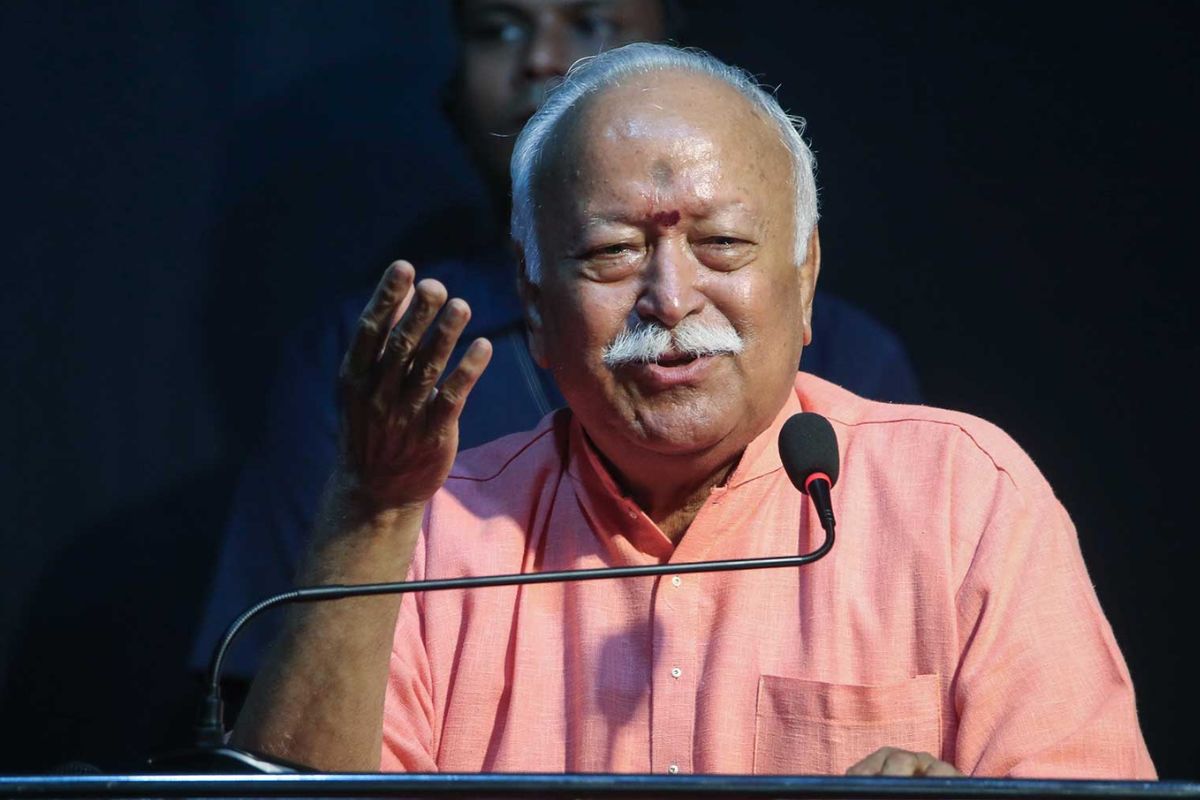
Asif Mahmud, a prominent student leader turned political figure emerging from the tectonic shifts of Bangladesh, recently thrust himself into international headlines by openly questioning the United States visit of Mohan Bhagwat, the chief of India’s Rashtriya Swayamsevak Sangh (RSS). Mahmud did not stop at mere rhetorical critique. He publicly demanded that the United States government impose sanctions on the RSS, labeling the ideological parent of India's ruling party as a transnational threat.
This confrontation represents a calculated escalation in diplomatic friction between South Asian political factions and transnational ideological organizations. To understand why Mahmud chose this specific target, one must examine the intersection of cross-border political posturing, diasporic influence networks, and the shifting calculus of post-uprising regional diplomacy in South Asia.
The Post-Uprising Political Blueprint
The rhetoric coming out of Dhaka has undergone a profound transformation. When student-led protests dismantled the long-standing administration of Sheikh Hasina, a new political vocabulary took root among the interim leadership and activist networks. Figures like Asif Mahmud stepped from street-level activism into positions of state-level influence, bringing with them a combative posture toward external entities perceived as hostile to regional democratic movements.
Targeting the RSS is not a random maneuver. For critics within South Asia, the RSS serves as the ultimate symbol of majoritarian nationalism. By directing his fire outward toward an American tour, Mahmud achieved two distinct objectives simultaneously.
First, he galvanized domestic support by framing foreign ideological movements as active threats to regional stability.
Second, he signaled to international human rights monitors and diaspora coalitions that the new political guard in Dhaka is willing to challenge powerful transnational actors on global platforms.
Decoding the Demand for American Sanctions
The call for American sanctions against a domestic Indian organization is an exercise in diplomatic pressure theater. Washington operates under strict legal frameworks when considering foreign entities for punitive measures under statutes like the Global Magnitsky Act. An ideological volunteer organization with deep roots inside a sovereign allied nation like India does not fit the conventional profile of a sanctioned transnational terrorist syndicate or a corrupt state actor.
Yet, the strategic value of the demand lies outside legislative reality. Mahmud understood the power of placing the RSS on the international radar.
- Diaspora groups in North America opposing majoritarian politics immediately amplify such statements.
- Western human rights organizations are forced to register the friction point in annual reports.
- Bilateral conversations between Washington and New Delhi face added friction when civil society actors inject ideological disputes into statecraft.
By appealing directly to Western jurisdictions, critics of the Indian establishment attempt to internationalize domestic political battles, shifting the arena from local parliaments to global capitals where optics carry heavy weight.
The Transnational Reach of Ideological Organizations
The controversy also underscores a broader reality of modern statecraft. Ideological networks no longer operate within fixed national borders. The RSS and its vast ecosystem of affiliate organizations maintain active shakhas, cultural centers, and advocacy groups across North America, Europe, and the Middle East.
These diaspora networks serve dual purposes. They maintain cultural continuity for expatriate communities while functioning as formidable lobbying forces that shape how foreign governments view Indian domestic policies. When leaders like Mohan Bhagwat travel abroad, these communities mobilize to organize lectures, community outreach, and high-level engagements.
To opponents like Asif Mahmud, this international footprint looks less like cultural preservation and more like an exportable political ideology that warrants intense scrutiny. The friction reveals an underlying anxiety about how diaspora communities influence foreign policy decisions in Western capitals regarding South Asian affairs.
Navigating the Diplomatic Fallout
Reactions to Mahmud's statements were predictably polarized. Supporters hailed the move as a courageous challenge to transnational majoritarianism, arguing that accountability should transcend borders. Critics dismissed the demand as opportunistic grandstanding designed to deflect attention from domestic challenges facing the interim administration in Dhaka.
Diplomatic channels between India and Bangladesh remain delicate. Leaders in New Delhi view external commentary on domestic ideological bodies with deep suspicion, interpreting such remarks as unwarranted interference in internal affairs. At the same time, the shifting political architecture in Dhaka means traditional diplomatic norms are continuously being rewritten by a generation of leaders who prioritize public confrontation over quiet backchannel diplomacy.
The episode demonstrates how easily local political grievances can spill onto the global stage. As non-state actors and newly empowered youth leaders utilize digital platforms and international human rights frameworks, traditional diplomacy must adapt to a landscape where every domestic dispute instantly becomes a global headline.
The pressure campaign launched against the RSS during an American tour highlights a permanent shift in regional politics. Boundaries are porous, digital networks amplify dissent instantaneously, and ideological battles are no longer contained by geography. The demand for sanctions may have fallen flat in Washington committee rooms, but the political shockwaves it generated across South Asia will dictate the terms of cross-border engagement for years to come.