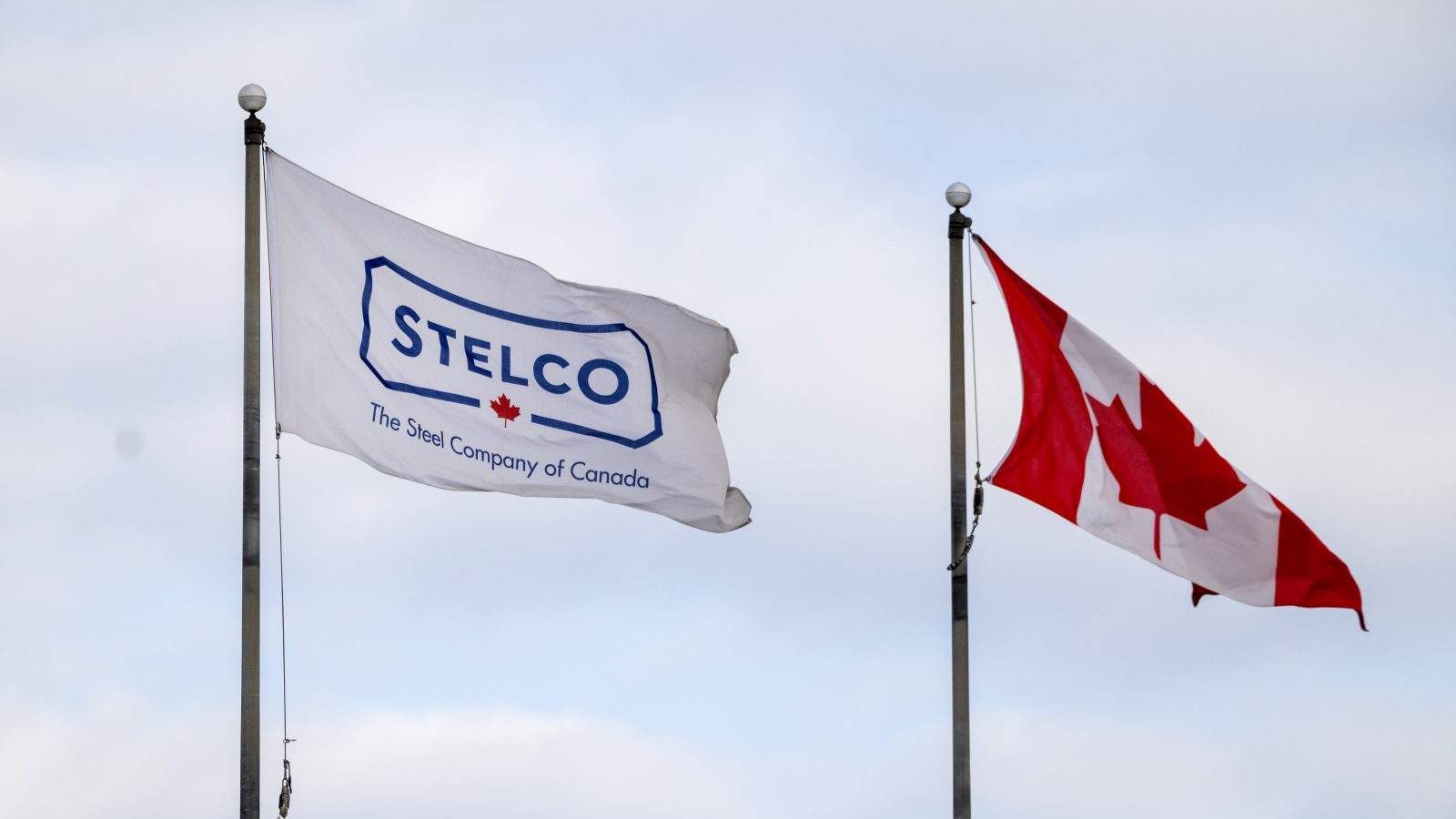
Federal intervention in private corporate restructuring represents a fundamental friction point between state-level economic stewardship and enterprise cost optimization. When a sovereign authority issues an ultimatum to a major industrial producer, the interaction transcends a simple labor dispute; it becomes a test of state leverage, regulatory enforcement capacity, and the economic toll of localized employment contraction. Deconstructing the standoff between the federal government and steel producer operations in Hamilton exposes the structural mechanics of political ultimatums, corporate cost-cutting logic, and the legal constraints governing industrial labor agreements.
The Structural Anatomy of the Ultimatum
The deployment of a strict compliance deadline by a national government is an exercise of coercive diplomacy. Rather than initiating immediate legal proceedings, the state establishes a temporal constraint to alter the calculus of corporate decision-makers. This strategy relies on three distinct operational levers.
The first lever is reputational risk management. Publicly issuing a short-fuse directive forces corporate leadership into a reactive defensive posture, shifting the narrative from operational viability to corporate citizenship. The second lever is the implied threat of statutory or judicial friction. By framing layoffs as a potential violation of historical acquisition commitments or environmental and labor statutes, the state introduces regulatory uncertainty that can impair capital access and stakeholder confidence. The third lever is political signaling. In industrial municipalities where single-employer dependencies dictate local economic health, government intervention serves as a visible defense of regional labor stability.
However, sovereign ultimatums operate within strict legal parameters. Corporations bound by collective bargaining agreements and fiduciary duties to shareholders evaluate federal threats through a cold economic lens. If the cost of legal defense and potential regulatory penalties is lower than the projected losses of maintaining excess production capacity, a corporate entity will often absorb the regulatory friction rather than capitulate to political demands.
The Economic Drivers of Industrial Contraction
To understand why a major steel producer implements sudden workforce reductions, one must examine the cost structure of heavy manufacturing. Steel production is characterized by high fixed capital intensity, volatile input costs for metallurgical coal and iron ore, and cyclical demand fluctuations driven by automotive and construction sectors.
When demand contracts or margin compression occurs, management faces a binary choice: absorb operating losses to preserve operational readiness or rationalize capacity by idling facilities and shedding labor. The decision to execute layoffs is rarely arbitrary; it represents a mathematical optimization designed to defend EBITDA margins against adverse market conditions.
The Fixed Cost Dilemma
In continuous-operation heavy industry, fixed overhead costs—including facility maintenance, property taxes, and baseline energy requirements—remain static regardless of output volume. When order books shrink, revenue declines while fixed overhead per unit produced spikes. Labor adjustments serve as the most flexible variable cost lever available to management.
The Opportunity Cost of Compliance
When a government demands the reversal of workforce reductions under threat of litigation, it introduces an external cost function. The enterprise must weigh two competing financial trajectories:
- Trajectory A (Compliance): Maintaining redundant labor overhead to satisfy political directives, resulting in compressed margins, cash burn, and potential long-term balance sheet distress.
- Trajectory B (Non-Compliance): Absorbing the legal and political fallout, incurring litigation expenses, and risking regulatory retaliation, offset by the immediate operational savings of the restructuring.
If the financial penalties threatened by the state are less than the cumulative wage and benefit liabilities of the disputed positions, economic rationality dictates that the corporation will resist the directive.
The Limits of Statutory Leverage
Federal interventions in private labor disputes frequently collide with existing corporate structures and statutory boundaries. Governments rarely possess direct operational control over private enterprises unless specific public subsidies, loan guarantees, or acquisition agreements grant them ongoing oversight rights.
When historical privatizations or corporate mergers involve binding commitments regarding employment levels or facility maintenance, governments may find a legal footing to challenge structural downsizing. Yet, these agreements typically feature force majeure clauses or economic hardship exemptions that corporations invoke during cyclical downturns.
Consequently, litigation initiated under political duress often bogs down in administrative tribunals and appellate courts. The judicial process moves at a velocity incompatible with the immediate political urgency of a 15-day ultimatum. By the time legal briefs are filed, operational realities on the ground have usually shifted, rendering the initial political posturing moot or forcing a negotiated settlement behind closed doors.
Strategic Execution and Market Realities
The resolution of high-stakes industrial standoffs depends entirely on the alignment of financial leverage and political will. When the state lacks the statutory authority to force operational reversals without assuming financial liability for the enterprise, ultimatums devolve into bargaining chips.
Management teams navigating such environments prioritize long-term asset integrity and market competitiveness over short-term political appeasement. Conversely, governments must balance the immediate imperative of protecting regional constituents against the systemic risk of signaling that private capital is subject to arbitrary political commandeering.
The dynamic establishes a clear predictive framework for industrial labor disputes. As global supply chain volatility and margin pressures intensify, corporate restructuring will increasingly trigger sovereign friction. The outcome is determined not by political rhetoric, but by the underlying balance sheet strength of the enterprise and the precise statutory limits of state oversight.