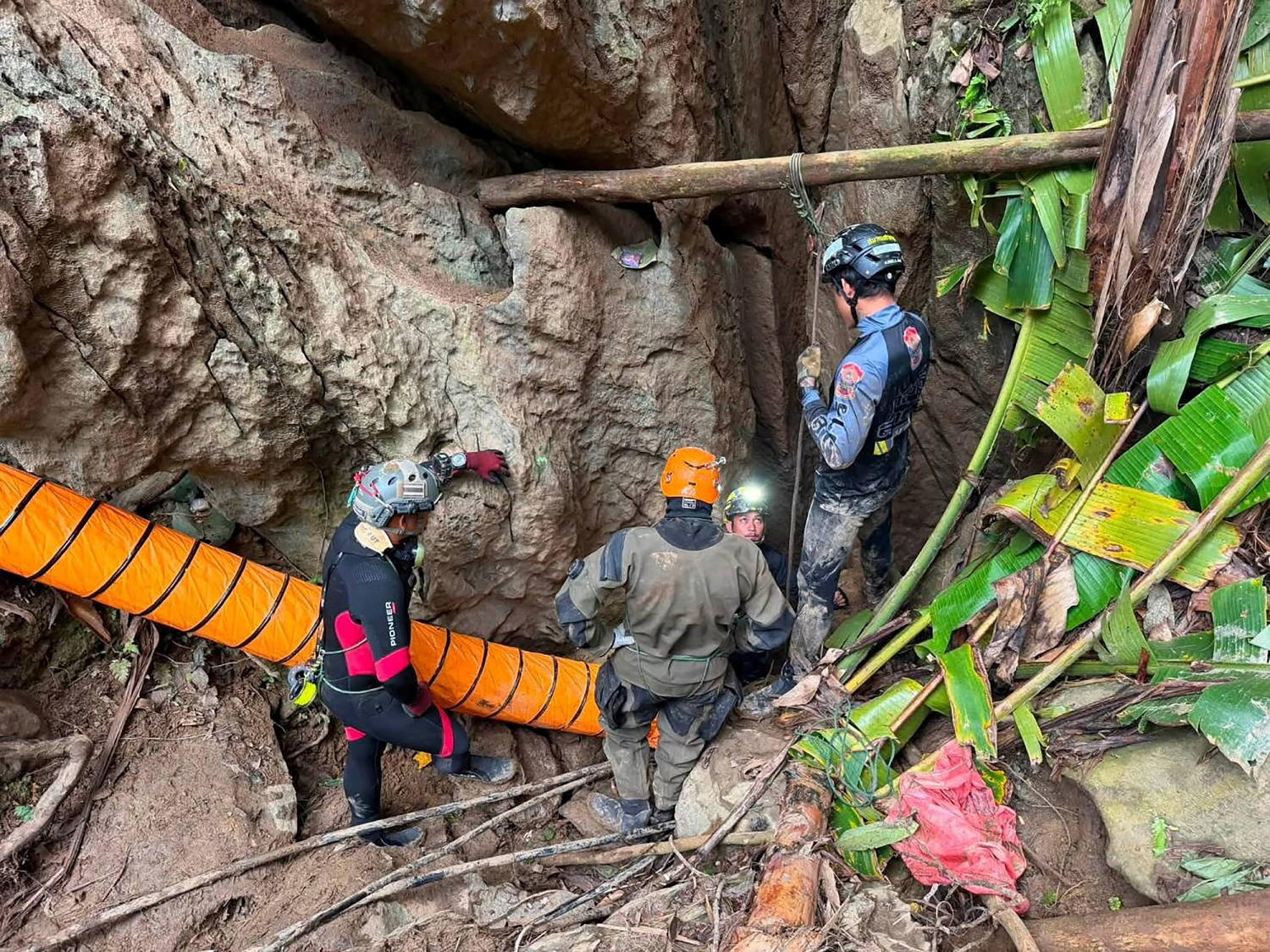
The survival and subsequent extraction of five villagers isolated for over a week in a flooded cave system in Laos represents more than a triumph of human endurance. It serves as a definitive case study in subterranean search and rescue operations. When rising waters trap individuals in karst topography, survival ceases to be a matter of chance and becomes a function of systemic variables: metabolic conservation, microclimate physics, and hydrological engineering.
To understand how these five individuals survived—and how rescue teams successfully localized and extracted them—requires breaking down the incident into its core operational components. The standard media narrative treats these events as miracles; a rigorous analysis reveals them as the predictable intersection of human physiology, environmental constraints, and strategic resource deployment.
The Triad of Subterranean Survival Physics
When individuals are cut off by sudden flooding in a cave system, their survival horizon is immediately dictated by three harsh environmental boundaries. The interaction of these variables determines the maximum theoretical window available to rescuers before mortality rates spike exponentially.
1. The Thermal Equilibrium Bottleneck
Subterranean environments maintain a relatively constant temperature reflecting the regional annual average, but high humidity levels dramatically accelerate heat loss through conduction and evaporation. In tropical cave systems like those in Laos, ambient temperatures may sit between 20°C and 25°C. While this sounds moderate, continuous exposure to 100% relative humidity, combined with wet clothing from initial floodwaters, triggers a slow, insidious form of hypothermia.
The human body loses heat 25 times faster in water than in air. Once clothing is saturated, the air layer that normally insulates the skin is replaced by moisture, forcing the core metabolism to work continuously to maintain a stable temperature of 37°C. The survivors' ability to find an elevated, dry ledge above the high-water mark is the primary reason they survived past day three. By eliminating direct contact with standing water and minimizing conductive heat loss to the stone floor (often achieved by huddling together to reduce total exposed surface area), they stabilized their thermal decline.
2. Atmospheric Stabilization and Gas Dynamics
A critical risk in sealed cave chambers is the alteration of the air mix. In a closed space, five adult humans consume oxygen ($O_2$) and exhale carbon dioxide ($CO_2$), steadily shifting the atmospheric balance.
- Oxygen Depletion: Normal atmospheric oxygen sits at roughly 21%. If a chamber is completely sealed by water, oxygen levels drop. Cognitive impairment begins around 15%, and unconsciousness occurs below 10%.
- Carbon Dioxide Toxicity: More dangerous than oxygen depletion is the buildup of $CO_2$. At just 2% atmospheric concentration, respiratory rates double. At 5%, severe headaches, mental confusion, and panic set in—a catastrophic psychological state in a cave.
The fact that the villagers remained conscious and lucid for over eight days indicates the cave chamber was not a perfectly sealed pneumatic system. Karst limestone is inherently porous, often featuring micro-fissures and secondary upper passages that allow barometric breathing—the natural exchange of air driven by external atmospheric pressure changes—even when the primary entrances are completely submerged.
3. Metabolic Dehydration Horizons
The human body can tolerate caloric deprivation for weeks, utilizing glycogen stores, adipose tissue, and eventually muscle mass to maintain basal metabolic functions. Dehydration, however, enforces a hard stop. The survival timeline without water rarely exceeds 3 to 5 days.
In a flooded cave, water is abundant but presents a dual challenge: contamination and access. Floodwaters carry agricultural runoff, sediment, and pathogens. However, in karst formations, water dripping from stalactites or filtering through upper limestone strata is generally pre-filtered and relatively safe to drink. The survivors managed their hydration by sourcing water from these secondary, clean inputs rather than consuming the stagnant, silt-heavy floodwaters at their feet, avoiding debilitating gastrointestinal infections that would have accelerated fatal dehydration.
Hydrological Mechanics and the Rescue Bottleneck
The operational response to a cave entrapment cannot begin with extraction; it must begin with stabilization of the environment. The rescue timeline in Laos was dictated by a specific hydrological constraint: the transition from dynamic inflow to static or declining water levels.
[Monsoon Downpour] ➔ [Rapid Surface Runoff] ➔ [Sinkhole Inflow]
                                                    │
                                                    ▼
[Saturated Cave Sump] ◄─── [Submerged Passage] ◄─── [Chamber Flooding]
          │
          ▼
[Rescue Bottleneck: Zero Visibility & High Velocity]
The Sump Phenomenon
In cave diving terminology, a "sump" is a passage that is completely filled with water. When a cave floods, multiple sumps can form sequentially, creating a series of underground traps. For rescuers, navigating a sump involves moving through completely dark, restricted conduits where the water is often moving at high velocity due to hydrostatic pressure from upstream inputs.
The primary constraint during the initial days of the Laos operation was visibility. Heavy rains wash topsoil into cave entrances, turning the water into an opaque slurry of suspended solids. Under these conditions, high-powered dive lights are rendered useless by backscatter—the reflection of light off suspended particles—reducing visibility to zero centimeters. Divers must navigate entirely by feel, laying a continuous nylon guide line (a dive line) through the darkness. If a diver loses contact with this line in a high-flow sump, disorientation is immediate and frequently fatal.
Engineering the Water Table
To shorten the diving distance and lower the technical difficulty of the extraction, rescuers must shift the hydrological balance. This is achieved through two concurrent strategies:
- Upstream Diversion: Identifying surface sinkholes and losing streams that feed the cave system, then constructing temporary sandbag dams or using plastic piping to route water away from the subterranean catchment basin.
- High-Volume Pumping: Deploying heavy industrial pumps at the cave mouth. This requires calculating the inflow rate versus the pump capacity. If the cave's natural inflow from the saturated mountain karst is 5,000 liters per minute, and pumps can only move 4,000 liters per minute, the water level will continue to rise despite maximum effort.
The breakthrough in the Laos rescue occurred when surface rain subsided, allowing the inflow rate to drop below the mechanical evacuation rate. This drop breached the sumps, turning completely submerged passages into "semi-sumps" where air pockets formed at the ceiling, allowing rescuers to wade and swim rather than dive technically.
Protocol for High-Risk Subterranean Extraction
Once contact was established and the five villagers were located, the operation shifted from a search phase to a highly technical extraction phase. The physical and psychological condition of the victims at day eight ruled out standard diving procedures.
The Physiology of Diver Panic
Placing an untrained, physically exhausted individual into scuba gear and submerging them in zero-visibility water is a high-probability failure mode. Panic triggers hyperventilation. In a cave sump, hyperventilation leads to rapid depletion of air tanks, regulator spitting (accidentally removing the mouthpiece), and uncontrollable ascending maneuvers into solid rock ceilings.
To mitigate this risk, modern cave rescue doctrine relies on specific staging protocols:
- Medical Stabilization: Before moving victims, they must receive targeted caloric and electrolytic replenishment. Feeding starved individuals solid food can trigger refeeding syndrome—a fatal metabolic shift caused by rapid intracellular potassium and phosphate movement. Rescuers first administer easily digestible glucose gels and electrolyte-dense fluids to stabilize blood pressure and thermal regulation.
- The Buddy Line and Full-Face Masks: If diving is mandatory, victims are equipped with full-face masks rather than standard regulators. A full-face mask seals the eyes, nose, and mouth completely, preventing water ingress even if the patient loses consciousness or panics. The victim is then physically tethered to a rescue diver who manages their buoyancy, orientation, and movement through the sump, effectively turning the victim into a passive cargo payload.
- Sequential Staging: The cave passage is divided into operational zones. Fresh dive teams are stationed at critical bottlenecks or air chambers. Rather than a single diver swimming a victim through the entire system, the victim is passed from one team to the next in an underwater assembly line, minimizing the fatigue of individual rescue assets and ensuring that fresh, clear-headed divers handle the trickiest navigational hazards.
Strategic Operational Recommendations for Karst Region Management
The occurrence of this event highlights a systemic vulnerability in regions characterized by karst topography and seasonal monsoon patterns. To prevent future incidents from escalating into resource-intensive international rescue operations, local authorities must implement a structured risk mitigation framework.
Subterranean Zoning and Seasonal Access Prohibitions
Relying on public awareness or informal warnings is insufficient to manage the risk of cave systems during monsoon transitions. Caves must be mapped and categorized based on their hydrological response profiles. Systems prone to rapid, catastrophic flooding must be physically secured with gated entrances, with mandatory closures enforced between June and October.
Deployment of Sub-Surface Telemetry Systems
Traditional radio waves do not penetrate solid limestone and earth. When individuals are lost underground, locating them visually from the inside is a slow, methodical process that drains rescue timelines.
Governments should invest in low-frequency, Through-the-Earth (TTE) communication infrastructure at high-risk tourist or foraging cave sites. TTE systems utilize ultra-low or very-low frequency (ULF/VLF) electromagnetic waves to transmit text or voice signals directly through hundreds of meters of solid rock. Installing stationary, emergency TTE beacons within known survival chambers (large, high-elevation rooms within cave networks) allows trapped individuals to signal their location instantly, eliminating the multi-day search phase and allowing rescuers to deploy resources directly to the correct extraction hub.


