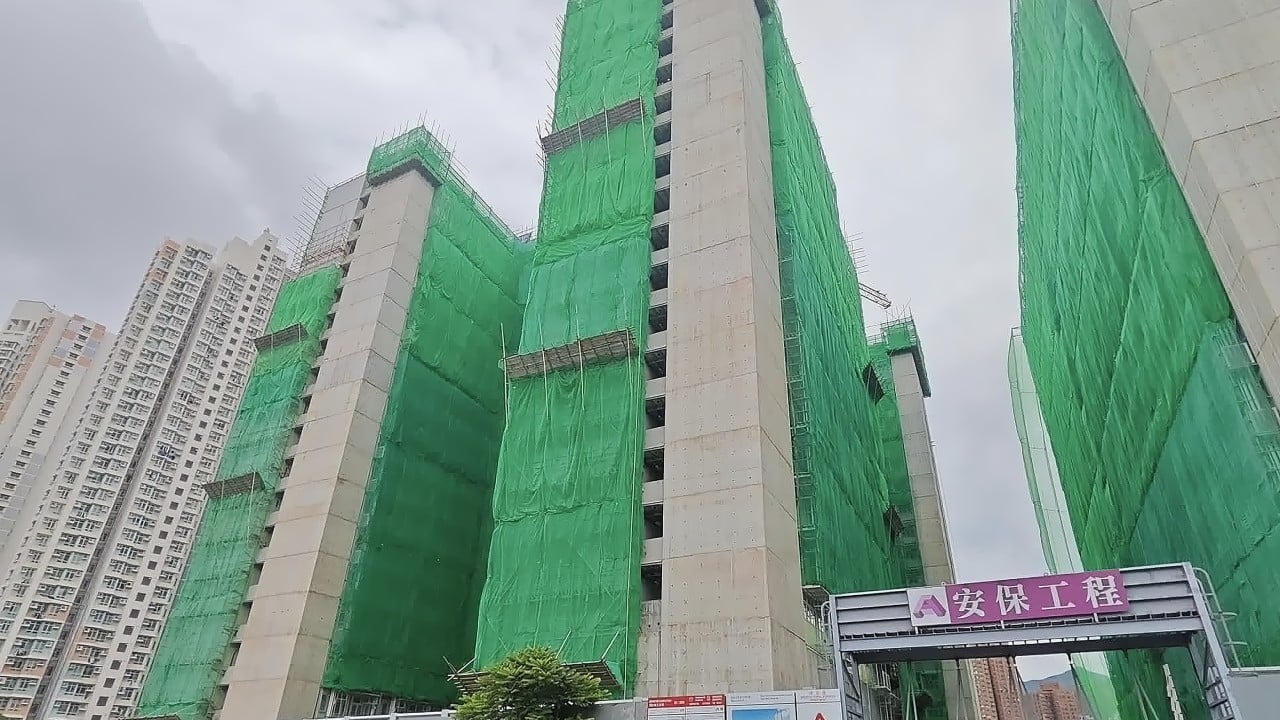
Falls from height account for approximately 49.3% of all occupational fatalities within the Hong Kong construction industry, remaining the single greatest driver of severe industrial trauma (Shafique & Rafiq, 2019). When an operative falls from a building under construction, traditional news reporting routinely treats the event as an isolated incident triggered by immediate human error or localized equipment failure. This narrow analytical lens misdiagnoses the problem. A rigorous structural breakdown reveals that high-rise construction fatalities are the deterministic output of system-level pressures, structural sub-contracting vulnerabilities, and flawed risk-mitigation frameworks.
To mitigate these losses, developers, principal contractors, and regulatory bodies must shift from reactive post-accident penalties to predictive, system-wide interventions. Evaluating these industrial accidents requires a clear breakdown of the multi-layered causal paths that dictate safety margins on high-density urban jobsites.
The Tri-Linear Causal Framework of High-Rise Falls
Industrial accidents do not occur in a vacuum. They materialize when latent systemic defects align with immediate physical omissions. The trajectory of a fatal fall can be mapped across three distinct operational layers.
[Systemic Pressures] ---> [Sub-Contracting Omissions] ---> [Physical Edge Failures]
  - Economic Delivery      - Layered Accountability      - Missing Guardrails
  - Compressed Timelines   - Training Asymmetry          - PPE Non-Compliance
1. Macro Economic and Schedule Pressures
The primary driver of safety degradation is the economic optimization function governing urban developments. In high-density environments like Hong Kong, the financial viability of a project depends directly on labor productivity and vertical cycle times. Empirical data establishes a clear, statistically significant correlation between industrial fatality rates and the gross value of construction work performed per worker (Chiang et al., 2018).
When project timelines compress, site management inherently forces concurrent scheduling—requiring multiple trades to operate simultaneously within the same vertical zone. This structural acceleration creates immediate friction between delivery velocity and risk-mitigation protocols.
2. Multi-Layered Sub-Contracting Asymmetry
Large-scale public and private projects depend on heavily fragmented sub-contracting networks, sometimes stretching four to five tiers deep. This structure causes severe organizational decay:
- Accountability Dilution: The distance between the principal contractor’s safety directors and the tier-four operative creates an information vacuum. Contractual safety mandates are diluted with each subsequent subcontracting layer.
- Operational Training Asymmetry: While tier-one contractors possess the capital to design comprehensive risk assessments, the actual execution falls upon smaller, specialized labor firms. These downstream firms often lack the administrative infrastructure to enforce continuous safety education, resulting in a high concentration of unvetted or improperly trained personnel working at heights (Wang et al., 0).
- Workforce Vulnerabilities: Subcontracting models rely heavily on day-labor mechanics. The structural risk is disproportionately borne by older workers and workers who are new to a specific site, both of whom exhibit elevated vulnerability profiles due to physical wear or unfamiliarity with changing site layouts (Chan et al., 2022).
3. Immediate Physical Edge Omissions
At the terminal level, the final barrier against gravitational acceleration is physical edge protection. A comprehensive analysis of 114 fall-from-height cases indicates that in 98% of analyzed incidents, the event resulted directly from missing or inadequate Risk Mitigation Measures (Zlatar et al., 2019). Within this subset, specific mechanical and procedural failures repeat with high predictability:
- Guardrail and Edge Omissions: Accounting for 65.8% of system failures, this involves incomplete perimeter fencing, un-decked elevator shafts, or poorly secured temporary working platforms (Zlatar et al., 2019).
- Scaffolding and Platform Instability: Representing 60.5% of failures, this manifests as structural compromises in bamboo or modular steel scaffolding systems, often exacerbated by unauthorized modifications made by secondary trades trying to access building faces (Zlatar et al., 2019).
- Personal Protective Equipment (PPE) Deficiencies: Even when active systems (like safety harnesses and anchor lines) are present on site, a critical failure path is the lack of certified tie-off points, which prevents workers from maintaining continuous tie-off.
Technical and Operational Risk Mitigation Matrices
Relying on post-incident punitive measures or manual site audits is an insufficient strategy for high-risk, high-velocity environments. True safety optimization requires moving up the traditional Hierarchy of Controls, using technical engineering interventions rather than administrative mandates.
Replacing Vulnerable Infrastructure with Prefabrication
The most effective method to eliminate vertical fall risks is to reduce the volume of work performed at elevated perimeters. Transitioning from traditional cast-in-place concrete methods to Modular Integrated Construction (MiC) fundamentally re-engineers the risk profile. By manufacturing entire volumetric building units inside a controlled factory environment, up to 70% of the high-risk perimeter work is brought down to ground level. The on-site operational requirement shifts from dangerous structural assembly to heavy precision lifting, reducing worker exposure to unprotected building edges.
Implementing Active Site Monitoring Architecture
Manual safety inspections are episodic, creating temporal blind spots between supervisor rounds. Modern high-rise projects require a continuous, closed-loop technical monitoring framework:
| Technology Layer | Deployment Mechanism | Operational Impact |
|---|---|---|
| Computer Vision (CV) | Fixed site cameras and crane-mounted optics processing real-time video feeds. | Automated detection of missing perimeter guardrails and immediate alerts for personnel working near edges without PPE. |
| Smart Wearables | IoT-enabled safety helmets and harnesses containing tri-axial accelerometers. | Real-time tracking of worker positioning relative to digital geofences, with automated alerts for unauthorized access to high-risk zones. |
| BIM-Integrated Risk Mapping | Linking 4D Building Information Modeling with daily site schedules. | Visual identification of spatial-temporal conflicts, alerting management to zones where concurrent trades will cross high-risk vertical pathways. |
Limitations of Current Institutional Frameworks
While technical solutions exist, their deployment is constrained by economic and structural realities. Understanding these bottlenecks is critical for designing realistic corporate or regulatory strategies.
The first limitation is the capital investment threshold. Outfitting a jobsite with automated computer vision architecture and IoT infrastructure requires a heavy upfront capital expenditure. For tier-one principal contractors, this cost can be amortized across multi-billion dollar portfolios. For tier-three and tier-four sub-contractors, however, these costs are prohibitive under current tight-margin bidding models.
The second bottleneck is structural legacy. Hong Kong’s high-density high-rise construction relies heavily on bamboo scaffolding due to its extraordinary flexibility, rapid deployment speed, and low material cost. However, bamboo scaffolding systems present highly variable structural consistencies compared to engineered steel modular systems. Transitioning an entire domestic workforce away from legacy scaffolding techniques faces intense resistance from deeply entrenched trade guilds and labor networks.
This creates a systemic enforcement loop:
Tight Bidding Margins -> Underfunded Subcontractors -> Legacy Method Reliance -> Latent Site Risks
De-Risking the Project Lifecycle
To systematically reduce high-rise construction fatalities, developers and principal contractors must re-engineer their procurement and site management frameworks through three specific interventions.
First, institute Mandatory Safety-Weighted Procurement Metrics. Eliminate lowest-bidter-win selection matrices for sub-contracting packages. Procurement protocols must allocate at least 30% of total tender evaluation points to verified, auditable safety performance indicators, including past experience modification rates (EMR) and independent third-party safety management certifications.
Second, enforce Digital Permit-to-Work (DPtW) Protocols for High-Risk Zones. All operations involving work at heights above three meters must require a digital permit tied to the site's BIM and IoT framework. A permit should only unlock when matching sensors confirm that localized edge protection is verified, the operative's smart harness is functional, and a dedicated safety competent person is logged into the immediate zone.
Third, establish Contractual Safety-Escrow Accounts. Principal contractors must structurally isolate safety budgets from general operational cash flows. By funding a dedicated, ring-fenced safety escrow account at project inception, sub-contractors can draw down guaranteed milestones for safety infrastructure installation (such as heavy mesh perimeter netting and certified anchorage networks) regardless of delivery schedule fluctuations or material cost overruns.
References
Chan, A. P. C., Yang, Y., Choi, T. N. Y., & Nwaogu, J. M. (2022). Characteristics and causes of construction accidents in a large-scale development project. Sustainability, 14(8), 4449. https://doi.org/10.3390/su14084449
Cited by: 28
Chiang, Y., Wong, F. K., & Liang, S. (2018). Fatal construction accidents in Hong Kong. Journal of Construction Engineering and Management, 144(3). https://doi.org/10.1061/(asce)co.1943-7862.0001433
Cited by: 104
Shafique, M., & Rafiq, M. (2019). An overview of construction occupational accidents in Hong Kong: A recent trend and future perspectives. Applied Sciences, 9(10), 2069. https://doi.org/10.3390/app9102069
Cited by: 147
Wang, Y., Liu, C., Xu, H., Geng, X., Wang, Y., & Liu, Y. (0). Analysis of the causes of falling accidents on building construction sites in China based on the HFACS model. Building construction sites in China based on the HFACS model. https://doi.org/10.3390/2075-5309/15/9/1412
Cited by: 11
Zlatar, T., Lago, E. M. G., Soares, W. A., Baptista, J. S., & Barkokébas Junior, B. (2019). Falls from height: analysis of 114 cases. Production, 29. https://doi.org/10.1590/0103-6513.20180091
Cited by: 35