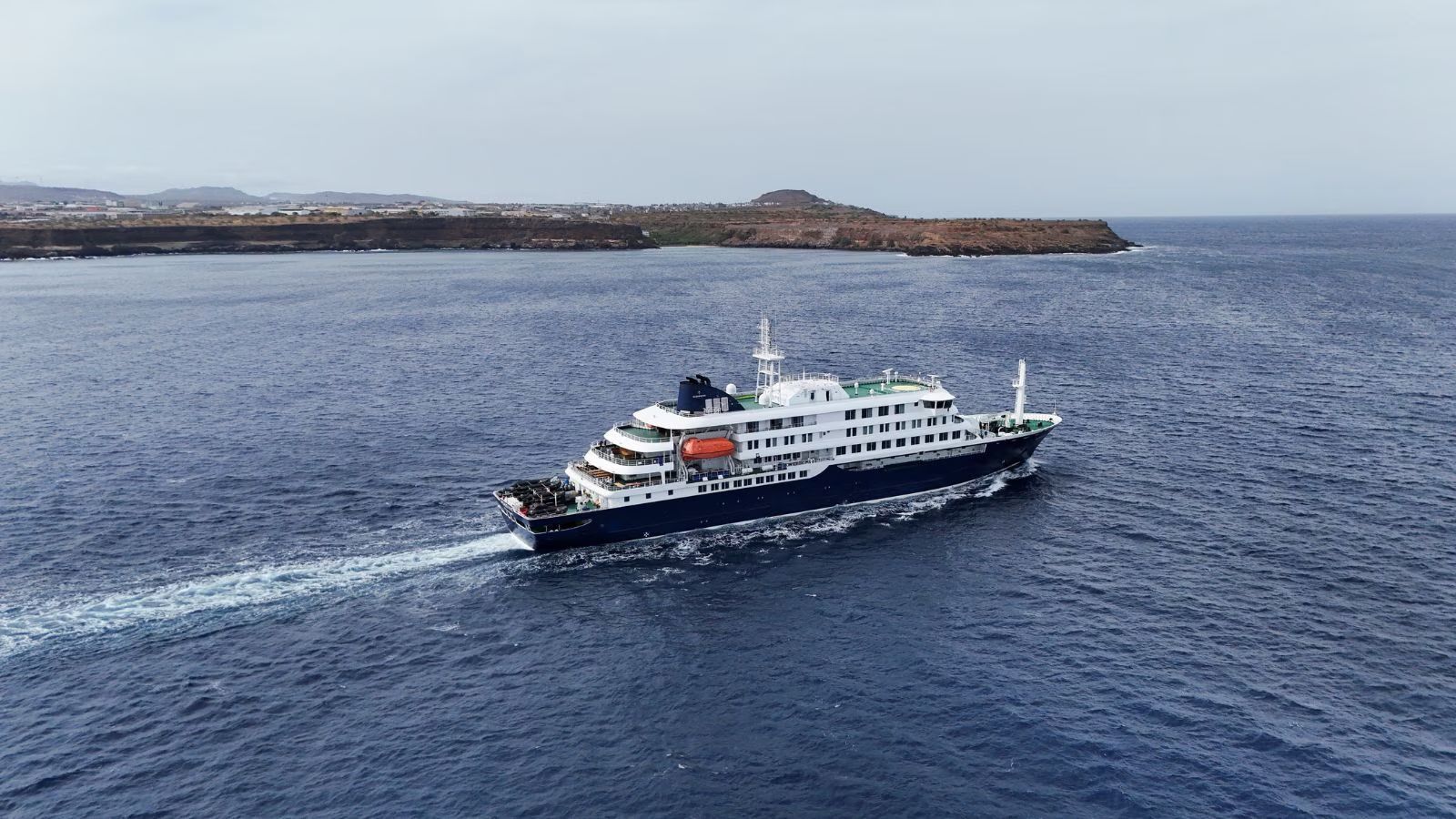
The MV Hondius is currently anchored off the coast of Granadilla, Tenerife, serving as a floating laboratory for a pathogen that should never have been there. As of May 10, 2026, the ship’s 33-day journey from Ushuaia has transformed from a high-end polar expedition into a multi-national bio-containment mission. This is not merely a localized health scare; it is the first significant maritime outbreak of the Andes virus, a specific hantavirus strain capable of jumping from human to human. While the immediate focus remains on the extraction of 147 remaining passengers and crew, the investigative reality points to a systemic failure in how the cruise industry screens for long-incubation "spillover" diseases in remote regions.
The timeline began in silence. On April 1, the Hondius departed Argentina, carrying travelers who had spent weeks trekking through the rural foothills of the Andes—a known reservoir for the long-tailed pygmy rice rat. By April 6, a 70-year-old Dutch passenger fell ill. He died five days later. In a critical diagnostic lapse, his death was initially attributed to "natural causes." This misclassification allowed the ship to maintain its itinerary, making stops at Tristan da Cunha and Saint Helena, effectively turning a quarantined vessel into a slow-moving dispersal vector across the South Atlantic. For a different view, see: this related article.
The Failure of the Incubation Window
Standard maritime health protocols are designed to catch fast-moving pathogens like Norovirus or COVID-19. They are fundamentally unequipped for the Andes virus. This strain carries an incubation period of up to eight weeks, meaning a passenger can carry the virus through an entire month-long cruise without showing a single symptom.
The tragedy of the Dutch couple—both now deceased—highlights the gap in current surveillance. The husband died at sea on April 11. His widow, presumed healthy, disembarked at Saint Helena on April 24. It was only after she boarded a KLM flight in Johannesburg on April 25 that she collapsed and died. By the time gene sequencing confirmed the virus on May 4, the "contact tracing" map spanned three continents and a dozen flights. Related coverage on the subject has been shared by Travel + Leisure.
Human to Human Transmission in Close Quarters
Most hantaviruses require direct inhalation of aerosolized rodent excrement. The Andes strain is the outlier. It is the only variant confirmed to spread through prolonged, close-contact human interaction. On a vessel like the Hondius, designed for social interaction and shared dining, the "close contact" criteria are met by default.
The European Centre for Disease Prevention and Control (ECDC) is now investigating whether the ventilation systems or shared cabin spaces facilitated the infections of a German woman and a British passenger, neither of whom had been part of the initial trekking group in Argentina. If human-to-human transmission is confirmed to have occurred through secondary contact on board, it will necessitate a total overhaul of ventilation standards for expedition-class vessels.
The Granadilla Extraction
The current evacuation at Tenerife is a study in clinical precision. Spain has refused to let the vessel dock at the main Santa Cruz terminal. Instead, the ship sits in the industrial port of Granadilla, where passengers are being lowered into small boats in groups of five. They are not walking through terminals; they are being moved in blue plastic ponchos directly into military buses, then onto the tarmac of the airport.
- United States: 17 Americans are being flown to the University of Nebraska Medical Center’s biocontainment unit.
- United Kingdom: 19 passengers are headed for a 42-day quarantine at Arrowe Park Hospital in Wirral.
- Spain: Spanish nationals have already been transferred to the Gómez Ulla Central Defense Hospital in Madrid.
The 42-day quarantine mandate is a brutal necessity. Because the virus can remain dormant for nearly two months, anything less would risk seeding the virus into European rodent populations. While the WHO maintains the risk to the general public is low because European rodents do not naturally carry the Andes strain, the threat of "spillover" remains a haunting possibility if the virus adapts.
The Cost of the Polar Frontier
The MV Hondius crisis exposes the "frontier risk" inherent in modern expedition cruising. As companies push deeper into remote territories like the Patagonia-Antarctica corridor, they are bringing high-density human populations into contact with zoonotic niches that were previously isolated.
Industry analysts must now reckon with the fact that a passenger’s "pre-cruise" activity is just as dangerous as their time on the ship. The initial infection likely happened in a rustic cabin or during a trek weeks before the anchor was even lifted in Ushuaia. The cruise line’s "SHIELD" response plan, currently at Level 3, is a reactive measure for a proactive problem.
The ship will eventually sail for Rotterdam with a skeleton crew, but the maritime industry cannot simply wash the decks and move on. The legal and insurance implications of a misdiagnosed death leading to a global manhunt for exposed passengers will likely lead to mandatory "pre-boarding" health disclosures that go far beyond a simple temperature check. We are entering an era where your travel history from two months ago is the most important document you carry.
The immediate task is clear: extract the remaining 147 souls and begin the grueling process of 42-day isolation. But the long-term reality is more sobering. The MV Hondius is not an isolated incident; it is a preview of the biological tax that comes with the expansion of global tourism into the world’s most sensitive ecological pockets.