The screen in the darkened operations center did not blink. It shifted color. A tiny, luminous pixel transitioned from a cool, reassuring green to a sharp, aggressive amber. High above the Strait of Hormuz, tens of thousands of feet in the air, a multimillion-dollar piece of American engineering was humming through the upper atmosphere. It was an unmanned surveillance aircraft, a silent observer packed with lenses and sensors designed to watch everything while remaining virtually untouchable.
Then, it simply vanished.
When a military drone is erased from the sky, the immediate reaction is a flurry of technical data. Analysts scramble to calculate trajectories, radar cross-sections, and electronic countermeasures. But behind the cold physics of surface-to-air hardware lies something far older and more deeply human. It is the primal impulse to defend a border, wrapped in the modern clothing of advanced rocketry.
To understand how a machine weighing several tons can be plucked from the clouds, you have to look past the steel and the solid fuel. You have to look at the name written on the side of the battery that brought it down.
The Ghost of the Boundary Line
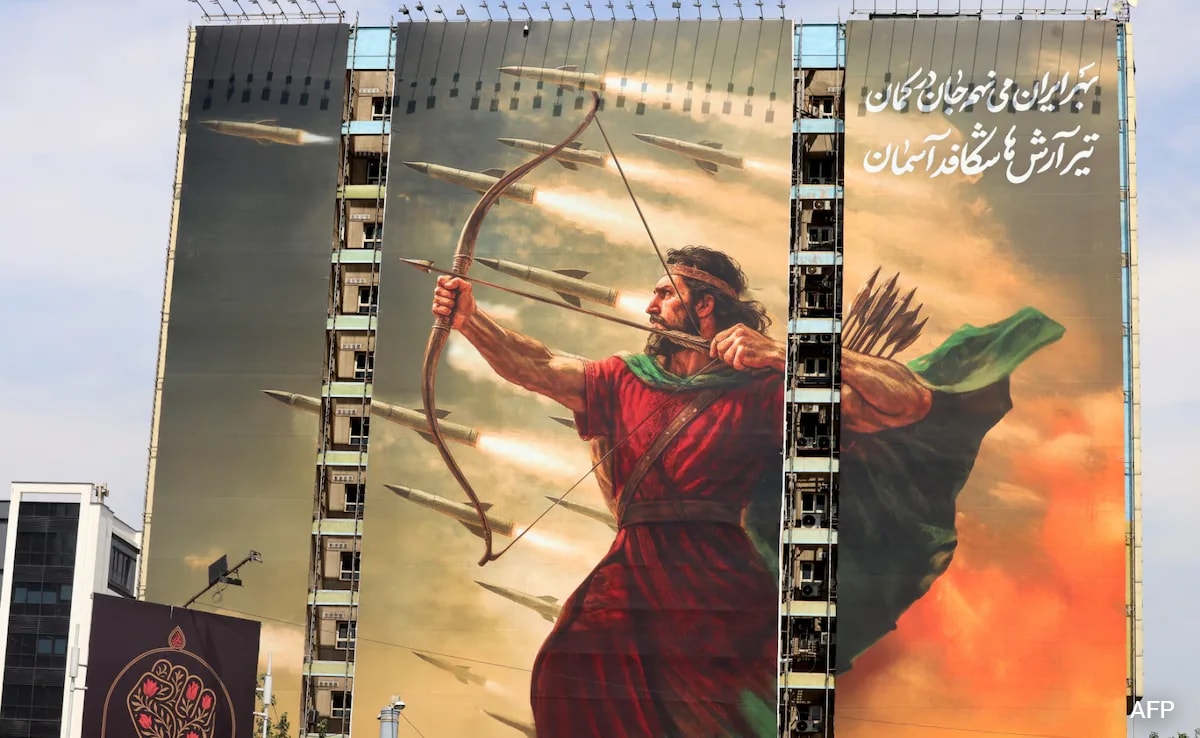
Every culture carries a myth that defines its survival. For Iran, that myth belongs to a man named Arash.
Centuries ago, according to Persian lore, a brutal war between Iran and Turan dragged on until both sides grew exhausted. To settle the bloody dispute over where one nation ended and the other began, they agreed to a bizarre, poetic wager. An Iranian archer would climb to the peak of the Damavand mountain. He would draw his bow and loose a single arrow. Wherever that arrow landed, the new border of the empire would be drawn.
Arash stepped forward. He was not a young man, but he poured his entire life force, his very soul, into the bowstring. He pulled it back until the wood groaned. When he let go, the arrow flew for days, traveling thousands of leagues before embedding itself in the trunk of a distant walnut tree. The border was set. Arash, drained of everything he had to give, collapsed and dissolved into the earth. He became the boundary itself.
Fast forward to the modern era. When the Islamic Revolutionary Guard Corps Aerospace Force unveiled its indigenous medium-range surface-to-air missile system, they did not give it an alphanumeric designation born in a sterile laboratory. They named it the Sayyad-2C, paired with the tactical system known as the Khordad-15, but the soul of the weapon was explicitly tied to the legend. They called it Arash-e-Kamangir.
The Archer.
This is not mere theatricality. In the high-stakes world of geopolitical deterrence, naming a weapon after a mythical border-maker is a calculated psychological statement. It tells the adversary that the machine on the launchpad is not just a collection of radar arrays and solid-propellant boosters. It is an emotional line in the sand.
The Chemistry of the Sky
Consider the sheer kinetic reality of what happens when these two philosophies collide in the stratosphere.
On one side, you have the pinnacle of Western aerospace doctrine. These drones are massive, elegant, and incredibly expensive. They fly at altitudes where the air is thin and freezing, relying on their distance from the earth to keep them safe. They operate on the assumption that the sky is an open highway for those with the technology to climb highest.
On the other side is a defense system built entirely around the obsession with containment.
The Arash system relies on a multi-channeled radar capable of tracking multiple targets simultaneously. Think of it as a metallic spider sitting at the center of an invisible web of radio waves. The radar sends out pulses that bounce off the smooth, radar-absorbent skin of the drone. If even a fraction of that energy bounces back, the system locks on.
The missile itself is a terrifying piece of engineering. It does not need to hit the aircraft directly. Instead, it uses a fragmentation warhead designed to explode just as it passes the target, shredding delicate composite wings and sensitive optical sensors with a hail of high-velocity shrapnel.
When the command is given, the solid-fuel booster ignites with a roar that shakes the desert floor. The missile accelerates instantly, punching through the atmosphere like a needle through silk. The drone, operating on pre-programmed flight paths thousands of feet above, has no pilot to feel the sudden surge of adrenaline, no human instinct to dive or weave. There is only a sudden loss of telemetry. A flatline on a monitor across the world.
The Weight of the Invisible
It is easy to get lost in the specifications. Writers love to compare radar ranges, Mach speeds, and altitude ceilings. But focusing strictly on the hardware misses the point entirely.
The true tension of modern warfare is found in the minds of the people operating these systems. Imagine a young technician sitting in a mobile air-defense vehicle parked amidst the rugged terrain of southern Iran. The air inside the cabin is hot, smelling of ozone and cheap plastic. For months, there has been nothing but routine drills and false alarms.
Then, the radar screen flickers.
The system identifies a target that shouldn't be there. The technician knows that pulling the trigger could ignite a global conflict. They know that the machine they are tracking belongs to the most powerful military on earth. The pressure is suffocating. In that moment, the myth of Arash ceases to be a story from a dusty textbook. It becomes a psychological shield. It convinces the operator that they are not committing an act of aggression, but rather performing a sacred duty to maintain the boundary.
Across the ocean, another operator sits in an air-conditioned trailer, staring at a video feed that suddenly turns to static. They are safe from physical harm, yet the psychological toll is profound. They have just watched a machine worth more than a small town's annual budget vaporize in a fraction of a second, proving that the sky is no longer a sanctuary.
The Broken Blueprint
For decades, Western military strategy leaned heavily on the concept of technological asymmetry. The belief was simple: if your technology is sufficiently advanced, the enemy will not even be able to see you, let alone strike back.
The deployment of the Arash system shattered that illusion.
It demonstrated that regional powers do not need to match the massive defense budgets of global superpowers dollar for dollar. They only need to build systems that are complex enough to exploit the vulnerabilities of over-extended technology. Air superiority is no longer a permanent state of being; it is a temporary condition that can be revoked by a well-placed battery of indigenous missiles.
This realization forces a massive shift in how we think about international airspace. When the sky above a volatile shipping lane becomes a graveyard for unmanned aircraft, the economic and political ripples are felt everywhere. Insurance rates for commercial tankers skyrocket. Diplomats spend sleepless nights drafting carefully worded statements to prevent escalation. The price of crude oil fluctuates based on the movements of mobile radar launchers hidden in the mountains.
The Echo in the Valley
The world moves on quickly from these incidents. The debris falls into the sea, where it is either recovered by diving teams or left to rust on the ocean floor. The analysts write their reports, the politicians deliver their speeches, and the news cycle shifts to the next crisis.
But the underlying reality remains unchanged.
The mountains of Iran still overlook the narrow waters of the strait. The mobile launchers still sit in the shadows of the ridges, their radar dishes turning slowly, searching the blank blue sky for the slightest anomaly. The technology will continue to evolve. Drones will become stealthier, faster, and more autonomous. Missiles will become smarter, longer-ranged, and harder to jam.
Yet, no matter how advanced the hardware becomes, the fundamental conflict remains remarkably ancient. It is the same struggle that played out on the slopes of Mount Damavand all those centuries ago. It is the story of a line drawn in the dirt, a bow strung with immense tension, and an arrow waiting to be released into the quiet air.