The alarm rings at 5:30 AM, a digital screech that shatters the fragile peace of dawn. Marcus rolls over, his thumb already flying across the glass screen of his phone. Within ninety seconds, he has consumed three breaking news alerts, two angry emails from his regional manager, and a social media post from an old college acquaintance who is currently sipping espresso on a balcony in Amalfi.
Before his feet even touch the hardwood floor, Marcus is not entirely human. He is a reactive machine. His chest tightens. His breath shallows. His mind is already a crowded, noisy marketplace of comparisons, anxieties, and phantom obligations.
He believes his unhappiness is caused by the overflowing inbox. He believes it is caused by the rain tapping against the window, or the fluctuating interest rates, or the fact that his flight next week was delayed before it even left the hangar.
He is wrong.
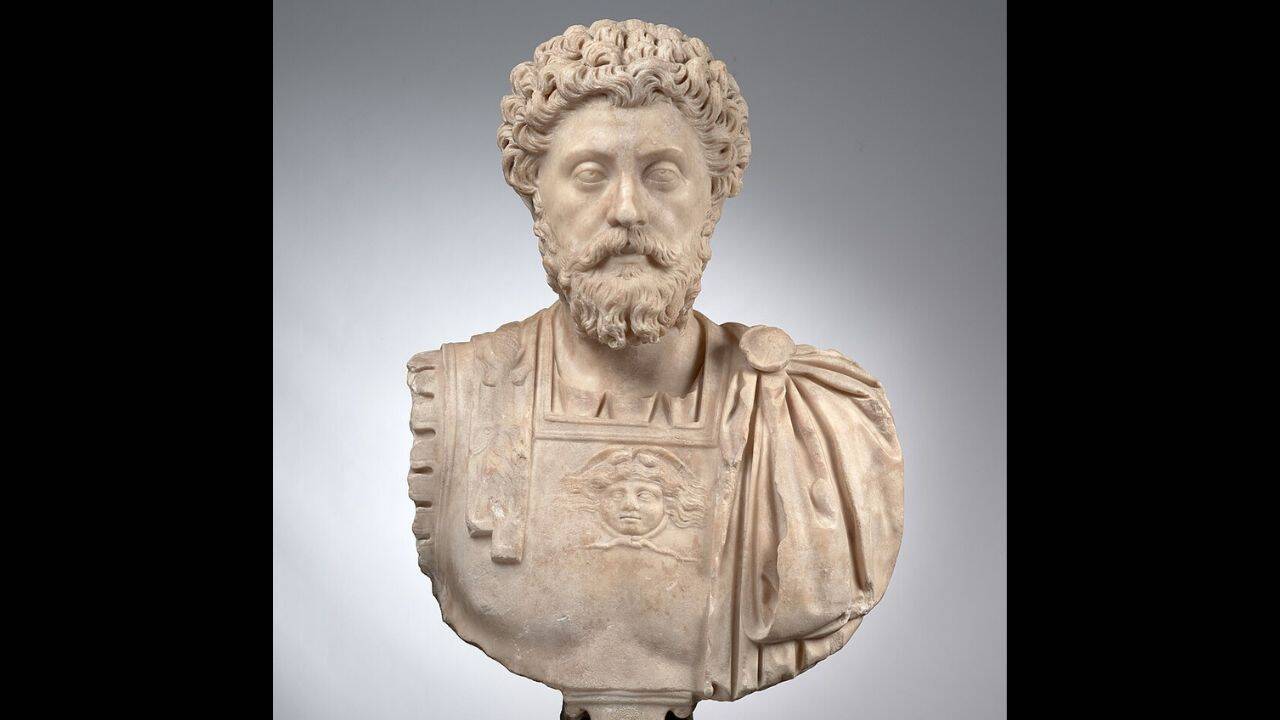
Nearly two thousand years ago, a man sat in a military tent near the frozen borders of the Danube River. He was the most powerful human being on the planet. He commanded legions, controlled the wealth of an empire, and held the literal power of life and death over millions. Yet, as the camp slept and the torches flickered, he did not write laws or battle plans. He wrote to himself.
"The happiness of your life depends upon the quality of your thoughts," Marcus Aurelius wrote in his private journal, a text we now know as Meditations.
He was not writing for publication. He was trying to survive. He was an emperor who understood a brutal, liberating truth that we have spent centuries trying to forget: the world outside our skin is entirely neutral. It simply exists. The misery or joy we experience is a product we manufacture entirely in the dark, quiet factory of our own minds.
The Mirage of the Perfect Condition
We are trained to believe in a simple, flawed equation: Change the circumstance, achieve the joy.
If the bank account hits a specific number, we will finally breathe easy. If the partner stops doing that irritating thing with their keys, peace will descend upon the household. If the promotion lands, validation will follow.
Consider a hypothetical scenario. Let us call her Sarah. Sarah is a brilliant graphic designer who convinces herself that her chronic anxiety is a product of her chaotic apartment and her demanding clients. She saves money, moves to a quiet cottage by the sea, fires her loudest clients, and waits for the serenity to arrive.
The first week is paradise. The second week is quiet. By the third week, the silence begins to echo.
Without the noise of the city to distract her, Sarah realizes the anxiety did not stay behind in her old apartment. It packed its bags and moved with her. It was sitting on the pristine kitchen counter, waiting for her. Why? Because Sarah had spent years cultivating a mental habit of hyper-vigilance. Her mind was an expert at finding threats. In the absence of real ones, it began to interpret the quietest moments as eerie, inventing new worries out of thin air.
The cottage was beautiful. The thoughts were toxic. The result was misery.
This is not a metaphor; it is cognitive science. Neurologists often discuss neuroplasticity, the brain’s ability to reorganize itself by forming new neural connections throughout life. When we spend hours every day practicing frustration, resentment, and worry, we build massive, efficient biological highways for those specific emotions. We become professional complainers, Olympic-level anxiety riders.
We expect a change in scenery to break a deeply ingrained neurological habit. It is like expecting a change of clothing to instantly teach us how to play the cello.
The Anatomy of a Thought
To understand how a mind shapes a life, we have to look at the invisible sequence that occurs in the fraction of a second between an event and our reaction to it.
Imagine you are driving down a crowded highway. Another vehicle cuts you off sharply, forcing you to slam on the brakes. Your heart races. Your hands grip the steering wheel until your knuckles turn white.
In that precise moment, what caused your anger?
Most people would say the driver of the other car. But let us change one variable. Imagine that as the car speeds past, you catch a glimpse through their rear window and see a terrified father frantically trying to keep his choking toddler conscious in the backseat as he speeds toward an emergency room.
The physical event is identical: a car cut you off. Yet, your internal state instantly shifts from blinding rage to deep empathy and concern.
The driver did not change your emotion. Your interpretation did.
Marcus Aurelius called these interpretations assumptions. He argued that if you remove the assumption of injury, the injury itself vanishes. The car cutting you off is just a mass of metal displacing air. The email from the boss is just a sequence of pixels on a screen. The rain is just water falling from a cloud.
We suffer because we overlay these neutral events with a heavy blanket of personal narrative. They did that to disrespect me. This rain ruined my entire weekend. This email means I am going to be fired. We become the authors of our own hauntings.
The Discipline of the Filter
Living a life of high-quality thought does not mean adopting a toxic, smiling optimism that ignores the genuine tragedies of existence. The Roman Stoics were profoundly pragmatic people. They did not pretend that pain didn’t hurt or that grief wasn’t real.
Instead, they practiced an intense, relentless discipline of the mind. They treated their consciousness like a high-security vault, being incredibly selective about what they allowed inside.
Today, we do the exact opposite. We leave the vault doors wide open. We allow algorithms designed by billionaires to manipulate our emotional states for profit. We scroll through outrage, consume tragedy we cannot alleviate, and compare our mundane Wednesdays to the curated, sun-drenched Sundays of strangers.
We are poisoning the well and wondering why the water tastes bitter.
If you want to test the raw power of your thoughts, try a simple, terrifying experiment. Spend twenty-four hours without uttering a single complaint. Do not complain about the traffic, the weather, the temperature of your coffee, or the incompetence of your coworkers. More importantly, do not complain about them in your head.
You will quickly realize how deeply addicted we are to friction. Conflict makes us feel alive. Complaint gives us a false sense of superiority. We believe that by condemning the world around us, we are somehow mastering it.
But the real problem lies elsewhere. Every complaint is a confession of powerlessness. It is an admission that an external event has breached your defenses and dictates how you feel.
The Solitary Emperor
Let us return to the Danube. The man writing by the torchlight was not a monk in a monastery. He was dealing with a devastating pandemic known as the Antonine Plague, which was decimating his population. He was facing betrayal by his closest general, Avidius Cassius. His health was failing, his stomach was plagued by chronic pain, and he had buried eight of his children.
If anyone had the right to claim that their circumstances justified a bitter, miserable mind, it was Marcus Aurelius.
Yet, he refused the luxury of self-pity. He understood that the empire he ruled was temporary, but the empire within his own skull was eternal. He knew that a man could be wrapped in purple silk and still live in a hell of his own making, just as a prisoner in chains could possess a mind that was entirely, beautifully free.
We cannot control the economy. We cannot control the behavior of the people we love. We cannot control the cells in our bodies when they decide to age or fail.
But we own the interpretation.
When Marcus finally closed his journal and stepped out into the cold morning air to face the brutal realities of a crumbling empire, he did so with a quiet, immovable peace. He had already won the only war that mattered.
Consider what happens next when you look in the mirror tomorrow morning. The face looking back at you is not a victim of the day ahead. The lines around the eyes, the tension in the jaw, the heavy weight in the chest—these are not gifts from the world outside. They are the architecture of your own creation.
The doors to the factory are open. You are standing at the controls. You choose the materials. You decide what to build.