The desk in Beijing is quiet at three in the morning. A single amber lamp cuts through the dark, illuminating a stack of intelligence summaries translated from English, Korean, and Russian. To the average observer, this is just another diplomatic outpost in a sprawling bureaucratic labyrinth. But to the man sitting behind that desk, this room is a theater of silent geometry. He does not wear a general’s stars, nor does he stand before flashing cameras to announce a treaty. Instead, he watches. He waits. He calculates the exact angle at which a crumbling alliance in Washington might open a door in Pyongyang.
For years, the conventional narrative in Western capitals cast Beijing as the nervous babysitter of an erratic North Korean regime. We were told that China feared a nuclear-armed neighbor more than anything else, that the Middle Kingdom was just as desperate to muzzle the Kim dynasty as the Pentagon was. It was a comforting story. It placed Washington at the center of the universe, holding the reins of global stability.
Reality is rarely so neat.
Consider what happens when the architect of American foreign policy changes every four or eight years, like a tenant moving out of an apartment and painting the walls a totally different color. Every election cycle brings a new cast of characters who treat decades-old geopolitical realities as a blank whiteboard. They draw arrows, erase them, shout about maximum pressure, and then, inevitably, discover that geography does not pack its bags and leave just because a new president takes the oath of office.
North Korea is not going away. And neither is the permanent, unshakeable reality of China’s shared border with it.
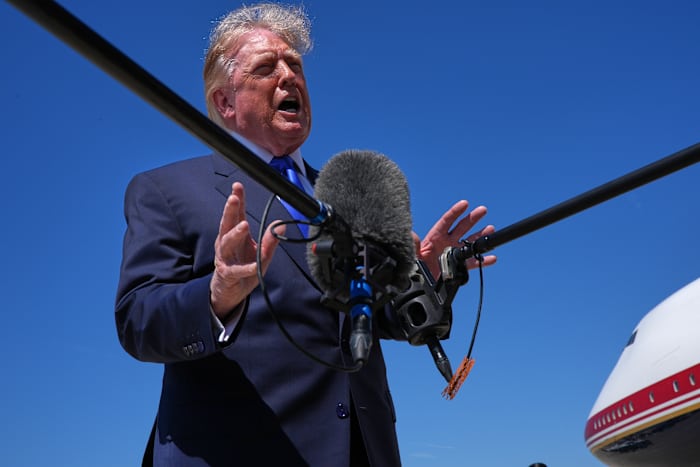
Step back to the dizzying days of 2018 and 2019. Helicopter rotors thudded against the humid air of Singapore and Hanoi. Donald Trump stepped out of his limousine, adjusted his red tie, and strode toward Kim Jong Un across a polished floor. Cameras flashed a billion times. The world held its breath, convinced we were watching the end of the Cold War's last lingering ghost. Commentators in New York and London scrambled for adjectives. History was being made.
Except the choreography had a ghostwriter.
Long before Trump ever tweeted about his "great chemistry" with the young North Korean leader, Kim Jong Un made a quiet, unannounced pilgrimage to Dalian in a heavily armored green train. He sat across from Xi Jinping. They drank tea. They walked along a coastal breeze. In that single, unglamorous summit, the ground rules were established. Beijing made sure that whatever table was eventually built for Washington and Pyongyang, China's interests remained the load-bearing pillar underneath it.
When those summits ultimately collapsed—when the walkout in Hanoi left aides staring blankly at unprinted communiques—Washington blamed North Korea’s stubbornness. But behind the closed doors of Zhongnanhai, there was a quiet, almost imperceptible sense of satisfaction. The erratic American president had proven the limits of his own unilateralism. He had tried to bypass the regional heavyweight, cutting a direct deal star-to-star, and he had hit a wall.
Now, the calendar turns. The political winds in the United States shift once more. Whispers out of Mar-a-Lago and foreign policy salons suggest that if Trump returns to power, the spectacle of personal diplomacy might be resurrected. The old showman may look at the Korean Peninsula and see an unfinished canvas, a chance to claim the Nobel Prize that eluded him.
And standing just offstage, smoothing his lapel, is Beijing.
To understand why China is uniquely positioned to broker or facilitate the next Trump-Kim handshake, you have to abandon the childish view of international relations as a playground fight between good and evil. Think of it instead as an eternal game of Go. In Go, you do not win by destroying your opponent's pieces in a flashy explosion; you win by surrounding intersections, controlling space, and making your presence so utterly indispensable that no move can be made without your permission.
Trade data tells a story that diplomatic cables often obscure. Despite international sanctions, despite pious resolutions passed in glass towers in New York, the economic umbilical cord connecting Dandong to Sinuiju never truly frayed. Trucks rumble across the Friendship Bridge every single night. Fuel flows. Food arrives. When North Korea needs to breathe, Beijing loosens the collar just enough to keep the patient alive, but not enough to let him wander off.
This is the leverage that Washington perpetually underestimates. American strategists think in terms of sticks and carrots: sanctions relief for denuclearization. It is a transactional, capitalist mindset applied to a dynastic fortress that views survival through the lens of centuries, not fiscal quarters.
Imagine a hypothetical briefing room in the State Department today. Analysts pore over satellite imagery of Yongbyon. They debate whether Kim has enriched enough plutonium to build six more warheads or seven. They draft stern condemnations. They coordinate with weary counterparts in Seoul and Tokyo. Everyone is sweating the details, running frantic simulations on secure servers to game out the first hundred days of a hypothetical second Trump administration.
Down the hall, nobody is asking the one question that actually matters: What does Beijing want out of the next photo-op?
Because if a second Trump term materializes, the dynamic will be fundamentally different from 2018. China is no longer simply managing a troublesome neighbor or watching nervously from the sidelines. Beijing is locked in a sprawling, systemic techno-economic cold war with the United States. In that context, a stable, nuclear-armed North Korea that keeps American aircraft carriers tied down in the Sea of Japan is not a strategic liability for China anymore. It is a fixed asset.
Yet, paradoxically, Xi Jinping also cannot afford total chaos. An outright military miscalculation between Washington and Pyongyang on China's doorstep would be catastrophic. Therefore, Beijing's sweet spot is managed tension—just enough friction to keep the United States distracted in Asia, but controlled tightly enough that no missiles actually land in Seoul or Tokyo.
This is where the handshake comes in.
If Trump decides he wants his dramatic reconciliation back—if he hungers for the front pages and the roar of a crowd—he will find that the door to Pyongyang does not open with an American key. It opens in Beijing.
Think back to the body language in those historic meetings. Kim Jong Un was often isolated, relying on translators who looked nervously at their notepads. But whenever things got complicated, look at where his diplomatic signals went. The quiet consultations with his handlers were never far away. The North Korean state is dependent on China for ninety percent of its trade. You do not bite the hand that feeds you your daily bread, especially when that hand is also the only shield standing between you and total economic strangulation.
If a new diplomatic overture begins, the choreography will be exquisite. First, subtle signals dropped in state media editorials. Then, an unannounced visit by a high-ranking Chinese envoy to Pyongyang, bearing quiet assurances and updated shopping lists. Finally, a nod of approval from Beijing to Washington, signaling that the supreme leader in Pyongyang is ready to talk.
The West will call it a breakthrough. The pundits on cable news will dust off their old talking points about the power of personal relationships and deal-making charisma.
They will miss the point entirely.
The man sitting in the dark office in Beijing will not be looking for glory. He will not care about headlines or television ratings or whether the handshake happens in the Demilitarized Zone or a neutral European capital. He will simply watch the chess pieces slide into place, knowing that whether the Americans come or go, whether the sanctions tighten or slip, the physical geography of the map remains unchanged.
The border runs north of the Yalu River. The trains keep rolling through the mist at dawn. And the architect in the shadows remains right where he has always been, holding the pen that writes the terms of engagement for a world that refuses to see how the game is actually played.