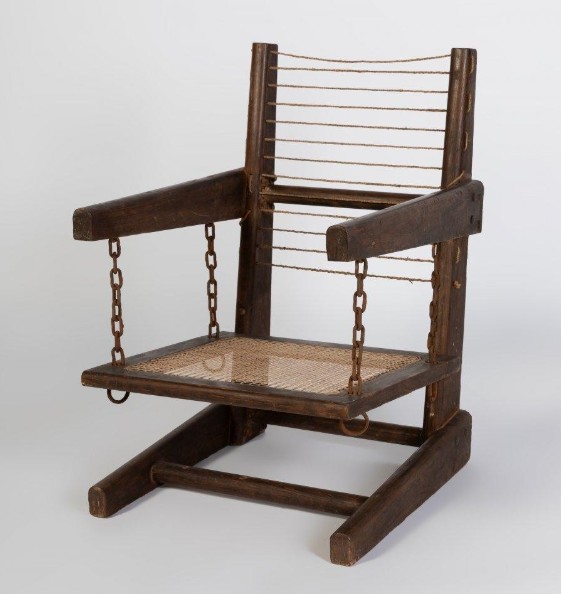
The tactical suspension of a Paris auction featuring two Pierre Jeanneret-designed armchairs demonstrated that direct state-level diplomatic intervention can temporarily disrupt the unsanctioned trade of cultural property. However, the subsequent scheduling of fresh auctions in Los Angeles and Barcelona less than a fortnight later reveals a critical structural flaw: reactive diplomatic friction does not dissolve global demand. Instead, it alters market velocity. When the Ministry of External Affairs and India’s Permanent Delegation to UNESCO halted the sale by François Epin, they established a narrow legal precedent. They did not, however, mitigate the regulatory arbitrage and supply-chain transparency issues that allow Chandigarh's modernist artifacts to routinely resurface in international showrooms.
The global trade in mid-century heritage furniture operates on a highly responsive decentralized network. Interventions that target individual auction houses treat the symptom of asset leakage rather than the systemic market incentives driving it. To understand why Chandigarh's heritage remains highly vulnerable despite a 2011 Ministry of Home Affairs export ban, we must dissect the economic pillars of the trade, the limits of bilateral diplomatic property enforcement, and the logistics of provenance masking. Learn more on a related subject: this related article.
The Three Pillars of Value Extrapolation
The hyper-valuation of Chandigarh heritage furniture—where utilitarian institutional objects designed in the 1950s and 1960s command thousands of dollars—is sustained by three distinct capital dynamics.
+-----------------------------------------------------------------+
|                    VALUE EXTRAPOLATION MODEL                     |
+-----------------------------------------------------------------+
|  1. SCARCITY ARCHITECTURE                                       |
|     Fixed supply bound to Le Corbusier & Jeanneret's master plan |
+-----------------------------------------------------------------+
|  2. PROVENANCE STENCILING AND DEGRADATION PREMIUM              |
|     Physical markings (e.g., "SLMB", "PU Chem/55") convert      |
|     institutional wear into immutable proof of authenticity     |
+-----------------------------------------------------------------+
|  3. JURIDICAL EMBARRASSMENT PREMIUM                             |
|     Contested legal status increases elite demand and status    |
|     signaling among specialized collectors                     |
+-----------------------------------------------------------------+
Scarcity Architecture
The supply of original Pierre Jeanneret furniture is fundamentally finite. Designed specifically for the public infrastructure of Chandigarh’s Capitol Project, Panjab University, and administrative complexes, these items were built from local Indian teak and cane to withstand regional climates. Because the production window was closed decades ago, the market operates on an inelastic supply curve. Every item successfully repatriated or locked in institutional storage permanently reduces the circulating global inventory, mechanically driving up the clearing price of remaining lots in the West. Further analysis by MarketWatch delves into comparable views on this issue.
Provenance Stenciling and Degradation Premium
In traditional luxury furniture markets, physical damage and wear reduce an item's valuation. In the Chandigarh heritage segment, institutional distress acts as a primary vector of value confirmation. The desk and chair lot listed by Los Angeles Modern Auctions (LAMA) features the original institutional stencil marking "SLMB" (State Legislature Members Block). Similarly, the armchairs halted in Paris bore markings "PU Chem/55" and "PGI/W/CH-0202".
These stencils function as an immutable ledger. They convert what would otherwise be generic mid-century carpentry into verified artifacts of a UNESCO World Heritage ecosystem. The physical weathering—scratches, minor cracks, and original patina—serves as forensic proof that the item was deployed within the master plan, neutralizing the risk of modern replicas and command-premium counterfeits.
The Juridical Embarrassment Premium
The risk profile of an asset influences its market profile. When an item faces potential diplomatic contestation, its visibility among elite collectors increases. The public tension between Indian municipal authorities registering First Information Reports (FIRs) and Western auction houses proceeding with public lots creates a unique status-signaling mechanism for buyers. Acquiring a contested piece of Jeanneret furniture functions as an assertion of property rights over sovereign cultural claims, maintaining high demand within elite circles in the United States and Western Europe.
The Asymmetric Friction Bottleneck
The administrative architecture used by Indian authorities to counter these sales is structurally unsuited for the speed of modern art markets. The mechanism relies on a chain of manual escalations: local activists discover listing catalogs, alert municipal administrators, who then prompt state officials to draft representations to the Ministry of External Affairs, which finally instructs localized foreign missions to petition auction houses or foreign courts.
This reactive model introduces a fatal operational bottleneck.
[Activists Flag Catalog] ---> [Municipal Review] ---> [State Administration Approval]
                                                                   |
[Auction Hammer Falls] <--- [Embassy Action] <--- [MEA Directive] <+
As a result, the strategy fails when confronted with concurrent, cross-jurisdictional listings. The current deployment of lots across two distinct legal domains—the United States (governed by state-level property laws and federal import regulations) and Spain (governed by civil law codes and European Union cultural heritage directives)—tests the scalability of this model.
While the Indian Embassy in Paris could leverage specific French domestic mechanisms and direct UNESCO proximity to freeze the François Epin sale, replicating this outcome simultaneously via the Indian consulates in San Francisco and Barcelona requires parallel coordination under tight deadlines. LAMA’s auction in Los Angeles and Setdart’s auction in Barcelona close within days of one another. The institutional response time required to file formal police complaints, establish chains of custody, and deliver diplomatic demarches across two drastically different legal systems creates an structural advantage for the auction houses.
Provenance Masking and Regulatory Arbitrage
The persistence of these auctions highlights a fundamental policy failure: the inability of domestic statutes to project legal authority beyond national borders without explicit multilateral treaty triggers.
The Antiquities Act Deficit
Under India’s Antiquities and Art Treasures Act, 1972, an item must be at least one hundred years old to be legally classified as an antiquity. Because the Chandigarh furniture was fabricated during the mid-20th century, it falls outside this statutory classification.
Consequently, international bodies like UNESCO and INTERPOL cannot deploy standard illicit-traffic protocols that automatically apply to ancient temple artifacts or archaeological assets. The 2011 Ministry of Home Affairs order bans the export of these items, but this operates as an internal administrative directive and customs control mechanism rather than an international property right law. Once a piece clears Indian borders—whether through historical systemic pilferage, misdeclaration of cargo, or legacy liquidations—it enters international commerce as general modern design commodity.
The Mechanism of Regulatory Arbitrage
International auction houses exploit the legal gap between an internal administrative ban and a formal statutory antiquity classification through deliberate provenance configurations.
- The Historical Gap Gambit: Catalogs frequently describe the items as "acquired from Chandigarh in the late 1990s or early 2000s," a period prior to the heightened awareness and formal domestic restrictions. This establishes a narrative of good-faith acquisition before the current legal disputes took shape.
- Jurisdictional Hopping: If a specific European nation intensifies its scrutiny of cultural property imports, logistics networks shift the inventory to jurisdictions with looser title verification requirements or higher burdens of proof for foreign sovereign claimants.
- Secondary Market Dispersal: Once an item passes through an open auction in a secondary market (such as Brussels, Italy, or Luxemburg), the subsequent bill of sale provides a clean title legacy. When the item later reappears at premier venues in London, Paris, or Los Angeles, its immediate provenance points to the European gallery rather than an illicit exit from a Punjab government office.
Strategic Action Framework
To transition from high-friction, reactive diplomatic interventions to a permanent suppression of the unsanctioned trade, the Indian state must construct an institutional framework that alters the economic feasibility of trafficking Chandigarh heritage.
1. Digital Registry Tokenization
The Chandigarh Administration must convert its 2012 Heritage Inventory Committee data—which documented 12,793 original items—into a publicly accessible, cryptographic database. Every physical asset still in the custody of Panjab University, the Secretariat, the High Court, and the Vidhan Sabha must be cataloged with high-resolution imagery, exact dimensions, and its institutional stencil numbers.
By publishing this ledger globally, auction houses can no longer claim ignorance regarding an item's provenance. A failure to check a lot against the active state registry before listing establishes immediate bad faith, exposing the auctioneer to domestic fraud and receiving-stolen-property liabilities under local Western laws.
2. Bilateral Cultural Property Agreements (CPAs)
Relying on the 1970 UNESCO Convention is insufficient due to the age of these modernist assets. The Ministry of External Affairs must negotiate specific bilateral cultural property protection agreements with the primary destination markets: the United States, the United Kingdom, France, and Spain. These agreements must explicitly expand the definition of protected cultural property to include mid-century state-sponsored architectural design components, matching the protections typically reserved for traditional antiquities.
3. Domestic Enforcement and Inventory Audits
The ongoing leakage of items—evidenced by the sheer frequency of international sales throughout 2024, 2025, and into 2026—points to internal supply chain vulnerabilities. Municipal authorities must implement mandatory bi-annual physical audits of all institutional furniture.
Any unaccounted-for item must trigger an immediate asset-loss protocol, linking local police investigations directly to international border control frameworks. Transforming these items from forgotten office furniture into strictly monitored state property reduces the internal opportunities for unauthorized removals.
The Paris intervention was a proof of concept for diplomatic leverage, but it remains an isolated success within an ongoing structural drainage. Until the legal status of these objects is elevated to match their international market value, the administrative machinery will continue to lag behind the global network of specialized auction houses.
How India Stopped Chandigarh's Heritage Chairs From Being Auctioned in Paris
This video provides critical background context regarding how the Chandigarh furniture transformed from neglected public office items into highly valued international collector's pieces, illustrating the exact supply chain vulnerabilities discussed above.