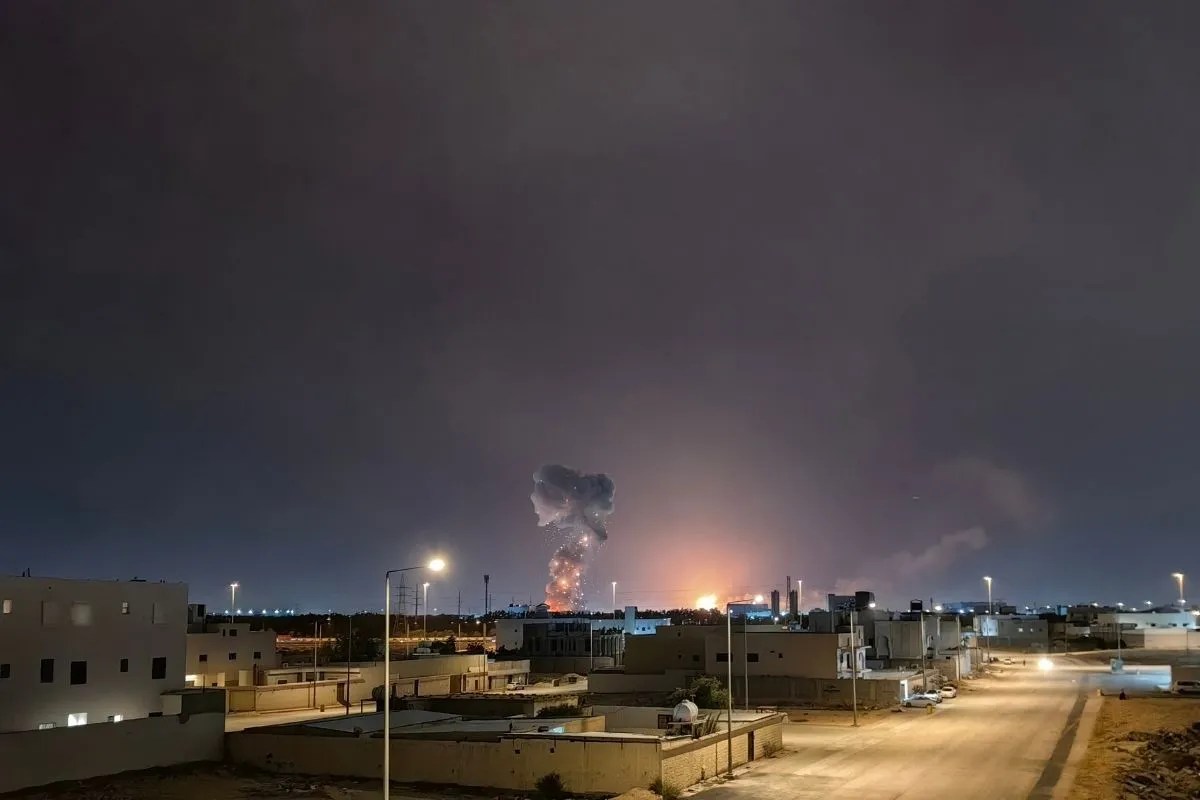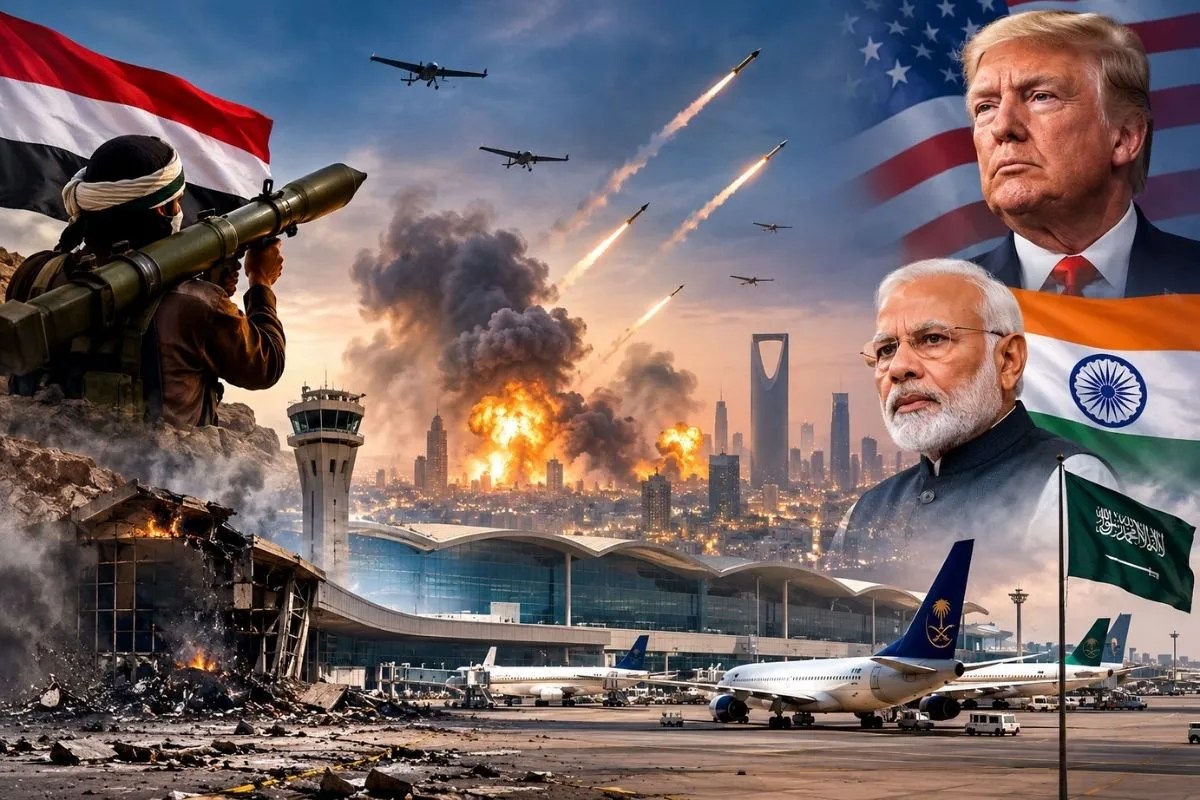
Geopolitical stability in the Arabian Peninsula is dictated by asymmetric military economics, where low-cost kinetic projectiles systematically disrupt high-value national infrastructure. The recent escalation involving ballistic and drone strikes targeting critical aviation hubs in Riyadh, specifically King Khalid International Airport, exposes structural vulnerabilities in regional air defense networks and highlights the limits of traditional deterrence doctrines.
The mechanics of this conflict operate on a stark cost-asymmetry function. Non-state actors operating within Yemen utilize decentralized supply chains and modular missile technology to impose disproportionate economic and psychological costs on centralized sovereign states. Intercepting a crude ballistic projectile requires sophisticated surface-to-air missile systems, generating an expenditure ratio heavily skewed against the defender. When these projectiles penetrate sovereign airspace or strike civilian infrastructure, the secondary economic fallout—ranging from temporary airspace closures to commercial flight suspensions and foreign capital hesitation—far outweighs the initial capital expenditure of the offensive strike.
Diplomatic responses from external stakeholders reveal divergent strategic priorities. New Delhi’s formal condemnation of the strikes and its affirmation of territorial sovereignty underscore India’s core interest in energy security and the safety of the expatriate diaspora residing across the Gulf Cooperation Council states. For India, any prolonged disruption of regional logistics creates immediate balance-of-payments pressures through energy price volatility.
Conversely, Washington’s posture reflects the challenges of managing multi-theater deterrence. Presidential statements indicating that the United States is actively evaluating direct military participation alongside Saudi coalition operations signal a potential shift from passive security guarantees to active kinetic intervention. However, direct military involvement introduces operational hazards, including the risk of widening regional escalation, retaliatory shipping disruptions in critical maritime chokepoints, and the entanglement of Western forces in protracted counter-insurgency dynamics.
The calculus for the Houthi leadership relies on exploiting these friction points. By declaring regional airspace a designated military zone and issuing direct warnings to international carriers, the militia attempts to weaponize commercial aviation isolation. This tactic shifts the burden of risk onto global logistics providers, forcing airlines to independently calculate the probability of collateral damage against commercial viability.
Resolving this security dilemma requires a recalibration of defensive engineering and regional coalition coordination. Traditional interceptor-based defense models are financially unsustainable against saturation attacks. Future defensive resilience depends on the integration of directed-energy systems, decentralized radar architectures, and proactive interdiction of supply nodes prior to launch coordination. Until the marginal cost of defense approaches parity with the cost of offense, strategic asymmetry will continue to dictate the security environment of the Middle East.
Execute comprehensive supply chain risk assessments for assets operating within high-exposure Gulf corridors, recalibrate logistics contingency models to account for sudden airspace closures, and hedge against localized energy price shocks resulting from sustained infrastructure targeting.