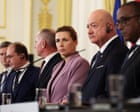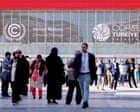
Two in the morning in Antalya, and the fluorescent lights of the plenary hall hum with the specific, teeth-grinding frequency of exhaustion.
Air conditioning blasts at sixty-two degrees to keep nearly two hundred delegates awake. On a glowing screen at the front of the room, a single paragraph of text sits scarred with brackets. Dozens of them. Every bracket is a trench dug into the grammar, a tiny territorial war over whether a verb should be shall, should, or encourages. For a more detailed analysis into this area, we recommend: this related article.
Paper cups of cold, bitter Turkish coffee litter the long laminate tables like spent shell casings.
Then, a thin sheaf of paper lands on the podium. It is the COP31 draft text. And when you look closely at what the presidency has actually written, you realize something startling. To get more context on this development, detailed analysis can also be found on Associated Press.
It isn't an answer. It is a trap.
A deliberate, carefully engineered provocation designed to make a room full of tired diplomats finally stop hiding behind their talking points and say what they actually mean.
The Trap Inside the Draft
When the president of the COP31 climate talks announced that the newly released draft text was an attempt to "draw out parties" to find agreement, the headlines treated it like standard diplomatic static. Another procedural update from another November climate summit. You read the sentence, your eyes glaze over, and you scroll past to see what the weather is doing tomorrow.
That reaction is completely understandable. Climate diplomacy has perfected the art of sounding like a washing machine manual while deciding whether coastal cities will still exist in fifty years.
Wait. Look closer at that phrase. Draw out parties.
In the sterile vocabulary of United Nations negotiations, a presidency usually tries to play referee, smoothing over sharp edges and offering mushy compromises that offend nobody and accomplish nothing. Doing the opposite—dropping a draft designed to flush nations out of their hiding spots—is a high-stakes gamble. It is the diplomatic equivalent of pulling the tablecloth off a banquet table just to see which plates are glued down and which ones shatter.
To understand why that matters, we need to step outside the conference center for a moment.
Consider a hypothetical scenario. Imagine two neighbors, Elena and Marcus, who share a sagging wooden fence between their backyards. A severe storm is rolling in from the coast. If the fence collapses, both of their gardens get washed out into the street. For three weeks, they have argued over text message about who should buy the lumber and how deep the post holes need to be. Neither wants to commit first because whoever names a dollar amount gets stuck holding the receipt.
Finally, on the night the wind starts howling, Elena walks outside with a shovel, digs one shallow hole right on the property line, and leaves a single piece of untreated pine lying in the mud.
It is obviously not enough to stop the storm. It isn't even a real repair.
Why did she do it? Because now Marcus can no longer send vague texts about "exploring structural synergies." He has to walk outside in the rain, look at that inadequate piece of wood, and either grab a hammer or admit to her face that he is willing to let both yards flood.
That single piece of pine in the mud is the COP31 draft text.
Why Silence Is the Safest Strategy in Diplomacy
If you have ever sat through a deadlocked negotiation—whether over a corporate merger, a union contract, or a family inheritance—you know the heaviest weapon in the room isn't anger. It is ambiguity.
Diplomats are trained from their first day in the foreign service never to show their cards early. In the sprawling architecture of the United Nations Framework Convention on Climate Change, decisions require consensus. Not a simple majority. Consensus. That means nearly two hundred countries, ranging from tiny Pacific atolls losing inches of shoreline every high tide to petro-states whose entire national budgets depend on barrel prices, must agree not to object.
Under those rules, saying nothing is remarkably safe.
You can spend ten days of a two-week summit speaking in glowing, abstract nouns. You can praise ambition. You can demand equity. You can nod solemnly during plenary speeches while your technical negotiators quietly insert brackets around every concrete timeline, dollar figure, and fossil fuel phase-out mechanism in the working documents. As long as the text remains bloated with seventy pages of mutually contradictory options, nobody has to make a painful concession. Nobody has to fly home and explain to an angry parliament or a restless electorate why they gave ground.
I remember standing in a cramped corridor outside a negotiation room during an earlier climate summit, watching a veteran delegate from a developing nation stare at his phone. His suit was wrinkled; he hadn't slept more than four hours a night all week. I asked him why a seemingly simple paragraph on adaptation finance had been stalled for thirty-six hours.
He let out a short, dry laugh that sounded more like a cough. "Because right now," he told me, "everyone gets to tell their capital they are winning. The moment the chair deletes the brackets and forces us to choose between two numbers, half of us become losers."
That is the paralysis the COP31 presidency is trying to break.
By releasing a lean, pointed draft text—one that strips away some of the comfortable, sprawling menus of options and puts specific, uncomfortable choices directly in front of the delegations—the presidency is removing the camouflage. You can no longer hide in the tall grass of seventy-page working drafts. You have to step into the clearing and state your real bottom line.
The Invisible Stakes Behind the Brackets
It is easy to get lost in the theater of these talks and forget what the ink on those pages actually buys.
When negotiators argue over whether climate finance should be delivered primarily through grants rather than loans, they are not debating accounting semantics. They are deciding whether a farmer in the Horn of Africa, whose crops failed after four consecutive dry seasons, gets help rebuilding a well—or whether her government has to take on high-interest debt just to clean up after a storm caused by emissions produced half a world away.
When parties clash over the exact wording around transitioning away from fossil fuels—whether the text includes loopholes for unabated coal or vague promises of future carbon capture—they are setting the market signals that trillions of dollars in private pension funds and sovereign wealth investments will follow over the next decade.
Capital is cowardly. It hates uncertainty.
If the COP31 final agreement comes out weak, fuzzy, and riddled with escape hatches, pension fund managers in London, New York, and Tokyo will keep parking billions into long-lived fossil infrastructure because the political signal says there is still plenty of time to burn. If the text comes out sharp, clear, and binding in spirit if not in court, the cost of capital shifts overnight. Solar farms get cheaper to finance; new gas pipelines suddenly look like stranded assets waiting to happen.
This is the invisible machinery humming underneath those dry press briefings.
Yet, if you ask an ordinary person watching the evening news what COP31 is doing, they will likely tell you it is a lot of politicians flying on jets to argue about commas. And honestly? Sometimes they aren't wrong. The gap between the urgency of atmospheric physics and the glacial pace of multilateral diplomacy is enough to make anyone cynical.
I feel that cynicism myself every time a summit stretches past its scheduled Friday closing into a bleary-eyed Sunday afternoon, only to produce a text full of words like urges and invites. The atmosphere does not care about diplomatic compromises. Carbon dioxide molecules do not pause their heat-trapping work because a minister needed a face-saving footnote to appease a domestic coal lobby.
Still, walking away from the table isn't an option. Because without this messy, infuriating, sleep-deprived room, there is no global ledger at all. No shared baseline. No mechanism to hold major emitters in the same room as the nations currently watching their graveyards wash into the sea.
How a Presidency Forces a Breakthrough
History shows that how a summit president handles the middle-weekend draft often determines whether the conference ends in a historic accord or a bitter collapse.
Think back to the playbook used at COP21 in Paris in 2015. French diplomacy famously relied on endless bilateral confessionals—pulling individual ministers into small, quiet rooms to ask one simple question: What is the absolute minimum you can live with, and what is the one thing that will make you walk out? Only after mapping those private red lines did the presidency drop a clean, tight text late in the game, daring anyone to be the country that blew up the deal in front of the world's cameras.
Compare that to COP15 in Copenhagen in 2009, where backroom drafts leaked prematurely, trust evaporated in hours, and developing nations felt ambushed by a text cooked up behind closed doors without their input. The summit fractured into public shouting matches and limped away with a non-binding political note instead of a treaty.
The COP31 presidency is walking a razor's edge between those two ghosts.
By openly admitting that the current draft is designed to "draw out parties," the president is signaling transparency rather than ambush. The message to the room is unmistakable: We know this text isn't finished. We know it makes some of you furious. Good. Tell us exactly what needs to change so you can sign your name to it, and tell us in front of everyone.
Look at what happens in the hours immediately after a text like this drops.
The polite speeches stop. Suddenly, the hallways outside the main plenary turn into frantic, whispering huddles. Negotiators from the European Union, the G77 and China bloc, the Umbrella Group, and the Alliance of Small Island States scramble to run line-by-line legal checks. Calls go out to capital cities at odd hours—waking up environment ministers in Washington, finance officials in New Delhi, and prime ministers in Suva.
"If we accept paragraph fourteen as written," a chief negotiator says into a secure line, pacing beside a potted palm in the convention center lobby, "our steel industry will revolt. What can we trade to get a five-year phase-in window?"
That frantic trading is the whole point. You cannot trade when nobody has put an offer on the counter. By placing a concrete, imperfect draft on the table, the presidency forces every bloc to reveal what they actually value versus what they were merely using as a bargaining chip.
The Illusion of the Perfect Text
There is a dangerous myth that surrounds every major climate conference: the idea that if negotiators just work hard enough, they will find a magic arrangement of words that makes everyone happy and solves the crisis in one stroke.
It doesn't exist.
Climate change is not a puzzle with a neat solution waiting to be discovered; it is a distributional conflict over the remaining carbon budget of the planet and the money required to survive the damage already locked in. Every single gain for rapid decarbonization threatens an entrenched economic interest. Every dollar pledged for loss and damage comes out of a national treasury facing its own domestic pressures, from healthcare costs to inflation.
So when a draft text arrives looking stark, contentious, and incomplete, that isn't a sign that the talks are failing. It is a sign that the real negotiation has finally begun.
Up until the moment a sharp draft hits the floor, the summit is mostly shadowboxing. Nations perform for their domestic audiences, repeating familiar grievances and lofty pledges. The real work—the painful, zero-sum arithmetic of who pays, who cuts, and how fast—only starts when someone puts a mirror in front of the room and refuses to let anyone look away.
Will it work this time?
No one in Antalya can promise that. Plenty of drafts meant to provoke agreement have instead triggered entrenched stubbornness, with major emitters digging in their heels and smaller nations refusing to rubber-stamp another watered-down compromise. The margin for error shrinks with every tenth of a degree of global warming.
Dawn in the Plenary Hall
Outside the convention center, the Mediterranean sky begins to bruise from black to a pale, washed-out violet. Fishing boats are already heading out past the harbor breakwater, their running lights blinking steadily against the swell.
Inside, the doors to the main hall swing open again.
A young negotiator from a coastal nation—someone whose own childhood neighborhood now floods every time a king tide coincides with a heavy rain—walks back to her seat. She carries a printed copy of the draft text, its margins now covered in red ink, crossed-out clauses, and handwritten counter-proposals. Across the aisle, a representative from a major fossil-fuel-exporting state sits down with an equally marked-up page, rubbing his eyes beneath his glasses.
Neither of them looks happy. Both of them are wide awake.
The gavel taps once, twice, sharp and hollow through the loudspeakers, and for the first time all week, nobody in the room is reading from a prepared script.