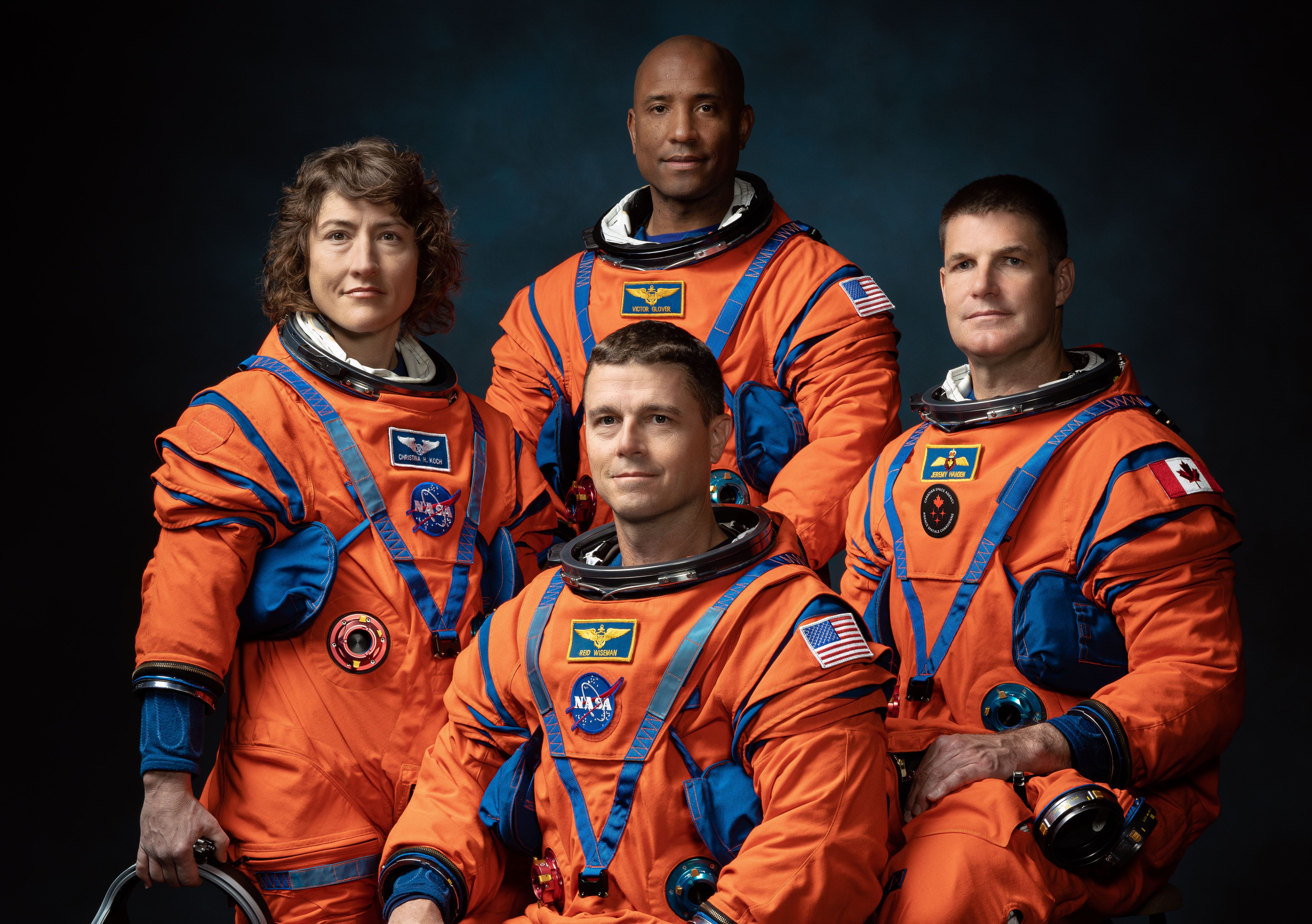
The headlines are predictable. They scream about "history in the making" and a "new era of lunar exploration." They want you to feel the patriotic swell of four brave souls strapped to a Roman candle, looping around the moon for the first time in fifty years. NASA is selling you a nostalgia trip wrapped in a high-tech veneer.
Here is the cold, orbital truth: Artemis II is a massive, expensive step backward disguised as progress.
We are watching a 1970s mission profile executed with 2020s tax dollars. While the press treats this like a leap for mankind, it’s actually a desperate attempt to justify the existence of the Space Launch System (SLS)—a rocket that was obsolete before it even left the drawing board. We are risking four lives and billions of dollars to replicate a feat we mastered when slide rules were still standard equipment.
The Myth of the Apollo Successor
The "lazy consensus" suggests that Artemis II is the necessary precursor to a permanent lunar base. It isn't. It is a political maneuver designed to maintain the status quo of the aerospace industrial complex.
The SLS is a "Franken-rocket." It’s built from leftovers of the Space Shuttle program—the same RS-25 engines and solid rocket boosters that were supposed to make spaceflight cheap but instead made it dangerously routine. By reusing these components, NASA didn't innovate; they handcuffed themselves to a supply chain that exists to preserve jobs in specific congressional districts, not to reach Mars.
When you look at the cost per launch, the math becomes stomach-turning. We are looking at roughly $4 billion per mission. For a flyby. In a world where reusable rocketry has slashed the cost of reaching orbit by an order of magnitude, spending $4 billion to send four people on a lunar loop-de-loop is a fiscal crime.
I’ve spent years watching government contracts inflate like over-leavened bread. I’ve seen projects "too big to fail" swallow the budgets of actual science—missions that could have sent fleets of autonomous probes to the Jovian moons or mapped the asteroid belt for resources. Instead, we’re paying for a high-altitude photo op.
Why Humans are the Weakest Link in Modern Spaceflight
The narrative insists that we "need" to send humans to prove we can live in deep space. This premise is fundamentally flawed. In the decades since Apollo 17, our robotics, sensor arrays, and machine learning capabilities have moved from science fiction to standard reality.
A human in a cockpit is a liability.
- The Weight Penalty: You have to launch tons of life support systems, water, food, and shielding just to keep a biological organism from dying in the vacuum.
- The Safety Ceiling: Every mission parameter is throttled by the thin margin of human endurance.
- The Cost of Failure: If a robotic rover crashes, you lose a budget line. If Artemis II has a critical failure, the entire space program enters a decade-long deep freeze.
If the goal is actual science—geological surveying, ice core sampling, or testing lunar manufacturing—robots do it better, cheaper, and without the need for a bathroom. We are sending humans because it makes for a better TV broadcast, not because it’s the most efficient way to explore the cosmos.
The Orion Capsule is a Gilded Cage
Let’s talk about the Orion Multi-Purpose Crew Vehicle. The media calls it a masterpiece. In reality, it’s a design compromise.
Because Orion has to be capable of surviving a high-velocity atmospheric reentry from deep space, it is incredibly heavy. Because it is heavy, it requires the massive SLS to move it. Because the SLS is so expensive, we can only afford to fly it once every few years. It is a closed loop of inefficiency.
Contrast this with the private sector’s approach to orbital architecture. While NASA focuses on a single, monolithic capsule, the rest of the industry is looking at modular, orbital assembly. Why launch a tiny, cramped capsule from the ground when you can launch fuel and components separately and build a truly sustainable deep-space vessel in Low Earth Orbit (LEO)?
Artemis II is the equivalent of building a brand-new steam locomotive in the age of the electric high-speed rail. It’s impressive to look at, but it’s the wrong tool for the century we live in.
Dismantling the "People Also Ask" Propaganda
Does Artemis II land on the moon?
No. It doesn't. It doesn't even enter a low lunar orbit. It performs a "free-return trajectory," which means it uses the moon's gravity to whip the capsule back toward Earth. It’s a glorified slingshot maneuver. To the average observer, this sounds like "going to the moon." To an engineer, it’s avoiding the hardest part of the mission because the hardware isn't ready for a sustained orbital stay.
Is Artemis II more advanced than Apollo?
Technically, yes. The computers are faster, the materials are lighter, and the heat shield is more resilient. But in terms of ambition, it’s a shadow of 1968. Apollo 8 did essentially the same thing with a fraction of the computing power and a far higher degree of risk. If "advancement" is measured by how much more we spend to achieve the same result fifty years later, then Artemis is a roaring success.
Why are we going back now?
The honest answer isn't "exploration" or "discovery." It’s geopolitical posturing. China has its sights on the lunar south pole. The U.S. cannot afford to lose the optics of lunar dominance. Artemis is a flag-planting exercise funded by anxiety, not a coherent plan for the colonization of the solar system.
The Opportunity Cost of Nostalgia
Every dollar spent on the SLS/Orion architecture is a dollar stolen from the next generation of propulsion. We should be perfecting nuclear thermal propulsion or ion drives that could actually shorten the trip to Mars from months to weeks. Instead, we are still burning chemical propellants like it’s 1942.
We are told that Artemis is the "stepping stone" to Mars. This is the biggest lie of all. The SLS is not capable of a Mars transit. Orion isn't designed for a two-year round trip. By the time we are actually ready to go to Mars, the entire Artemis hardware suite will be in a museum. It is a bridge to nowhere, built at a premium.
Imagine a scenario where we diverted the $20+ billion spent on SLS development into a prize-based system for private heavy-lift capacity and orbital refueling. We wouldn't be celebrating a single flyby; we would have a dozen commercial stations in LEO and a regular shuttle service to the lunar surface. We chose the slow, expensive, bureaucratic path because it felt safer to the people signing the checks.
Admit the Downside
The contrarian view isn't without its risks. If we abandoned Artemis now, we would face a gap in American heavy-lift capability. We would be admitting that the last two decades of deep-space planning were a sunk-cost fallacy. It would be politically embarrassing. It would cost jobs in Alabama and Florida.
But the alternative is worse. The alternative is continuing to pour resources into a system that is fundamentally incapable of making space travel routine. We are teaching a new generation that space is a rare, multi-billion dollar event for a select few, rather than a frontier that should be open to all.
Stop Clapping and Start Questioning
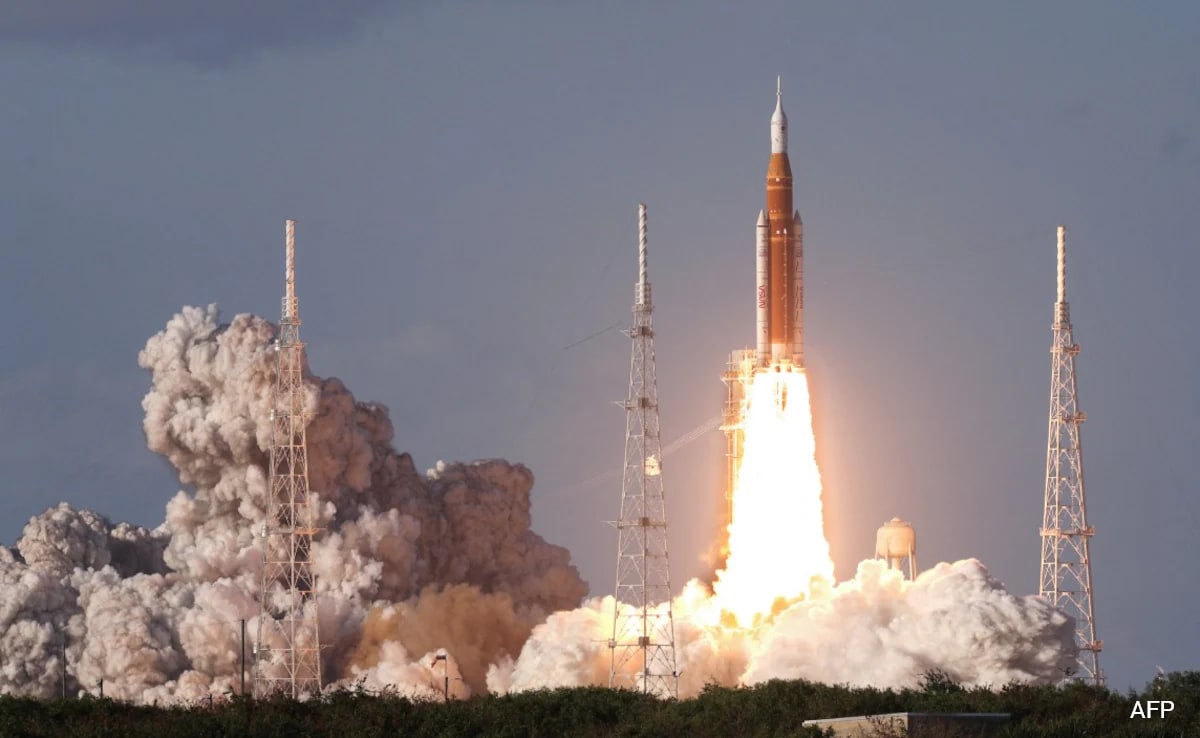
The next time you see a slow-motion video of the SLS clearing the tower, don't just marvel at the fire. Look at the price tag. Look at the decades of stagnation it represents. Look at the fact that we are celebrating a return to a place we already conquered, using technology that refuses to evolve.
Artemis II isn't a bold leap. It’s a expensive lap of honor for a program that is afraid to move forward. We don't need more "historic" flybys. We need an architecture that doesn't bankrupt the future to satisfy the nostalgia of the past.
If you want to see the future of humanity in space, look away from the NASA launchpad and start looking at the companies that are actually trying to break the cost-curve of the gravity well. The moon is a destination, but Artemis II is just a very expensive detour.
Stop treating a billion-dollar loop-de-loop as a victory for science. It’s a victory for the status quo, and the status quo never reached the stars.