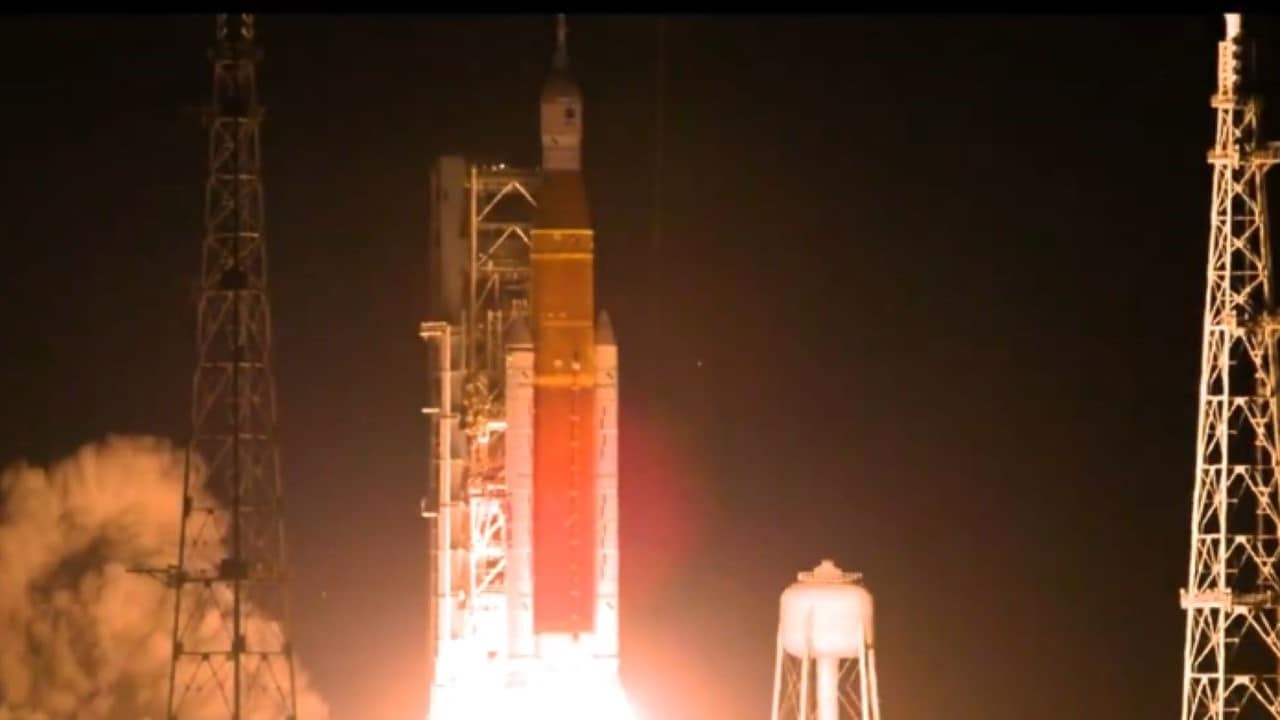
The Artemis II mission represents a fundamental shift from low-Earth orbit (LEO) habitation to deep space operational readiness. While the Apollo program functioned as a proof-of-concept for lunar arrival, Artemis II serves as the structural validation of a sustainable logistics chain and crew survival architecture designed for multi-year Martian transits. This mission is not a "repeat" of 1968; it is the stress test of the Space Launch System (SLS) and Orion spacecraft's integrated life support systems (ECLSS) under the extreme radiation and thermal gradients of cislunar space.
The SLS and Orion Integration Architecture
The mission profile hinges on the successful execution of two distinct orbital phases. The first phase, the High Earth Orbit (HEO) maneuver, allows the crew to verify the Orion spacecraft’s performance while still within an abort-capable distance from Earth. The second phase is a lunar free-return trajectory. This specific flight path utilizes the Moon’s gravity to "slingshot" the capsule back toward Earth without requiring a major propulsion burn for the return trip—a critical fail-safe for a crewed test flight.
The SLS Block 1 Heavy-Lift Capability
The Space Launch System (SLS) provides the initial kinetic energy required to escape Earth's gravity well. The Block 1 configuration utilized for Artemis II produces 8.8 million pounds of maximum thrust, a 15% increase over the Saturn V. This power is necessary to loft the 27-metric-ton Orion spacecraft, along with its European Service Module (ESM), into an initial elliptical orbit.
The mass-to-orbit ratio remains the primary constraint in deep space exploration. Every kilogram of life support equipment or shielding added to the Orion capsule increases the propellant requirement exponentially. Engineers have optimized this through the use of solid rocket boosters for the first two minutes of flight, followed by the sustained liquid-hydrogen/liquid-oxygen thrust of the four RS-25 core stage engines.
Orion Life Support and Thermal Management
Deep space presents a thermal environment far more hostile than LEO. Without the protection of Earth's magnetosphere, the Orion capsule faces a constant bombardment of solar energetic particles (SEP) and galactic cosmic rays (GCR).
- Active Thermal Control: Orion uses a pumped fluid loop system that collects heat from the electronics and crew, transferring it to radiators located on the exterior of the Service Module.
- Radiation Mitigation: The crew module incorporates a "shelter-in-place" protocol. In the event of a solar flare, the crew uses mass-dense storage items—such as water and food supplies—to create a localized shield against radiation.
- Redundancy Tiers: Unlike the International Space Station (ISS), which can be resupplied within hours or days, Orion must function as a closed-loop system for the duration of the 10-day mission. The failure of a single CO2 scrubber or oxygen regulator must be offset by on-board mechanical backups, as there is no "safe haven" in cislunar space.
The Cislunar Operational Environment
The mission trajectory takes the crew approximately 10,300 kilometers beyond the far side of the Moon. This distance is calculated to place the spacecraft in a region of space where Earth's magnetic influence is negligible, allowing for the first real-world test of the communication and navigation systems in a deep-space context.
Optical Navigation and Communication Latency
Artemis II will test the Optical Navigation (OpNav) system, which uses cameras to photograph the Earth and Moon. By analyzing the position and size of these bodies against the star field, the onboard computer can calculate the spacecraft’s position and velocity autonomously. This reduces reliance on the Deep Space Network (DSN) and mitigates the risks associated with signal latency or ground-station outages.
The communication architecture utilizes both S-band and Ka-band frequencies. S-band provides a low-data-rate, highly reliable link for command and control, while Ka-band allows for the high-speed transmission of telemetry and high-definition video. The bottleneck in this system is the geometric alignment of the spacecraft's high-gain antennas. During the lunar flyby, the Orion capsule must maintain a specific orientation—known as a "barbecue roll"—to ensure even thermal distribution while simultaneously pointing its antennas toward Earth.
The Physics of Re-entry: 40,000 Kilometers per Hour
The final and most dangerous phase of the mission is the atmospheric entry. Returning from the Moon, Orion will hit the atmosphere at approximately 11 kilometers per second (nearly 25,000 mph).
The kinetic energy at these speeds is converted into heat, reaching temperatures of nearly 2,800 degrees Celsius. The Avcoat heat shield, a proprietary ablative material, is designed to char and erode in a controlled manner, carrying the heat away from the capsule. Artemis II will utilize a "skip entry" maneuver. The capsule will dip into the upper atmosphere to bleed off speed, "skip" back out momentarily like a stone on water, and then perform a final descent. This technique extends the range of the landing site and reduces the G-loads experienced by the crew, shifting the physical stress from a peak of 7-8 Gs down to a more manageable 4 Gs.
Structural Risks and Strategic Constraints
The mission is not without significant variables that could compromise the timeline for the subsequent Artemis III lunar landing. The primary risks are categorized into hardware reliability and environmental unpredictability.
Hardware Wear and Component Fatigue
During the Artemis I uncrewed flight, the heat shield experienced more charring and material loss than predicted by computational models. Artemis II serves as the definitive test of whether those "out-of-family" observations were within the safety margins for a crewed vehicle. If the erosion rates exceed the structural threshold, the entire Orion design may require a mid-stream overhaul, delaying lunar surface operations by years.
The Human Element: Physiological Degradation
The four-person crew will experience a rapid transition from 1G to microgravity. Unlike the ISS, which has massive gym equipment to mitigate bone density loss, Orion is cramped. The crew must perform resistive exercises in a space no larger than a small SUV. The mission will monitor:
- Intracranial Pressure: Fluid shifts in microgravity can cause vision impairment (SANS - Spaceflight-Associated Neuro-ocular Syndrome).
- Cognitive Load: Operating a complex vehicle under high-stress conditions with disrupted circadian rhythms.
- Radiation Exposure: Dosimeters will track the exact amount of REM (Roentgen Equivalent Man) absorbed by the crew to calibrate future shielding for longer-duration missions.
The Economic and Geopolitical Cost Function
The Artemis program is a multi-billion dollar investment that operates on a different economic logic than the Apollo era. Apollo was a sprint fueled by 4% of the US Federal Budget. Artemis operates on less than 0.5%, necessitating a partnership-heavy model.
The European Service Module (ESM) Dependency
The reliance on the European Space Agency (ESA) for the Service Module introduces a geopolitical variable. The ESM provides the air, water, and propulsion for the Orion capsule. This international dependency ensures sustained funding and political backing across multiple nations, but it creates a complex supply chain where a delay in a factory in Bremen, Germany, can ground a launch in Cape Canaveral, Florida.
Cost Per Seat and Scalability
The current estimated cost of a single SLS launch exceeds $2 billion. For the program to be sustainable, the mission cadence must increase to drive down the unit cost of the hardware. Artemis II is the gatekeeper for this scalability. If the mission proves that the hardware is "flight-proven" and reusable in its core designs, the path to a permanent lunar presence—the Gateway station—becomes fiscally viable.
Strategic Forecast for Cislunar Dominance
The success of Artemis II will establish the baseline for the "Lunar Economy." The mission's primary output is not just data, but the validation of an orbital path that will soon become a high-traffic corridor.
The next tactical phase involves the deployment of the Lunar Gateway. This small space station will orbit the Moon in a Near-Rectilinear Halo Orbit (NRHO). This specific orbit is a gravitational "sweet spot" that requires very little fuel to maintain and provides a constant line of sight to Earth for communications.
The move to Artemis III and beyond hinges entirely on the telemetry gathered during the Artemis II flyby. If the Orion's power generation from its solar arrays exceeds the predicted curves, mission planners can increase the weight of the scientific payloads for future flights. If the life support system's water recycling rates are higher than expected, the duration of lunar surface stays can be extended.
The strategic play is the transition from exploration to occupation. Artemis II is the stress test of the infrastructure required to make the Moon a permanent human outpost and a shipyard for the eventual transit to Mars. The mission establishes the standard operating procedures for deep-space navigation, radiation shielding, and high-speed re-entry that will define aerospace engineering for the next half-century.