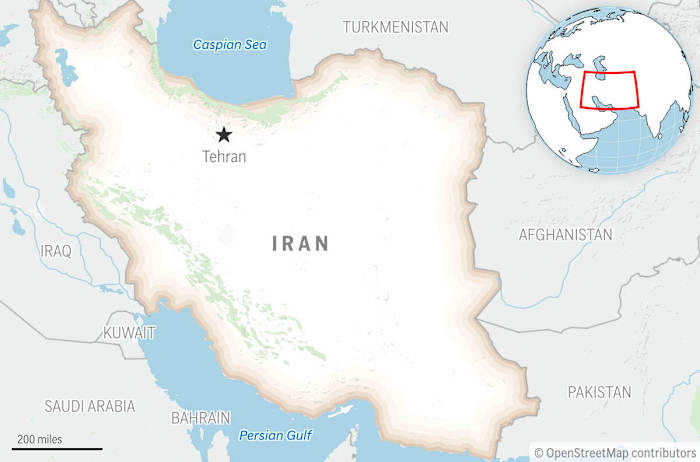
The recent deployment of unmanned aerial vehicles (UAVs) and ballistic missiles against United Arab Emirates (UAE) territory represents a calculated stress test of the regional security architecture rather than a random act of aggression. These kinetic events signal a breakdown in the informal de-escalation protocols that have characterized the post-Iran war ceasefire period. The strategic objective behind these attacks is not territorial acquisition but the imposition of a high-cost attrition model on the UAE’s economic stability and defensive logistics. By forcing a high-value target to expend multi-million dollar interceptors against low-cost loitering munitions, the aggressor shifts the conflict from a contest of arms to a contest of economic endurance.
The Calculus of Kinetic Asymmetry
The fundamental driver of this engagement is the Cost-Exchange Ratio (CER). In modern aerial warfare, the disparity between the cost of the offensive munition and the cost of the defensive countermeasure creates a structural vulnerability for high-tech states.
- Offensive Inputs: Piston-engine drones and repurposed ballistic technology often cost between $20,000 and $100,000. These assets require minimal infrastructure to launch and utilize GPS-denied navigation to complicate tracking.
- Defensive Outputs: Interceptor missiles, such as those utilized by the Terminal High Altitude Area Defense (THAAD) or Patriot systems, carry unit costs ranging from $2 million to $4 million.
This 40:1 cost ratio means that even a 100% interception rate constitutes a strategic drain on the defender. The UAE faces a "saturation bottleneck" where the sheer volume of incoming low-cost threats can theoretically deplete localized interceptor magazines, leaving high-value infrastructure—such as the Barakah Nuclear Energy Plant or Jebel Ali Port—vulnerable to follow-on strikes.
Structural Vulnerabilities in Global Logistics Hubs
The UAE’s status as a global logistics and financial nexus makes it uniquely sensitive to "perception-based" warfare. Unlike traditional theaters of conflict, the damage of a missile strike in Abu Dhabi or Dubai is not measured in physical debris alone, but in the immediate spike of insurance premiums and the potential flight of foreign direct investment.
The threat logic operates through three distinct transmission channels:
- The Maritime Risk Premium: Attacks near shipping lanes or port facilities immediately trigger "War Risk" surcharges from global insurers. Since the UAE serves as a re-export hub for the Middle East, a sustained threat profile increases the cost of every container moving through the region, effectively taxing the UAE’s primary economic engine.
- Aviation Disruption: The UAE hosts some of the world's busiest international airports. The presence of drones in civil airspace necessitates immediate grounding of flights. The operational cost of a four-hour closure at Dubai International (DXB) runs into the tens of millions of dollars in lost revenue and logistical cascading failures.
- Capital Flight Incentives: The UAE’s "safe haven" status is its most valuable intangible asset. Kinetic activity challenges the foundational assumption that the Emirates are insulated from the broader instability of the Levant and the Iranian plateau.
The Breakdown of the Post-Ceasefire Equilibrium
The timing of these attacks suggests a deliberate erosion of the diplomatic "Gray Zone." Following the cessation of direct hostilities between regional powers and Iran-aligned groups, a period of "competitive coexistence" emerged. This equilibrium has failed because the underlying drivers of the conflict—regional hegemony and proxy influence—remained unresolved by the ceasefire terms.
The collapse of this stability can be traced to the Decoupling of Accountability. Proxy actors now possess autonomous strike capabilities that allow primary state sponsors to maintain plausible deniability while reaping the benefits of the disruption. This creates a "detection-response lag" where the UAE must decide whether to retaliate against the launch site (the proxy) or the source of the technology (the state sponsor). Retaliating against the former is often ineffective due to the mobile nature of drone launchers; retaliating against the latter risks a total regional conflagration that the UAE’s service-based economy cannot afford.
Technical Analysis of the Threat Vector
The hardware involved in these incursions indicates a sophisticated understanding of radar cross-section (RCS) management. Low-altitude loitering munitions utilize the "clutter" of the desert floor and urban environments to mask their approach.
Radar Horizon Limitations
Standard ground-based radar systems are constrained by the curvature of the earth and physical obstructions. A drone flying at 50 meters can remain below the radar horizon until it is within 20-30 kilometers of the target. At a speed of 150 km/h, this leaves the defense system with less than 10 minutes to identify, track, and neutralize the threat.
The Electronic Warfare Paradox
While Electronic Warfare (EW) and signal jamming are often touted as the solution to drone threats, they create a secondary risk in dense urban environments. High-powered jamming to disrupt drone GPS signals can simultaneously interfere with civilian communications, medical equipment, and aviation navigation. The defender is thus forced to choose between a physical intercept (expensive) or a broad-spectrum jam (disruptive to the local economy).
Re-Engineering the Defense Framework
To counter this evolving threat, the UAE is forced to pivot from a "Point Defense" model to an "Integrated Layered Defense" (ILD). This shift requires the synchronization of multiple sensor types—optical, acoustic, and radio frequency—to create a persistent surveillance dome.
- Level 1: Directed Energy Weapons (DEW): The integration of high-energy lasers is the only viable path to correcting the CER. A laser shot costs roughly the price of the electricity required to fire it, moving the cost per intercept from $2,000,000 to under $10.
- Level 2: Kinetic Interception: Reserved for high-speed ballistic threats that cannot be neutralized by DEW or soft-kill methods.
- Level 3: Non-Kinetic Soft Kill: Utilizing cyber-takeover protocols to hijack the drone’s command link and force a landing or return-to-origin command.
The limitation of this strategy lies in its technical complexity. Coordinating these layers in real-time requires an AI-driven command and control (C2) system capable of making millisecond decisions on which asset to deploy. The risk of "friendly fire" or civilian collateral damage remains a persistent constraint on the automated engagement of these systems.
The Geopolitical Friction Points
The resurgence of attacks despite diplomatic overtures indicates that the "Ceasefire" was a tactical pause rather than a strategic resolution. The UAE finds itself at the center of a multidimensional pressure campaign involving:
- The Yemen Variable: The persistent capability of Houthi-aligned forces to strike deep into Emirati territory serves as a reminder that the war in Yemen cannot be contained within its borders.
- The Iran-US Nuclear Nexus: Fluctuations in the Joint Comprehensive Plan of Action (JCPOA) negotiations often manifest as kinetic "messages" delivered via proxies in the Gulf.
- Intra-GCC Competition: The UAE must maintain its security edge to prevent a shift in logistics dominance toward regional competitors who may be perceived as being in "safer" geographies.
Strategic Realignment Requirements
The UAE must now accept that "Zero-Risk" is an unattainable metric. The strategy must move toward Resilience Engineering—designing systems and economic models that can absorb a hit without systemic failure. This involves the decentralization of critical infrastructure and the hardening of the "digital twin" versions of their logistics networks.
The primary objective is to signal to aggressors that the marginal utility of a drone strike has reached zero. This is achieved not just through better missiles, but through an "Economic Iron Dome"—a combination of rapid-recovery insurance protocols, redundant supply chains, and a clear, pre-staged escalatory ladder that removes the advantage of deniability from the aggressor. The UAE's next phase of defense will not be fought in the air, but in the ability to maintain "Business as Usual" under the constant shadow of asymmetric friction. The focus must remain on the deployment of high-power microwave (HPM) systems to neutralize swarm threats at scale, as current vertical launch systems are mathematically incapable of winning a sustained war of attrition against mass-produced autonomous munitions.