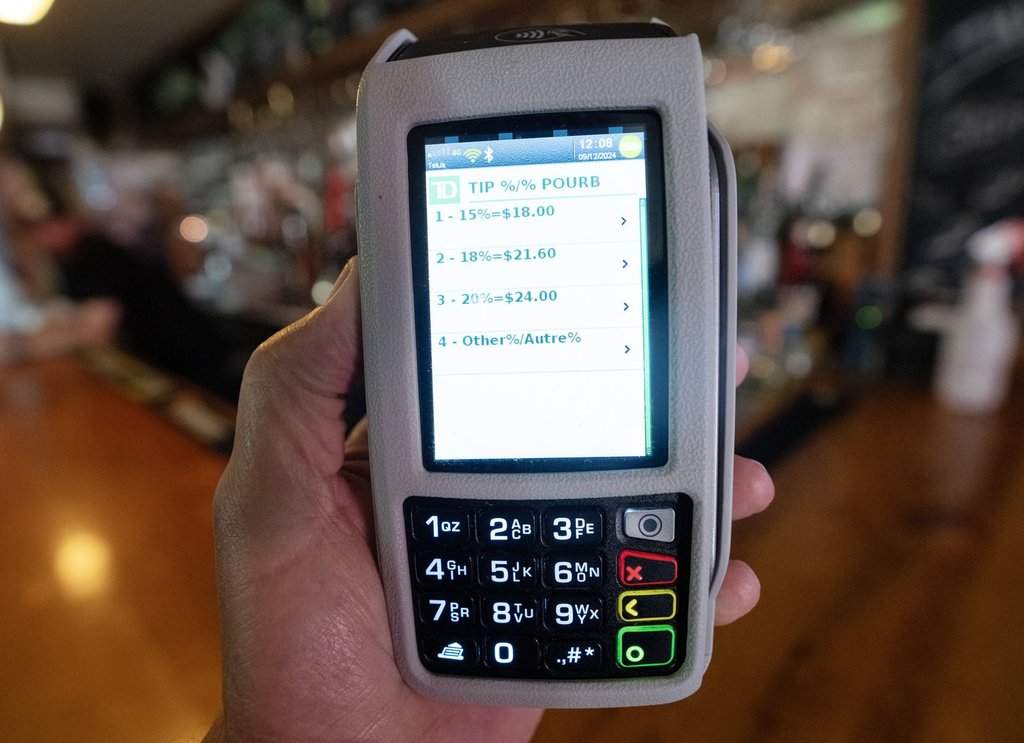
If you walk into a restaurant in Halifax, St. John's, or Moncton right now, you can feel the tension in the air. It is not just about the price of a pint or a plate of seafood anymore. It is about the little digital screen flipped around at the end of the meal, demanding twenty percent or more.
We are living through a tipping recession. Recent data from an Angus Reid survey commissioned by hospitality tech company Actual reveals that roughly 67 percent of tipped hospitality workers across Canada have seen their tip income drop over the past two years. In Atlantic Canada and British Columbia, the crisis hits even harder. Around 51 percent of hospitality workers in these regions rely directly on tips to cover fundamental essentials like rent, utilities, and groceries.
When customers tighten their spending, servers and bartenders take the direct hit. But pointing fingers at stingy diners misses the bigger picture of a system running on fumes.
The Squeeze on Both Sides of the Table
You do not have to look far to understand why tipping habits are shifting. Grocery bills have soared, rent is through the roof, and wages haven't kept pace with inflation. When everyday consumers feel financially squeezed, they pull back on discretionary spending. Dining out becomes a luxury, and when people do treat themselves, they start questioning why default tip prompts on point-of-sale machines now start at 18 or 20 percent.
Natasha Chestnut with the Restaurant Association of Nova Scotia puts it bluntly: everyone is trapped in the same financial vise. Consumers have less disposable cash. Restaurants are fighting to stay alive against climbing food costs, alcohol duties, and labour shortages. And frontline staff see their take-home pay shrink week after week.
Data from Restaurants Canada shows that average restaurant profits hover near historic lows, with a staggering number of establishments operating at a loss or just barely breaking even. Operators cannot easily raise menu prices any higher without driving away the few customers they have left. That leaves workers dependent on a public that is increasingly experiencing tip fatigue.
Why Tipping Culture Broke Down
Tipping used to be a simple, straightforward nod for exceptional service. Over the last few years, it morphed into something entirely different. Tablet checkout screens now ask for tips at coffee shops, bakeries, and fast-casual counters where no table service occurs.
This creep of tip prompts everywhere has bred deep cynicism among consumers. Diners feel manipulated by software designed to guilt them into paying extra. Consequently, people push back across the board. Servers report that customers are growing more selective, sometimes cutting tips entirely not because the service was bad, but because the base bill already hurts to look at.
Wayne Smith, a hospitality and tourism management professor at Toronto Metropolitan University, points out the awkward social friction created by modern payment terminals. Servers stand right there while customers calculate percentages on pre-tax or post-tax totals, turning a private transaction into an uncomfortable public test.
The Real Cost of Losing Hospitality Talent
Working in hospitality was never easy, but for many, the trade-off was clear: hard shifts could yield solid cash on a good night. Now, with tips drying up, that equation breaks down.
About 61 percent of tipped workers admit that tip income heavily influences their decision to stay in the industry. When tips evaporate, experienced bartenders, servers, and kitchen staff pack their bags for retail, warehousing, or office jobs with stable, predictable hourly wages.
The industry cannot afford this drain. Training new staff costs time and money that struggling independent restaurants simply do not have. Without reliable earnings, the talent pool shrinks, service suffers, and the local dining scene pays the price.
Moving Toward Transparency and Stability
Change is slowly forcing its way into the legislative landscape. Governments are paying attention to how tips are handled behind closed doors. For instance, Nova Scotia introduced regulations requiring employers to provide clear, written notice of tip-pooling policies and maintain accurate records. Amendments to labor codes aim to guarantee that tips actually reach the hands of the workers who earned them.
Transparency matters because trust is completely broken. When workers know exactly how tip pools work, and when customers feel confident that extra money goes to the floor staff rather than padding corporate margins, some of that bitterness fades.
Fixing the hospitality sector requires more than crossing fingers for a sudden return of generous tipping habits. Businesses need sustainable models, fairer base compensation, and clearer boundaries around where tipping belongs. Until then, the people carrying trays and pouring drinks across the Maritimes will keep feeling the pinch of an economy that stopped working for the service class.
If you work in the industry, advocate for transparent tip-pooling policies and look closely at your employer's distribution records. If you are dining out, remember that the person serving your meal is likely navigating the exact same cost-of-living crisis you are, even if the payment terminal asks for too much.
Why Canadians Are Tipping Less
This video provides an in-depth look at the national data and economic reports highlighting the ongoing shift in Canadian tipping habits.