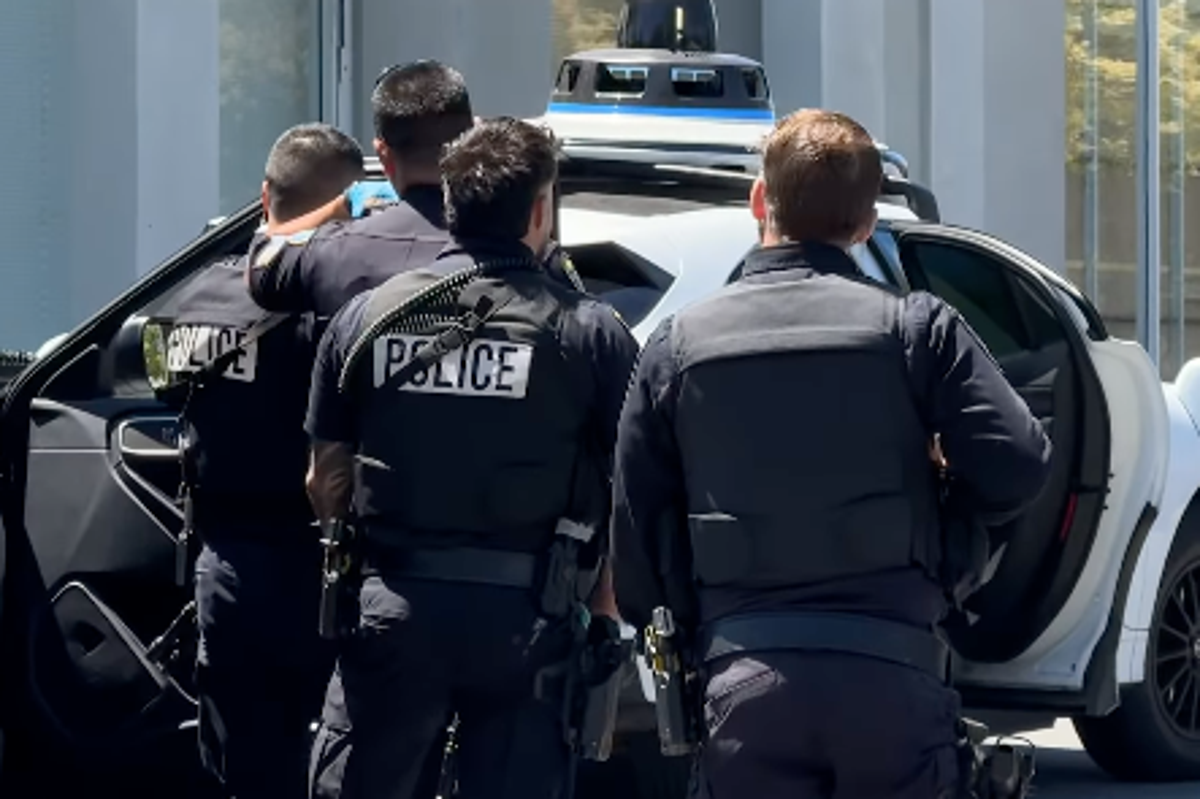
The tech blogosphere is throwing a collective tantrum because a Waymo vehicle supposedly "ratted out" its passengers to the police. The headlines read like dystopian sci-fi: autonomous vehicles transformed into rolling panopticons, betraying human trust at the first sight of a badge.
It is a comforting narrative for privacy alarmists. It is also entirely wrong. For a deeper dive into this area, we suggest: this related article.
The lazy consensus treats the self-driving car as an intrusive, autonomous snitch. In reality, these vehicles are just high-fidelity data loggers that happen to have wheels. The outrage isn't actually about privacy; it is a symptom of human discomfort with a machine that records reality without bias, emotion, or the ability to misremember.
We need to stop pretending that an autonomous vehicle (AV) owes its passengers a criminal omertà. It doesn’t. And frankly, that is exactly why the roads are getting safer. For additional details on the matter, detailed analysis is available on Ars Technica.
The Illusion of the Mobile Safe House
For decades, the interior of a taxi or a traditional rideshare vehicle has enjoyed a weird, legally murky status in the public imagination. Passengers treat the back seat like a temporary sanctuary—a place where you can argue with a partner, take a sensitive business call, or nurse a hangover away from the world's eyes.
When you step into a Waymo, Cruise, or Zoox vehicle, you are not entering a private sanctuary. You are stepping inside a commercial data center that moves at 35 miles per hour.
Every square inch of an AV is built around perception. Autonomous vehicles rely on a dense suite of sensors to function:
- LiDAR: Millions of laser pulses per second mapping the 3D environment.
- Radar: Tracking velocities and objects through adverse weather.
- High-Resolution Cameras: Scanning both the exterior perimeter and the interior cabin.
The interior cameras exist for obvious liability and operational reasons. They ensure passengers don't vandalize the vehicle, leave behind hazardous items, or smoke inside the cabin. If an incident occurs inside the vehicle, that footage is saved.
When law enforcement requests that data via a valid legal warrant or subpoena, the AV company complies. This is not "snitching." It is the exact same compliance pipeline that banks, convenience stores, and traditional Uber drivers with dashcams use every single day. The only difference is that the AV doesn't forget what it saw, and it can't be intimidated into staying silent.
Why Human Drivers are the Real Security Risk
The mainstream outrage machine laments the loss of the human element in ridesharing. They argue that a human Uber driver would have the "discretion" not to hand over footage, or might choose not to get involved when things go sideways.
Let's look at how that "human discretion" actually plays out in the real world.
I have spent over a decade analyzing data pipelines and corporate liability structures. When a human driver is involved in a legal dispute or a criminal investigation, they are a liability nightmare. Humans get startled. Humans misidentify suspects. Humans lie to protect themselves, alter their dashcam footage, or lose the memory card when it's inconvenient.
According to cognitive psychology studies on eyewitness testimony, human memory is remarkably fragile and easily corrupted by stress. In a high-stakes scenario, a human driver’s account of an event is often the least reliable piece of evidence in the courtroom.
An AV, by contrast, provides an unvarnished record of objective reality.
[Event Occurs] ➔ [Sensors Record Raw Data] ➔ [Immutable Log Created] ➔ [Legal Process Followed]
There is no emotional bias. There is no selective memory. If a crime occurs near or inside the vehicle, the machine records the exact timestamps, coordinates, and visual data. The real panic among critics isn't that the machine is biased; it’s that the machine is undeniably, ruthlessly objective.
Dismantling the Privacy Premise
Look at the questions dominating the comment sections and tech forums right now. They are fundamentally flawed.
Flawed Question: How do we stop self-driving cars from sharing our personal data with the police?
Brutal Truth: You don't, because you signed away that expectation the moment you booked a ride on a public road using a corporate asset.
If you are using a multi-million dollar autonomous fleet vehicle to conduct illicit activity, your operational security is already zero. The premise that a corporate-owned vehicle operating in a highly regulated public space should shield you from state scrutiny is legally illiterate.
The Fourth Amendment protects against unreasonable searches and seizures. It does not protect you from a third party documenting what you do inside their property. Under the established Third-Party Doctrine (reaffirmed across decades of US case law), when you voluntarily reveal information to a third party—like a bank, a telecom provider, or a rideshare company—you lose a reasonable expectation of privacy over that data.
Imagine a scenario where a passenger leaves a backpack full of contraband in a hotel room. The housekeeping staff finds it and calls the police. Does the internet erupt in fury that the Marriott "ratted out" its guest? No. Because we understand that the hotel room belongs to Marriott, and they have a legal right to protect their property and comply with law enforcement. The back seat of a Waymo is no different.
The Trade-off Nobody Wants to Admit
Let's be completely transparent about the downsides of this reality.
Yes, the omnipresence of AV sensors means that public anonymity is shrinking. If you live in a city with dense AV deployments, you are being captured on camera more frequently. If your strategy for navigating the world relies on slipping through the cracks of a messy, unmonitored environment, the rise of autonomous fleets is bad news for you.
But let's look at the alternative. Would you prefer a transport ecosystem where liability is impossible to prove? Where hit-and-run drivers escape because human witnesses couldn't catch the license plate? Where passengers can assault rideshare drivers with impunity because there is no camera logging the cabin?
The data collected by AVs doesn't just assist law enforcement; it protects the innocent. In multiple documented cases across the autonomous vehicle industry, exterior camera footage has immediately exonerated AV operators—and other human drivers—by proving that jaywalkers or erratic motorists were the sole cause of an accident.
The machine's lack of empathy goes both ways. It won't lie for you, but it absolutely will not lie about you.
Stop Romanticizing the Dark Ages
The anger directed at Waymo is misplaced nostalgia for an era of systemic friction. People miss the days when crimes, accidents, and disputes could be buried in a cloud of "he-said, she-said" arguments. They are uncomfortable with the fact that technology is steadily erasing the grey areas of urban life.
If you want absolute privacy, don't hail a vehicle that relies on twenty different cameras to avoid hitting a mailbox. Buy a 1998 Honda Civic with cash, leave your phone at home, and drive it yourself.
But if you choose to summon a supercomputer on wheels to transport you through a major metropolitan area, accept the terms of service. The car isn't your friend. It isn't your co-conspirator. It is an industrial tool operating in a public space, and its only loyalty is to the physics of the road and the data on its drives.
Stop asking your car to cover for you. It's too smart to take the fall.