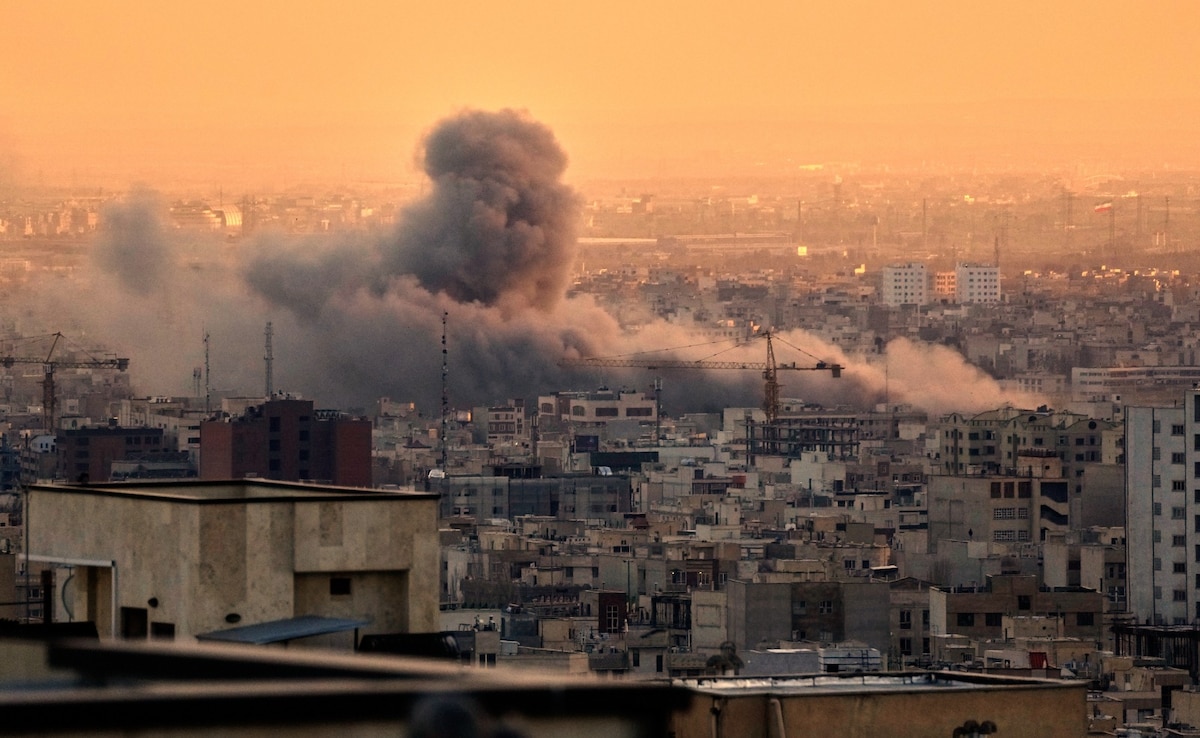
The foreign policy establishment is salivating again. With rumors swirling about the health of Supreme Leader Ali Khamenei and a returning Trump administration, the "regime change" vultures are circling. They see a vacuum. They see an opportunity to bankroll an internal explosion.
They are completely wrong.
The lazy consensus suggests that funneling cash and hardware to Iranian opposition groups will trigger a democratic domino effect. It’s a fairy tale told by consultants who have never stepped foot in a bazaar in Isfahan. If the U.S. leans into this strategy, it won't be "liberating" Iran; it will be cementing the power of the Islamic Revolutionary Guard Corps (IRGC) for another forty years.
The Sovereignty Trap
Most analysts treat the Iranian public like a monolithic block of pro-Western activists waiting for a check from D.C. This ignores the "Sovereignty Trap." Even Iranians who despise the current clerical rule have a deep-seated, historical allergy to foreign interference.
I have watched DC "experts" burn through millions of taxpayer dollars trying to manufacture movements in the Middle East. They always forget 1953. The memory of the CIA-backed coup against Mossadegh isn't a history lesson in Tehran; it is a live wire. The moment a rebel group is seen taking a paycheck from a foreign power—especially the United States—it loses its domestic legitimacy. It stops being a "liberation front" and starts being a "vassal."
If Trump backs these groups, he isn't helping the resistance. He is handing the IRGC the perfect propaganda tool. He is giving them the ability to frame every legitimate protest against inflation or water shortages as a "Zionist-American plot."
The MEK Delusion
Let’s name the elephant in the room: the Mujahedin-e-Khalq (MEK). For years, high-ranking U.S. officials have taken speaking fees to praise this organization. They see an organized, disciplined group and think they’ve found a turnkey government-in-exile.
This is a catastrophic misunderstanding of the Iranian street. The MEK is widely loathed inside Iran for siding with Saddam Hussein during the Iran-Iraq War. To the average Iranian, backing the MEK is equivalent to asking a Frenchman in 1945 to support a government led by Nazi collaborators.
Backing the "wrong" rebels doesn't just fail; it backfires. It forces the gray-zone population—those who don't like the Mullahs but fear chaos—to side with the regime as the lesser of two evils. When you threaten a country with external destabilization, the population doesn't scatter. They huddle.
The Succession Myth
The report suggests Khamenei's death is the catalyst. The assumption is that the transition will be messy, fragile, and ripe for disruption.
I’ve spent two decades watching how autocracies handle "fragile" successions. They don't fall apart; they harden. The IRGC is not a subsidiary of the Supreme Leader; they are the board of directors. They have already mapped out the succession. They have the guns, the banks, and the intelligence apparatus.
Imagine a scenario where a U.S.-backed group attempts a coordinated uprising during the funeral of a Supreme Leader.
The result isn't a revolution. It is a massacre that the IRGC uses to justify a total military takeover, effectively ending the "republic" part of the Islamic Republic and installing a pure military dictatorship. This is the nuance the "Big Claim" reports miss: you can't disrupt a transition if the people you are disrupting are the ones who hold the keys to the armory.
Follow the Money, Not the Ideology
Realists understand that Iran is a business. The IRGC controls an estimated 30% to 50% of the Iranian economy through various front companies and foundations (Bonyads).
If you want to disrupt the Iranian status quo, you don't send rifles to a disparate group of rebels in the mountains of Sistan-Baluchestan. You target the supply chains of the IRGC’s shadow economy. You make the cost of loyalty higher than the cost of defection.
The current talk of "backing rebels" is a cheap shortcut for politicians who don't want to do the heavy lifting of complex economic warfare. It’s "kinetic theater." It looks good on a briefing memo, but it has a 0% success rate in the 21st century.
The Syrian Ghost
Look at Syria. The U.S. and its allies backed "moderate rebels" for years. What did it buy? A decade of civil war, a massive refugee crisis that destabilized Europe, and a strengthened Iranian and Russian presence in the Levant.
If the U.S. funds Iranian rebel groups—which are often split along ethnic lines (Kurds, Baluchis, Arabs, Azeris)—it isn't creating a unified democratic front. It is creating the conditions for a multi-sided civil war in a country of 88 million people.
A destabilized Iran is not a "win" for the West. It is a gift to the Taliban to the East, a nightmare for the oil markets in the Persian Gulf, and a massive opportunity for China to step in as the "stabilizing" partner.
The Counter-Intuitive Play
Instead of trying to pick a winner in a fight we don't understand, the move is to ignore the "rebel" bait entirely.
The real threat to the Iranian regime isn't a man with a gun; it’s the guy who can't buy eggs. The regime survives on the myth of "Resistance." When the U.S. backs rebels, it validates that myth. When the U.S. focuses on the regime's internal incompetence and corruption without becoming the "face" of the opposition, the regime has no external enemy to blame for its failures.
We need to stop treating Iran like a 1980s Cold War proxy map. It is a sophisticated, nationalistic society. Any change that sticks must be 100% homegrown and 0% foreign-funded.
If Trump wants to actually "fix" the Iran problem, he should stop listening to the regime-change lobbyists in D.C. who have been wrong about every Middle Eastern conflict since the turn of the century. They aren't selling strategy; they are selling a fantasy that ends in a regional inferno.
Stop looking for a "Shah" or a "rebel commander" to save the day. There are no shortcuts in Persian politics. If you bankroll the revolution, you own the chaos that follows. And the U.S. cannot afford to own any more chaos.
Burn the briefing papers. Fire the consultants. Let the regime collapse under the weight of its own economic rot, rather than giving it the "foreign devil" it needs to stay united.
Stop funding the theater and start watching the ledger.

.png?format=1500w)