Seven death sentences in a single verdict changes everything. When the International Crimes Tribunal in Dhaka handed down capital punishment to seven former Awami League leaders over the deadly 2024 student uprising, it didn't just close a legal chapter—it blew open the biggest political fault line in modern Bangladeshi history.
Let's be real. If you're only reading surface-level headlines about the Bangladesh tribunal sentencing Awami League figures for crimes against humanity, you're missing the actual story. Most coverage treats this like a straightforward courtroom drama. It isn't. This is the exact same court mechanism that Sheikh Hasina's government once used to execute opposition leaders from Jamaat-e-Islami back in the 2010s, now turned squarely on her own inner circle.
History doesn't just repeat itself in Dhaka. Sometimes it comes back with a vengeance.
The Verdict and What Triggered It
To understand why a tribunal in Dhaka just sentenced seven former ruling-party figures to hang, you have to look back at July and August 2024. What started as student protests against a controversial civil service job quota system quickly spiraled into a nationwide revolt against 15 years of increasingly autocratic rule under Sheikh Hasina.
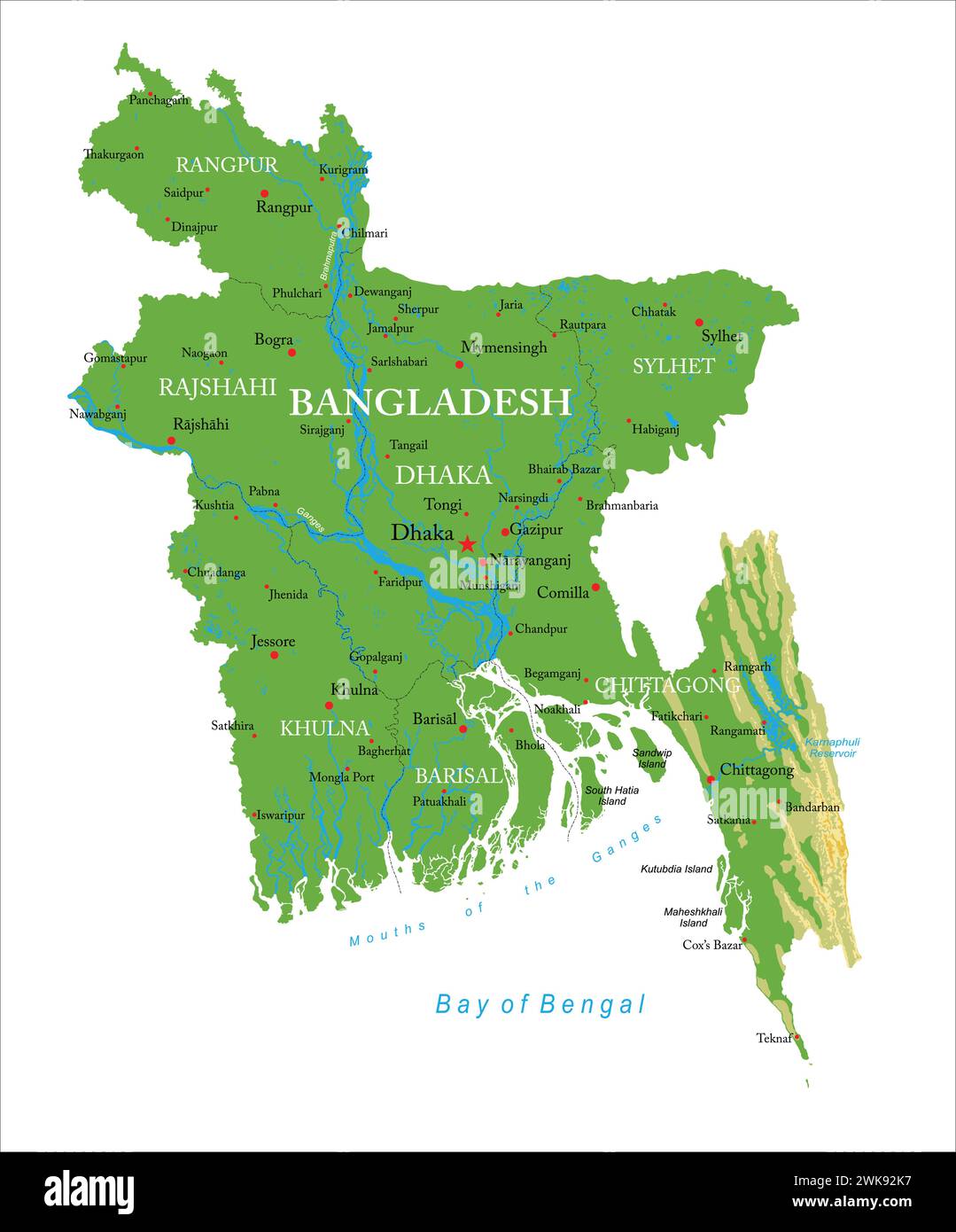
The state's response was brutal. Security forces, alongside armed wings of the Awami League like the Bangladesh Chhatra League, opened fire on unarmed demonstrators across Dhaka, Chattogram, and Rangpur. According to preliminary findings from the United Nations Office of the High Commissioner for Human Rights (OHCHR), well over 600 people were killed between mid-July and mid-August 2024, with later domestic health ministry estimates pushing that toll past 1,000 dead and tens of thousands injured.
By August 5, 2024, Hasina had fled by helicopter to India. Days later, Nobel laureate Muhammad Yunus stepped in to lead an interim government with a mandate to reform state institutions and prosecute those responsible for the bloodshed.
The International Crimes Tribunal (ICT)—originally set up in 2009 to prosecute atrocities committed during Bangladesh's 1971 Liberation War—became the chosen vehicle for those prosecutions. Prosecutors argued that the coordinated crackdowns, targeted sniper fire, and mass killings during the 2024 uprising met the legal threshold for crimes against humanity under the International Crimes (Tribunals) Act of 1973.
Why This Tribunal Carries Heavy Historical Baggage
Here's what most casual observers miss. The ICT isn't a United Nations court, despite the word "International" in its name. It's a purely domestic Bangladeshi tribunal operating under domestic law.
And its reputation? Complicated, to put it mildly.
When Sheikh Hasina's administration revived the court in 2009 and 2010, human rights groups like Amnesty International and Human Rights Watch repeatedly flagged serious due process flaws. Defense lawyers complained of restricted witness lists, hurried proceedings, and political interference. Back then, Awami League supporters dismissed those criticisms as foreign meddling, arguing that justice for 1971 war crimes was non-negotiable.
Now the shoe is on the other foot.
Watching the interim administration use the amended 1973 Act to prosecute former Awami League ministers, police officials, and party organizers creates an uncomfortable legal paradox. The interim government did pass amendments to the ICT Act in late 2024—expanding definitions of crimes against humanity, allowing foreign observers, and theoretically tightening evidentiary rules—to avoid repeating past mistakes. Yet trying many of the accused in absentia because they fled to India or third countries still raises eyebrows among international legal scholars.
You can't build lasting institutional trust if the court looks like a tool of political payback rather than impartial justice. That's the tightrope Dhaka is walking right now.
Who Was Targeted and How the Prosecution Built Its Case
The prosecution didn't just go after low-level foot soldiers pulling triggers in the streets. They built a command-responsibility case aimed straight at the political and security apparatus that enabled the July 2024 crackdown.
During the hearings, chief prosecutor Tajul Islam and his team relied heavily on three pillars of evidence:
- Digital forensics and open-source video: Thousands of smartphone clips uploaded by protesters and bystanders showed police units and ruling-party activists firing live ammunition into crowds in neighborhoods like Uttara, Jatrabari, and Mirpur.
- Hospital and morgue records: Doctors from Dhaka Medical College Hospital and private clinics testified about bullet wounds—specifically high-velocity rounds fired from rooftops and helicopters—as well as pressure from security agencies to alter death certificates.
- Chain-of-command testimony: Statements from detained police officers and bureaucrats pointed toward direct orders coming down from senior Awami League officials to suppress the protests "by any means necessary."
Under Bangladeshi law, proving crimes against humanity requires showing that atrocities were committed as part of a widespread or systematic attack directed against a civilian population. Prosecutors argued that the simultaneous deployment of armed party cadres alongside elite paramilitary units like the Rapid Action Battalion (RAB) proved state-backed coordination, not isolated police panic.
What Most People Get Wrong About Death Sentences in Bangladesh
If you think these seven Awami League leaders are heading to the gallows tomorrow morning, slow down. That's not how the Bangladeshi appellate system works, especially when defendants are outside the country.
First, any death sentence handed down by the ICT must be confirmed or reviewed through the Appellate Division of the Supreme Court of Bangladesh. Even when defendants are present, appeals routinely take years.
Second, several prominent Awami League figures named in ICT arrest warrants and indictments fled Bangladesh immediately after August 5, 2024. A verdict rendered in absentia carries enormous symbolic and political weight—it strips away any lingering legitimacy the old regime might claim—but executing that sentence requires physical custody.
Which brings us straight to the elephant in the room. New Delhi.
The India Factor and Extradition Headaches
You cannot talk about accountability for the 2024 Bangladesh uprising without talking about India. Sheikh Hasina has remained in India since fleeing Dhaka, and dozens of former ministers, MPs, and Awami League organizers reportedly crossed the border alongside or shortly after her.
Dhaka and New Delhi do have a bilateral extradition treaty signed back in 2013 (and amended in 2016 to speed up transfers). On paper, that treaty allows either country to request the handover of individuals charged with extraditable offenses.
In reality? Extradition treaties almost always contain a "political offense" exception.
New Delhi spent fifteen years cultivating Sheikh Hasina as its closest strategic partner in South Asia. Handing over senior Awami League leaders to face the death penalty in Dhaka would be political suicide for Prime Minister Narendra Modi's government at home, while signaling to regional allies that India abandons friendly leaders when regimes fall.
At the same time, flatly refusing Dhaka's legal requests poisons bilateral relations with Bangladesh's current leadership and alienates an entire generation of young Bangladeshis who already view New Delhi with deep suspicion. Expect diplomatic stalling, quiet backchannel negotiations, and plenty of public posturing from both capitals rather than sudden prisoner transfers on the tarmac.
How This Reshapes Bangladesh's Domestic Politics
Inside Bangladesh, the political consequences of these death sentences are immediate and brutal.
For the Awami League—the party that led Bangladesh to independence in 1971—this verdict is an existential blow. Already battered by student demands for an outright party ban and crippled by the flight of its top leadership, the party now carries the formal judicial stigma of crimes against humanity committed against its own citizens.
Meanwhile, rival political forces are jockeying hard to fill the vacuum:
- The Bangladesh Nationalist Party (BNP): Having boycotted elections and endured years of jailings under Hasina, the BNP wants swift national elections while its organizational network remains the largest intact political machine in the country.
- The student movement leaders: The coordinators who led the Anti-Discrimination Student Movement want structural constitutional reforms—term limits, judicial independence, an end to winner-take-all politics—locked in before any ballot boxes come out.
- Jamaat-e-Islami: Banned under Hasina's administration and decimated by earlier ICT executions, Jamaat has re-emerged openly on the political stage, viewing the current tribunal verdicts as grim vindication of their long-standing claims that the court was always political.
If the interim government leans too hard on tribunal verdicts without delivering economic stability—curbing inflation, fixing banking sector loot, and restoring garment export confidence—public patience will wear thin fast. Justice matters deeply to the families who lost sons and daughters in July 2024. Bread on the table matters just as much to 170 million people trying to survive rising food prices.
What International Observers Are Watching Next
Human rights organizations and Western diplomats are walking a careful line here. Governments in Washington, Brussels, and London welcomed the fall of an increasingly authoritarian regime and supported the UN fact-finding mission into the 2024 killings.
Yet Western governments also oppose the death penalty on principle.
The European Union and UN human rights bodies have consistently urged Dhaka to ensure that trials meet international fair-trial standards—meaning transparent evidence rules, genuine defense representation for absent defendants, and a moratorium on capital punishment. If the ICT starts churning out mass death sentences without airtight procedural transparency, international goodwill toward Bangladesh's transition could evaporate overnight.
How to Follow This Story Without Falling for Disinformation
Information warfare around Bangladesh has been intense since July 2024, with coordinated social media networks pushing fabricated casualty figures, doctored videos, and exaggerated claims about minority attacks or retaliatory violence. If you want to track how these tribunal rulings actually play out over the coming months, stick to primary verification habits:
- Check the UN OHCHR reports directly: Compare partisan claims from either Dhaka or New Delhi against the formal investigative findings published by the UN High Commissioner for Human Rights.
- Track Appellate Division filings, not just tribunal headlines: A trial-level death sentence at the ICT is step one, not the final word. Watch whether defense counsel files appeals and whether the Supreme Court stays or modifies the punishments.
- Watch the extradition paperwork, not political speeches: Politicians in Dhaka will promise swift extraditions to satisfy domestic voters, while commentators in Delhi will dismiss them. Until formal diplomatic notes trigger judicial hearings in Indian courts under the 2013 treaty, nothing has legally moved.
- Follow independent Bangladeshi legal journalists: Reporters covering the Supreme Court beat in Dhaka—through outlets like The Daily Star, Prothom Alo, and Netra News—consistently catch the procedural nuances that wire summaries leave out.
The Dhaka tribunal's death sentences mark a historic turning point, proving that even the most entrenched political dynasties in South Asia aren't untouchable forever. Whether those verdicts ultimately strengthen the rule of law in Bangladesh—or simply lock the country into another decade of zero-sum political vengeance—depends entirely on what happens in the appeals courts and ballot boxes next.