Every single time Beijing lurches three outdated aircraft and a handful of rust-bucket frigates across the median line of the Taiwan Strait, global media outlets lose their collective minds. Analysts with zero operational experience rush onto cable news networks to warn of an imminent amphibious landing. Panic spreads through financial markets. Defense contractors salivate over budget increases.
It is all smoke, mirrors, and administrative budget justification.
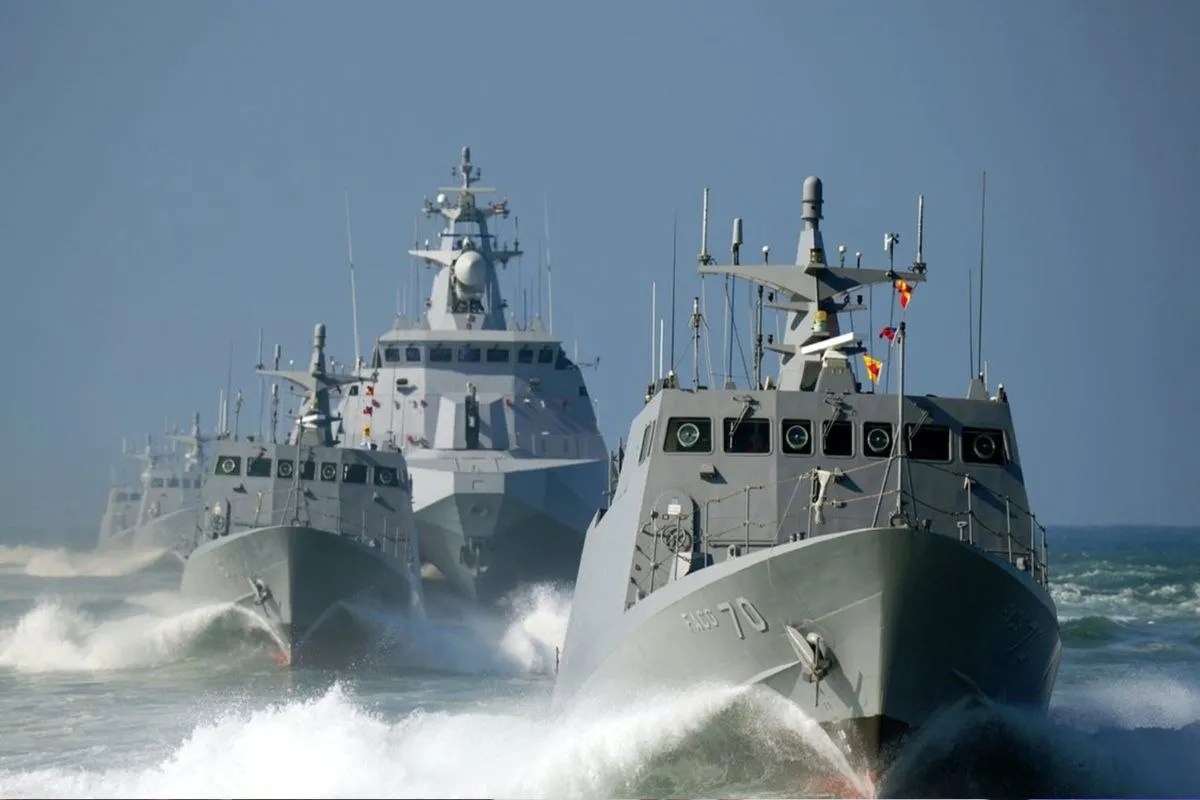
Let us look at the actual operational reality instead of swallowing the panic porn handed out by headline-hungry defense commentators. When state media breathlessly reports that three PLA aircraft and five PLAN ships were detected operating near Taiwan, they are describing a Tuesday morning coast guard patrol disguised as an armada.
The Logistics Trap Nobody Talks About
An amphibious invasion of Taiwan is not a cross-channel ferry ride. It is the single most complex military undertaking in human history, far outstripping the Normandy landings in scale, topography, and technological hazards. The Taiwan Strait is a punishing, weather-churning maritime meat grinder for nearly half the year.
Yet, casual observers look at a flotilla of five ships and assume a blockade is tightening. They ignore the brutal laws of logistics. To sustain an invasion force across ninety miles of heavily fortified water against a defending military that has spent decades embedding anti-ship cruise missiles into every limestone cliff on the island requires millions of tons of fuel, ammunition, and spare parts daily.
Three planes and five surface combatants do not project invasion power. They project nervous anxiety. Beijing is running a continuous psychological wear-and-tear campaign because actual kinetic conflict carries an existential risk that the leadership in Beijing is entirely unready to absorb.
Why the Status Quo Benefits Everyone Except the Alarmists
The lazy consensus in international relations is that escalation is linear. The narrative claims that every sortie brings us one step closer to World War III. That is a fundamental misunderstanding of how nuclear-armed major powers posture in the twenty-first century.
Sub-threshold coercion is a pressure valve, not a fuse. By keeping the Taiwan Strait at a low boil, Beijing achieves three domestic objectives without firing a single shot:
- It forces Taipei to spend billions on defensive readiness that could otherwise fund infrastructure or social programs.
- It tests communication protocols and electronic intelligence-gathering capabilities against regional defense grids in real time.
- It gives state television a perpetual nationalist distraction whenever domestic economic growth numbers dip below the Communist Party comfort threshold.
When you panic over three planes, you are playing the exact role written for you in a state-managed propaganda script.
The Real Vulnerability is Cyber, Not Kinetic
While everyone is staring at the horizon waiting for grey hulls to appear off the coast of Kaohsiung, the actual strategic contest is happening in silent server rooms.
Kinetic posturing is cheap. Buying influence in Taipei's political apparatus, conducting subterranean influence operations on social media platforms, and mapping the vulnerabilities of Taiwan's semiconductor supply chains are where the real strategic shifts occur. An adversary who can paralyze your power grid, disrupt your financial clearinghouses, and freeze your port logistics with keystrokes has zero incentive to launch a D-Day style amphibious assault that risks turning the Taiwan Strait into a maritime graveyard for their entire surface fleet.
Stop looking at the sky for three propeller planes. Start looking at the fiber-optic cables on the ocean floor and the software dependencies hiding inside critical infrastructure.
The next time a news alert screams about a surge of military hardware near Taipei, take a deep breath, check the vessel classes, and remember that real preparation for war looks nothing like a weekend naval parade.