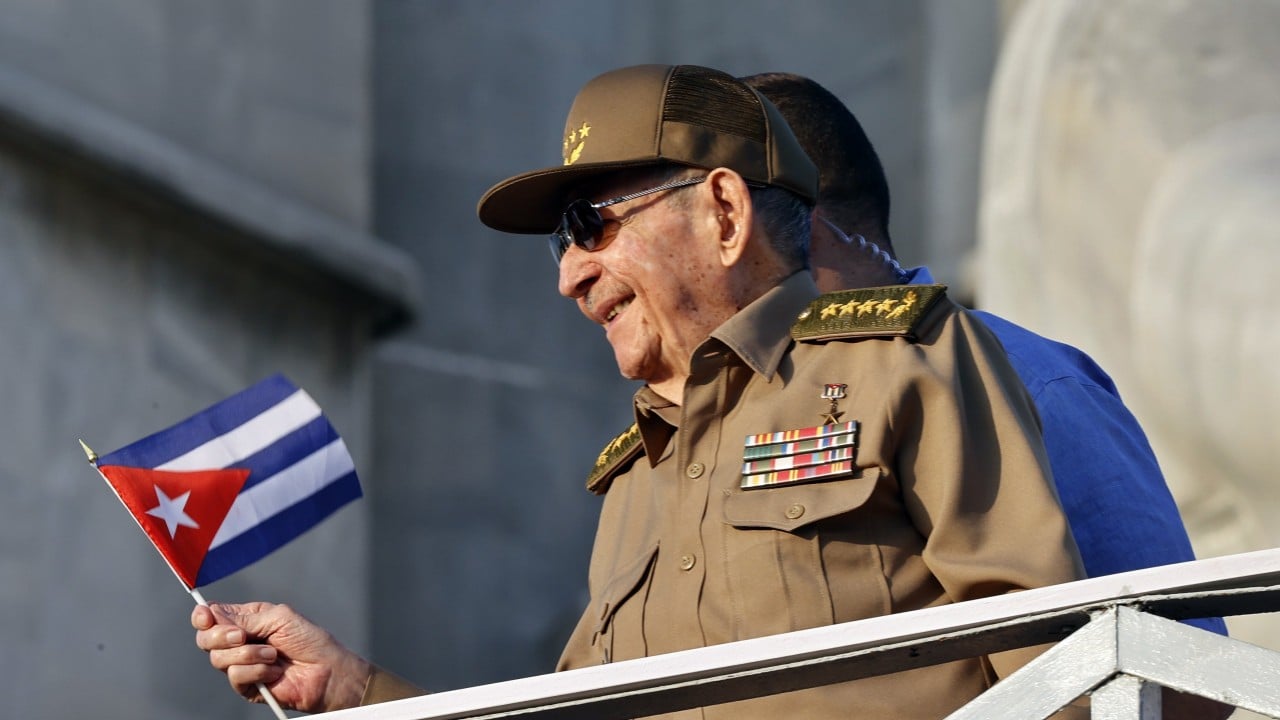
Beijing moved swiftly in October 2026 to defend former Cuban leader Raul Castro after Florida prosecutors secured a state arrest warrant charging him with conspiracy to commit first-degree murder over the deadly 1996 shootdown of two civilian planes. At a regular foreign ministry briefing, spokeswoman Mao Ning called the 95-year-old a "comrade" and a "venerated" revolutionary leader, accusing Washington of abusing judicial measures to pressure Havana and urging an end to sanctions and coercion.
Surface coverage treats Beijing's remark as routine socialist solidarity. That reading misses the real mechanics at work. A state-level warrant from Tallahassee and a federal indictment unsealed in May 2026 have collided with a year of acute pressure on Havana—including the January capture of Venezuelan leader Nicolas Maduro—turning a thirty-year-old aviation tragedy into a high-stakes test of sovereignty, extraterritorial law, and great-power signaling in the Western Hemisphere.
How a Thirty-Year-Old Shootdown Became a 2026 Warrant
The legal drumbeat did not start in October. It accelerated in May 2026 when the U.S. Department of Justice unsealed a superseding indictment charging Raul Castro—who was Cuba's armed forces minister in February 1996—alongside five co-defendants over the downing of two unarmed Cessna aircraft operated by Brothers to the Rescue, a Miami-based group that searched the Florida Straits for migrants at sea. Four men died in the attack, including three U.S. citizens: Carlos Costa, Armando Alejandre Jr., and Mario de la Peña, alongside Pablo Morales.
Five months later, Florida Attorney General James Uthmeier announced a state warrant charging Castro with conspiracy to commit first-degree murder. Prosecutors argued that Cuban fighter jets acted without prior warning or attempts to force a landing, destroying planes that federal prosecutors allege were flying outside Cuban territory.
In Washington and Miami, officials framed the prosecution as long-delayed accountability for the deaths of Americans. Cuban President Miguel Diaz-Canel dismissed the move as a political maneuver with no legal or practical basis, warning that it serves to build a pretext for coercive pressure or military action.
Legal experts and veteran observers see sharp friction between domestic prosecutorial ambition and practical enforcement. Uthmeier acknowledged that a 95-year-old living in Cuba is unlikely to fly to Miami voluntarily, even as he argued a warrant complicates international travel to jurisdictions with U.S. extradition treaties. At the same time, charging a sitting or former foreign official over a state-linked military operation raises thorny questions of sovereign immunity, extraterritorial jurisdiction, and evidentiary proof across three decades.
| Legal & Diplomatic Track | Key Actor | Core Claim or Action | Practical Effect |
|---|---|---|---|
| Federal Superseding Indictment | U.S. Department of Justice (May 2026) | Charges Castro and five others over the 1996 downing of two civilian planes and four deaths | Establishes formal U.S. federal criminal exposure for senior former Cuban officials |
| State Arrest Warrant | Florida Attorney General James Uthmeier (Oct. 2026) | Charges conspiracy to commit first-degree murder over the 1996 shootdowns | Creates a state warrant and flags potential extradition risk if Castro travels abroad |
| Havana's Rebuttal | President Miguel Diaz-Canel | Calls charges a political maneuver lacking legal basis and aimed at escalating pressure | Rejects U.S. authority and rallies domestic anti-imperialist messaging |
| Beijing's Diplomatic Shield | Foreign Ministry Spokeswoman Mao Ning (Oct. 2026) | Calls Castro "comrade" and opposes "abuse of judicial measures" and coercive pressure | Signals backing for Havana's sovereignty without binding legal enforcement |
Why Beijing Chose the Word Comrade
Words in Beijing's foreign ministry briefings are rarely accidental. Calling Raul Castro "comrade" and "venerated" places him inside a shrinking circle of founding-era revolutionary figures whom the Chinese Communist Party treats as ideological peers rather than ordinary foreign politicians.
That framing serves two audiences at once. Inside Cuba's leadership, it reassures aging elites and their successors that Beijing refuses to treat revolutionary veterans as common criminal suspects subject to U.S. courts. Outside Cuba, it projects ideological continuity at a moment when Havana's economic and energy lifelines are under severe strain.
Calling a ninety-five-year-old revolutionary "comrade" costs Beijing almost nothing diplomatically, yet signals that China rejects Washington's right to criminalize allied leadership through domestic indictments.
Still, rhetoric is not a security guarantee. China's defense of Castro stops well short of promising military intervention or absorbing all of Cuba's economic shocks. Beijing routinely pairs strong sovereignty language with cautious risk management so its broader trade and diplomatic ties do not unravel over a single flashpoint.
The 2026 Pressure Cooker Around Havana
The warrant did not land in a vacuum. Throughout 2026, U.S.-Cuba tensions sharpened dramatically following the capture of Venezuelan leader Nicolas Maduro by U.S. forces early in the year, stripping Havana of a vital regional partner and compounding energy and economic pressures tied to U.S. sanctions and oil-supply restrictions.
In that environment, criminal warrants function as asymmetric statecraft. Even without an immediate arrest, indictments and warrants narrow a target's room to maneuver, energize domestic supporters in South Florida, and keep Havana on the defensive.
Consider a hypothetical scenario where a former senior official from a sanctioned country visits a third nation that maintains a bilateral extradition treaty with Washington. Even if local authorities hesitate over political fallout, the mere existence of an active warrant turns routine travel into a diplomatic hazard. That chilling effect—not an imminent courtroom appearance in Miami—is often the most immediate consequence of such warrants.
What Beijing Gains by Pushing Back
Beijing's pushback fits a wider pattern in how China contests U.S. legal reach abroad. When Washington uses indictments, sanctions, or domestic court filings against foreign officials or entities, Beijing frequently attacks the practice as judicial overreach or long-arm jurisdiction.
- Defending norm boundaries: Beijing argues that national courts should not sit in judgment over another state's political and military leadership.
- Courting Global South partners: Standing beside a smaller socialist state under heavy sanctions reinforces China's pitch as a counterweight to U.S. coercion.
- Preserving leverage at low cost: Verbal backing keeps Havana aligned with Beijing without requiring China to underwrite every Cuban fiscal or energy shortfall.
Where the Counter-Argument Cuts Hard
Critics of Beijing's stance—and supporters of the prosecutions—argue that shielding Castro behind sovereignty obscures real victims and real crimes. Four men died when two civilian Cessnas were shot down in 1996, and their families waited three decades for formal charges.
Skeptics of the warrants also point out a genuine double standard in international law. Governments routinely invoke sovereignty when their allies are targeted, yet applaud extraterritorial prosecutions when rivals are in the dock. Neither side applies legal principles uniformly.
What to Watch Next
Watch whether new U.S. sanctions or enforcement moves follow the October warrant, and watch how Havana's leadership manages succession and public morale under prolonged economic squeeze. Watch too whether Beijing's support remains largely rhetorical—insisting on an end to blockades and coercion—or expands into concrete trade, energy, or diplomatic initiatives.
Track court filings in Florida alongside official statements from Havana and Beijing to separate courtroom theater from real shifts in leverage.

