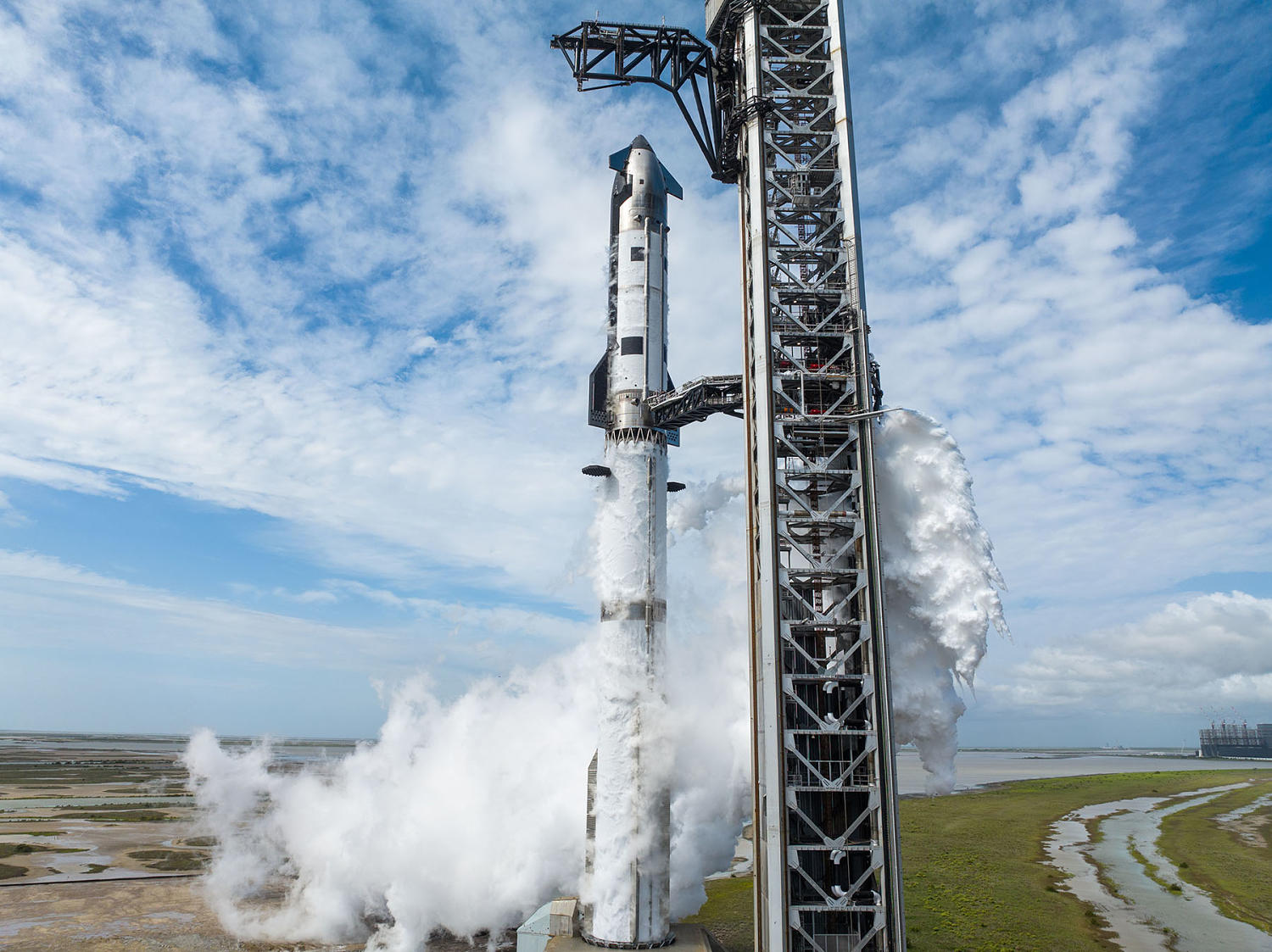
The aerospace press is swooning over SpaceX building an even larger Starship prototype. They see a bigger rocket and immediately copy-paste the same predictable narrative: larger payloads, grander mars missions, and total dominance over the launch market.
They are missing the entire point of aerospace economics.
Making Starship bigger right now is not a sign of triumph. It is a loud admission of a fundamental design bottleneck that the industry is too polite to talk about. The tech press loves to focus on the sheer scale of hardware because big steel cylinders look great on camera. But in the real world of rocket propulsion and orbital mechanics, scaling up physical size before mastering the underlying operational efficiency is a massive gamble.
The Secret Physics Penalty of Scaling Up
The lazy consensus says bigger is always better because of economies of scale. In shipping containers, yes. In rocketry, it is a brutal uphill battle against the rocket equation.
When you increase the diameter and height of a stainless-steel vehicle, your structural mass does not scale linearly with your volume. It brings a heavy penalty. The tech media reports on the expanded internal volume as if it is free real estate. It isn't. Every extra meter of steel requires more thrust, which requires more propellant, which in turn requires a heavier structure to hold that propellant.
Let's look at the actual physics of the raptor engines powering this beast. Rocket engines do not scale cleanly. When you pack more engines into a single booster base to lift a heavier hull, you create a logistical nightmare in fluid dynamics and acoustic vibration.
- Acoustic Destruction: More engines mean a higher decibel output that can literally shake the vehicle—or the launch pad—to pieces.
- Thermal Management: The plumbing required to feed propellant to a massive cluster of engines at cryogenic temperatures introduces thousands of potential failure points.
- Plume Interaction: The exhaust streams from dozens of engines interacting at supersonic speeds create unpredictable backpressure environments.
I have watched aerospace startups blow hundreds of millions of dollars trying to scale up thrust profiles before perfecting their thermal protection systems. SpaceX is not immune to these laws of physics. Increasing the footprint of the vehicle before achieving a 100% reliable, rapidly reusable upper-stage reentry profile is putting the cart miles ahead of the horse.
The Reusability Myth the Public Buys Into
Everyone asks: "When will Starship be fully reusable?"
The better question is: "Will a massive Starship ever be economically reusable?"
True reusability is not just about catching a booster with giant mechanical arms, though that makes for spectacular video. True reusability means minimal refurbishment between flights. It means turning a rocket around in twenty-four hours like a commercial airliner.
Right now, the thermal protection system—the thousands of hexagonal ceramic tiles covering the belly of the ship—is a glaring vulnerability. Every time a prototype flies, tiles crack, peel off, or fail under extreme plasma loads during reentry.
When you build a bigger prototype, you exponentially increase the surface area that requires thermal shielding. That means more tiles, more inspectable surface area, and more failure points. If a ship requires weeks of meticulous manual inspection and tile replacement between flights, the entire economic model of cheap orbital access collapses. A larger ship that sits in a hangar for a month being repaired is vastly less useful than a smaller, less ambitious vehicle that can fly twice a week.
The Distraction of the Mars Narrative
The public obsession with Mars missions blinds people to the immediate commercial realities. Starship’s real, near-term job is much less romantic: it needs to deploy the massive next-generation Starlink satellites and fulfill the Artemis human landing system contract for NASA.
Neither of those tasks strictly requires a larger hull than what has already been built. In fact, a larger vehicle complicates the NASA contract. To send a single Starship to the moon under the current architecture, SpaceX must launch multiple "tanker" Starships to refill the main vehicle in low Earth orbit.
Think about the math. If you make the primary deep-space vehicle larger, you drastically increase the volume of cryogenic propellant required to fill it. That means the number of orbital refueling flights goes up. Instead of needing perhaps eight to ten tanker flights, you might now need fifteen or twenty.
Every single launch carries risk. Doubling the number of required refueling launches to support a single mission does not make the architecture more reliable; it introduces a compounding probability of a catastrophic launch or docking failure. It is an engineering workaround for a payload capacity that nobody actually needs yet.
What the Competitors Are Getting Right
While the media fawns over the scale of Starship, legacy players and new automated launch startups are quietly focusing on the real profit center: precision and cadence.
The satellite market is shifting toward smaller, distributed constellations in custom orbits. Launching a massive, school-bus-sized rocket to deploy a handful of small satellites is like using a cruise ship to deliver a pizza. It makes no financial sense. Unless you are filling a giant rocket to maximum capacity on every single flight, the cost per kilogram metrics get ugly very quickly.
The contrarian truth is that the sweet spot for the launch market is not mega-heavy lift. It is reliable, high-frequency, medium-to-heavy lift. A vehicle that can reliably put twenty tons into a precise orbit every Tuesday morning will print money faster than a monster rocket that can lift two hundred tons but requires a specialized seaport, a cleared airspace for fifty miles, and months of pad repairs after every launch.
Stop Asking About Size
The industry keeps tracking the wrong metrics. We are bombarded with infographics comparing the height of Starship to the Saturn V or the Statue of Liberty, as if height equates to engineering dominance.
We should be asking about turnaround times. We should be asking about the exact boil-off rate of liquid methane during orbital storage. We should be asking about the mass fraction efficiency of the structural hull.
Building a larger steel tank is relatively easy. Perfecting the metallurgy to prevent structural fatigue over fifty flights is incredibly hard. Managing the intense aerodynamic stresses of a larger cross-section punching through the upper atmosphere is incredibly hard.
If SpaceX builds a bigger prototype before proving they can routinely land and reuse the current size without a scratch, they aren't accelerating progress. They are scaling up their mistakes.
Stop looking at the height charts. Watch the refurbishment clock. That is where the real war for space dominance will be won or lost. Deliver the payload cleanly, turn the vehicle around in a day, and do it again. Anything else is just expensive theater for the internet.