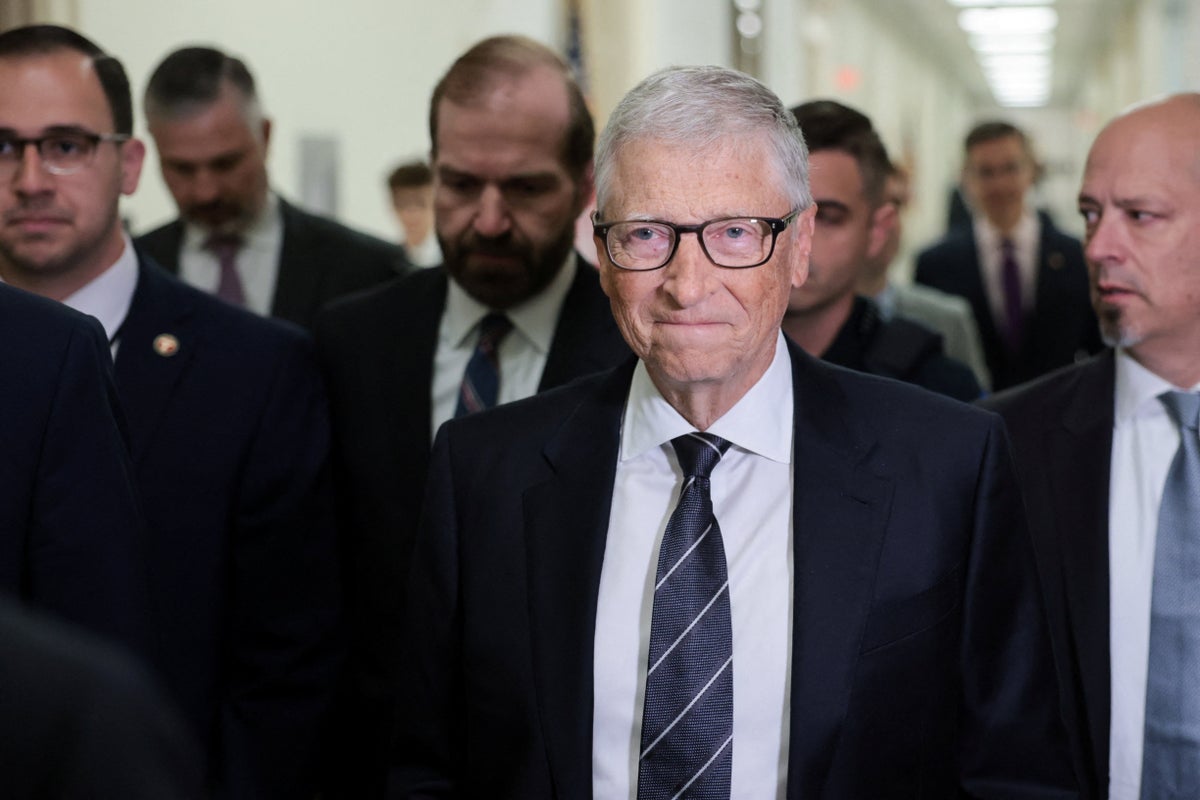
Bill Gates just gave a voluntary deposition before a House committee investigating the Jeffrey Epstein case, and his defense boils down to a classic, painful admission. He had extramarital affairs, and one of the world's most notorious predators found out about them and tried to use them as leverage.
For years, the public wondered why a tech pioneer and hyper-calculating billionaire kept hanging out with a convicted sex offender long after his 2008 conviction. Now we know. Gates admitted to Congress and his own foundation staff that Epstein discovered sensitive details about his personal life—specifically, his infidelities—and used that data to mount a targeted pressure campaign.
The strategy didn't work, according to Gates. But the details coming out of the recently released Justice Department files paint a deeply unsettling picture of how power, secrets, and elite networking collided.
The Russian Connections and the 2017 Threat
The pressure campaign wasn't vague or abstract. It targeted very specific elements of Gates's personal life.
During a recent internal town hall meeting with Gates Foundation staff, Gates confessed to having two specific extramarital affairs. One was with a Russian bridge player named Mila Antonova, whom he met at bridge tournaments around 2010. The other was with a Russian nuclear physicist he met through business activities.
Epstein stepped into the picture by capitalizing on these relationships. In 2013, Antonova was looking for funding for a software coding school. Gates refused to fund it, but Epstein stepped in and paid her tuition directly.
Years later, in 2017, after Gates had cut off communication with Epstein, the trap snapped shut. Epstein sent Gates an email demanding reimbursement for Antonova’s coding school costs. The subtext wasn't subtle. The tone of the email made it clear that Epstein knew about the affair and could expose it if Gates didn't re-engage with him.
The timing of that 2017 email matters immensely. Epstein was aggressively trying to set up a multibillion-dollar charitable fund with JPMorgan Chase. To make it work, he desperately needed the validation and financial backing of Bill Gates. In emails sent to JPMorgan executives, Epstein openly boasted about his access, claiming his planned fund would allow Gates to access elite investments "without upsetting either his marriage or the sensitivities of the current foundation employees."
When Gates refused to play ball, Epstein weaponized the affairs.
A Serious Failure of Elite Scrutiny
One of the biggest questions surrounding this entire saga is how Gates, a man with access to the finest security and intelligence apparatus money can buy, managed to misjudge Epstein so completely.
Gates told Congress he was introduced to Epstein in 2011 through trusted professional and philanthropic contacts. Epstein pitched himself as a master fundraiser who could secure billions of dollars for global health initiatives. Gates claimed he viewed the relationship through a purely utilitarian lens, believing Epstein could unlock massive funding for the causes the Gates Foundation championed.
But Gates admitted he accepted the introduction without applying necessary scrutiny. He told foundation staff he was aware of an "18-month thing" that had limited Epstein's travel—referring to Epstein’s 2008 conviction for soliciting prostitution from a minor—but claimed he didn't fully understand the terrifying scope of Epstein's criminal behavior at the time.
That blind spot carried a heavy cost. Between 2011 and 2014, Gates continued to meet with Epstein. He flew on Epstein's private jet and met him in New York, Washington, Paris, and Germany. Gates maintains he never stayed overnight, never visited Epstein's private island, and never witnessed or suspected any illicit behavior.
He did, however, admit that Epstein’s massive network of Wall Street billionaires and prestigious figures made the interactions feel normalized. It was a classic elite echo chamber where wealth obscured obvious danger signs.
The Severe Fallout for the Gates Legacy
The revelations from the massive trove of Department of Justice documents are actively dismantling pieces of Gates's public standing. The personal toll is already a matter of public record; Gates acknowledged that his then-wife, Melinda French Gates, was deeply skeptical of Epstein from the beginning. The tension over the ongoing relationship contributed to the end of their marriage in 2021.
Now, the professional fallout is accelerating. Gates was recently snubbed by Microsoft's annual CEO summit and didn't attend the annual meeting of Berkshire Hathaway shareholders—an event he frequented for decades.
Inside his own organization, the damage control is extensive. The Gates Foundation opened an external review into its historical ties with Epstein. During his staff town hall, Gates apologized to his employees, admitting that his past judgment errors have cast a shadow over the global health and development work the organization performs daily.
The Reality of Asset Protection and Security
The lesson here isn't just about high-profile gossip. It's a stark reminder of how high-net-worth individuals become prime targets for sophisticated extortion when they fail to manage personal risks.
If you manage a business, an organization, or significant assets, you don't wait for a crisis to vet your network.
First, implement strict, independent background checks for any third-party fundraisers or high-profile partners, regardless of who introduced them. Relying on "trusted mutual friends" in elite circles is how bad actors bypass traditional security compliance.
Second, maintain total separation between personal relationships and institutional operations. Epstein successfully embedded himself into the periphery of Gates's world by funding individuals connected to Gates's personal life, creating a web of leverage that took years to untangle.
Ultimately, Gates's team had to build a literal replica of the congressional hearing room in Palm Desert, California—complete with a mock podium, wood-paneled furniture, gold curtains, and cameras—just to prepare the billionaire for the intense scrutiny of his deposition. It's a vivid image of the extraordinary measures required to manage the fallout when personal secrets are leveraged by dangerous people.
Bill Gates Admits Two Affairs With Russian Women Amid Epstein Row
This video provides essential broadcast context regarding Bill Gates's direct admissions to his foundation staff about his extramarital relationships and his deep regrets over allowing Jeffrey Epstein into his professional orbit.