The salt spray of the Caribbean sticks to your eyelashes before you even realize you are crying.
Standing on the ridge of what is now the Virgin Islands National Park, looking down at Trunk Bay, the water does not look real. It is a gradient of impossible blues, shifting from the pale, trembling turquoise of a shallow reef to the bruised, midnight navy of the deep trench beyond. Green hills roll down to white sand, dense with sea grapes, maho trees, and the low hum of an island that existed long before humans learned to measure time in dollars.
Now, imagine stepping onto these exact beaches in the early winter of 1952.
There were no paved roads. No eco-resorts. No cruise ship terminals flashing neon in the distance. Just wild forest, old ruins of sugar plantations swallowed entirely by vines, and silence. A silence so absolute that the only sound was the rhythmic, indifferent pulse of the Atlantic crashing against coral.
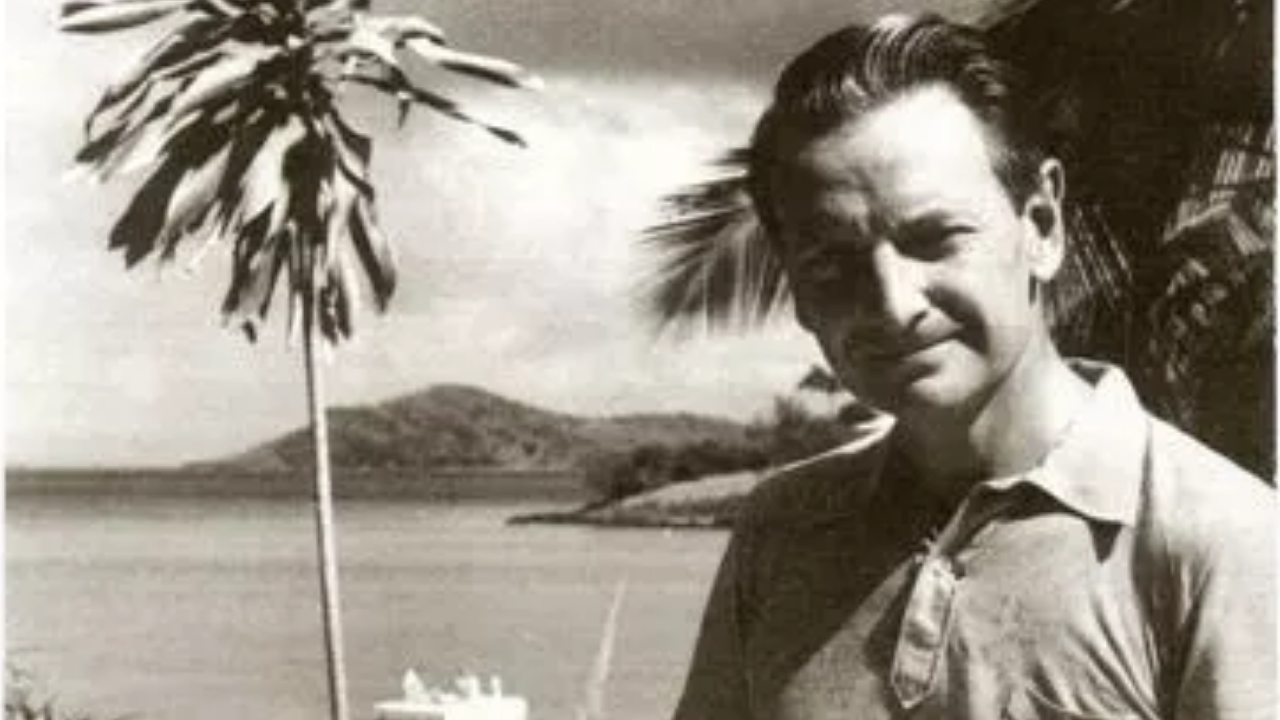
Laurance Rockefeller stepped off a boat onto that shore, adjusted his collar, and exhaled.
He was not looking for a place to build a mansion. He was looking for an escape from the frantic gravity of his own name. As the grandson of John D. Rockefeller, his life was built on iron, oil, ledgers, and a legacy that cast a shadow stretching across continents. Yet here, standing in the raw, humid heat of St. John, he felt something entirely foreign.
He felt small. And for a man burdened by an empire, smallness was the sweetest luxury on earth.
The Architecture of Preservation
Wealth usually builds. It pours concrete. It carves highways into mountainsides. It puts up fences and writes "Private Property" in bold letters on weathered cedar signs.
Laurance did the opposite.
He looked at the steep hillsides of St. John and saw a tragedy waiting to happen. The post-war American boom was beginning to stretch its long, asphalt fingers toward the tropics. Developers were eyeing the Virgin Islands, salivating over pristine bays and sweeping ocean views. They saw concrete blocks, luxury hotels, and tourists sipping rum punches under plastic umbrellas.
Rockefeller saw something else. He saw a sanctuary that, once paved, could never be unpaved.
History often paints wealthy conservationists as eccentric saints, but the reality was far more strategic. Rockefeller was a pragmatist with an aesthetic soul. He understood that America was changing, speeding up, choking on its own exhaust. He believed that the national park system was the best idea the country ever had, a radical democratic promise that the most beautiful places on Earth belonged to everyone, not just the people who could afford the deed.
So, he quietly formed a quiet corporation called Jackson Hole Preserve.
Through this shell, he began buying land on St. John. Quietly. Parcel by parcel. Acre by acre. He bought old sugar estates, steep hills, rocky shorelines, and hidden beaches from local families who had farmed or fished those waters for generations. Some were eager to sell; others were suspicious of the billionaire from New York. Why would a Rockefeller want chunks of scrubby hillside with no electricity and no running water?
They thought he was crazy. They thought he was building a secret palace.
Instead, he was assembling a ghost.
A Gift That Changed the Horizon
By the mid-1950s, Rockefeller had quietly acquired more than 5,000 acres of St. John. That is roughly two-thirds of the entire island.
Think about that scale for a moment. Imagine owning a majority of an island paradise and holding the power to turn it into your own private kingdom, a playground for the ultra-rich where superyachts anchor in hidden coves and gates lock out the local fishermen.
He didn't do it.
On a crisp day in Washington, D.C., the transaction was finalized. Rockefeller handed the deeds of those 5,000 carefully curated acres over to the federal government, establishing the Virgin Islands National Park in 1956.
It was not a hands-off donation. To soften the blow of preservation on the local economy, he also built Caneel Bay Resort on a small, excluded slice of land. It was designed to be a pioneering experiment in low-impact luxury, where cottages blended into the foliage and guests were forced to disconnect from the modern world. He wanted tourism, yes, but tourism that respected the ghost of the place. He wanted people to experience the island the way he had—not as conquerors, but as guests.
When you walk the Cinnamon Bay Trail today, past the skeletal ruins of the 18th-century Danish sugar mill where enslaved people once labored under a brutal sun, the history of the island feels heavy in the air. The park is not just a collection of pretty trees and clear water. It is a layered monument. It holds the scars of colonial greed, the quiet resilience of island culture, and the peculiar intervention of American philanthropy.
The wild donkeys that trot across the road today do not care about the Rockefeller name. The pelicans diving into the turquoise surf do not check property lines.
They simply exist, suspended in a landscape that survived the 20th century because one man decided that some things were too valuable to be bought twice.
The Lasting Echo
We live in an era obsessed with acquisition. We measure our lives in square footage, stock portfolios, and digital engagement metrics. We look at a view and immediately wonder how to monetize it, how to build a brand around it, how to capture it in a vertical video.
Laurance Rockefeller's legacy in St. John offers a strange, quiet counter-narrative. It reminds us that the ultimate flex of immense power is sometimes restraint. It is looking at a paradise, falling completely in love with its wild, untamed chaos, and then stepping back to ensure nobody can ever ruin it.
Next time you find yourself scrolling through photos of white-sand beaches, looking for an escape from the endless noise of notifications, emails, and concrete jungles, remember the hills of St. John.
Remember the quiet billionaire who walked those ridges seventy years ago, felt the sting of salt air, and decided that the best thing he could do with his fortune was to make sure it vanished into the green.
The sun dips below the Caribbean horizon, turning the water from bright turquoise to a deep, molten gold, and the jungle lets out its evening sigh.


