Two hundred billionaires live in California. That single fact has quietly governed the state’s budget, its public schools, and its anxieties for more than a decade.
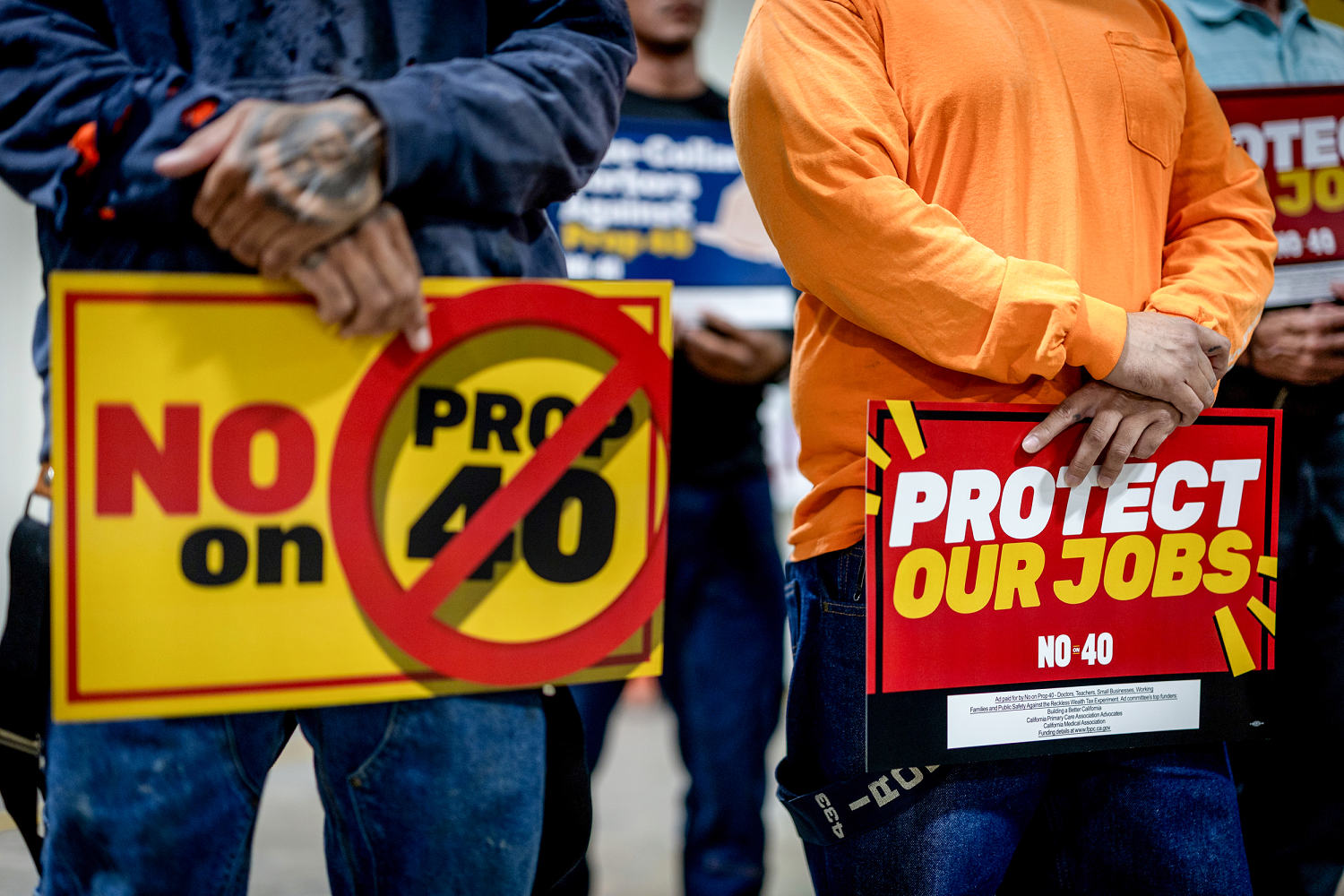
When California voters stepped into voting booths to decide the fate of a proposed billionaire tax—most prominently represented in recent election cycles by measures like Proposition 30, which sought a 1.75 percent tax hike on personal income above $2 million to fund electric vehicle infrastructure and wildfire prevention, alongside ongoing legislative pushes such as Assembly Bill 259 for an annual net-worth tax—they were not merely checking a box on a ballot. They were standing over a fault line. On one side stood teachers, nurses, climate advocates, and working families watching the cost of milk, rent, and health insurance climb out of reach while tech fortunes swelled into the hundreds of billions. On the other side stood business owners, economists, moderates, and even Democratic leaders who feared that pushing the wealthiest residents one step too far would trigger an exodus that could hollow out the very tax base California depends on to survive. In similar news, take a look at: Inside the Diplomatic Scramble to Keep Europe at the Ukraine Negotiating Table.
Voters said no.
To understand why a state famous for its progressive politics rejected a tax aimed squarely at the ultra-wealthy, you have to look past the campaign slogans and step inside the kitchens, classrooms, and boardrooms where the real math happens. The Washington Post has provided coverage on this fascinating subject in extensive detail.
The Kitchen Table Math of a Golden State
Consider a hypothetical family—let’s call them Elena and Marcus—living in a modest two-bedroom bungalow in East Oakland. Elena teaches fourth grade in a public school where the air conditioning fails every September; Marcus repairs municipal buses. Together they earn $135,000 a year, a figure that sounds generous almost anywhere else in the country and feels like treading water in the Bay Area.
Every spring, Elena buys glue sticks and printer paper with her own debit card. Every summer, smoke from Sierra Nevada wildfires turns the afternoon sky into the color of an old penny, keeping her students indoors during recess. When union organizers and environmental coalitions knocked on Elena’s door to pitch a new tax on the state’s richest residents, the logic felt immediate and personal. Why shouldn’t the people who made historic fortunes during the tech boom help pay for clean air, fire crews, and public infrastructure?
According to data from the California Franchise Tax Board and the Legislative Analyst’s Office, the top 1 percent of California earners already pay roughly 40 to 50 percent of the state’s personal income tax revenue. In years when Silicon Valley stocks soar, Sacramento enjoys massive budget surpluses. In years when tech stocks stumble, the state plunges into multi-billion-dollar deficits.
For supporters of a billionaire tax, that concentration of wealth is precisely the point. Labor unions, including the California Teachers Association and the Service Employees International Union, alongside progressive advocacy groups like the California Federation of Teachers, have repeatedly argued that extreme wealth inequality requires structural correction. Their case rests on a simple moral equation: when a handful of individuals accumulate more wealth than entire mid-sized nations, asking them to contribute an extra fraction of a percent to stabilize public services and fight climate change is both fair and overdue.
Yet when the ballots were counted, millions of voters who share Elena and Marcus’s daily struggles still voted against the measure.
Why?
The Warning From Sacramento
The opposition did not come solely from corporate boardrooms or billionaire donors, though tech executives and venture capitalists poured tens of millions of dollars into defeating wealth and high-earner tax proposals. One of the loudest voices against Proposition 30 was California’s own Democratic governor, Gavin Newsom.
Newsom broke sharply with progressive allies, appearing in television ads warning that the measure was a "Trojan horse" engineered by a single company—Lyft—to force taxpayers to subsidize corporate electric vehicle mandates. Beyond the politics of that specific measure, state fiscal analysts and mainstream economists have long raised a structural alarm about how California collects its money.
California already has the highest top marginal personal income tax rate in the United States at 13.3 percent—rising to 14.4 percent for wage earners after the elimination of the State Disability Insurance wage cap. Unlike most states, California taxes capital gains as ordinary income, meaning every stock sale by a tech founder is taxed at the highest bracket.
Think of California’s budget like a house balanced on three narrow stilts rather than a wide concrete foundation. Because property taxes are strictly capped under 1978’s Proposition 13, the state relies heavily on personal income taxes from a tiny fraction of ultra-high earners. When those earners have a good year, the house stands tall. When even a few dozen of them move to Texas, Florida, or Nevada—states with zero personal income tax—the stilts wobble.
Critics of new billionaire taxes, including the California Chamber of Commerce and nonpartisan tax policy researchers at the Tax Foundation, point to high-profile departures like Elon Musk, Larry Ellison, and Charles Schwab as cautionary tales. While academic studies from institutions like Stanford University and the UC Berkeley Stone Center on Wealth and Income Inequality show that millionaires generally migrate at lower rates than middle-income residents, tax policy experts note that losing even a small cluster of ultra-billionaires can erase hundreds of millions of dollars in annual revenue overnight.
For voters standing in the booth, the fear was not sympathy for billionaires. It was self-preservation. Many Californians wondered: If the billionaires leave, who gets stuck with the bill next?
The Invisible Stakes Behind the Ballot
The debate over taxing billionaires in California also exposes a deeper, quieter frustration that rarely makes it into political commercials: trust.
Over the past decade, California voters approved billions of dollars in new bonds and taxes aimed at solving homelessness, repairing crumbling highways, and expanding public transit. Yet on their daily commutes, residents still saw tent encampments growing beneath freeway overpasses, potholes swallowing tires, and utility bills climbing among the highest in the nation.
Let’s step into another hypothetical scene—this time a small family-owned machine shop in Fresno run by a second-generation owner named David. David isn’t a billionaire. He isn’t even close. Still, when he hears talk of a new tax targeting the ultra-rich, his instinct is skepticism. He remembers watching state surpluses swell to nearly $100 billion in 2022, only to vanish into a massive deficit two years later without visible improvements to his neighborhood streets or local schools.
To David, the question wasn’t whether billionaires have too much money. The question was whether Sacramento would spend another dollar wisely.
Political analysts at the Public Policy Institute of California have documented this exact tension in voter polling. Californians consistently express strong concern about income inequality and support the idea of the wealthy paying their fair share in the abstract. Yet when specific ballot measures appear with complex funding formulas, carve-outs, or unclear oversight, skepticism takes over. Voters begin looking for the catch.
And in the case of a direct wealth tax—such as legislative proposals seeking to tax unrealized capital gains or global net worth—the practical hurdles become even thornier. How do you value a private startup that hasn’t gone public? What happens if a founder’s paper wealth drops by half the day after the tax assessment? Legal scholars have also warned that taxing assets held outside California would almost certainly trigger years of constitutional battles in federal court, tying up the revenue long before a single dollar reaches a classroom or fire station.
What the Rejection Actually Means
Calling the defeat of a billionaire tax a simple victory for the right or a crushing defeat for the left misses the real story unfolding across California.
The political spectrum in the state is no longer a neat tug-of-war between Republicans and Democrats. Instead, it has fractured into a complex debate between populist progressives who believe aggressive redistribution is the only answer to runaway inequality, and pragmatic moderates who argue that economic growth, housing affordability, and government accountability must come first.
Union leaders and progressive advocates have made clear that the issue is far from dead. With housing costs still locking an entire generation out of homeownership and climate disasters growing more expensive every summer, pressure to tap concentrated wealth will continue to resurface in future legislative sessions and ballot initiatives.
Meanwhile, business groups and moderate lawmakers see the vote as a clear boundary line drawn by the electorate: before asking for another tax hike, the state must prove it can manage the revenue it already collects and stabilize the erratic boom-and-bust cycles of its existing tax code.
Back in East Oakland, the morning after the election, Elena unlocks her classroom door at 7:15 a.m. The fluorescent lights flicker on, illuminating rows of mismatched desks and a box of donated tissues sitting beside the whiteboard. Down the highway in Silicon Valley, servers hum inside glass campuses where fortunes rise and fall by millions of dollars before lunch. Both worlds share the same coastline, the same dry hills, and the same fragile fiscal future—waiting to see who will blink first.