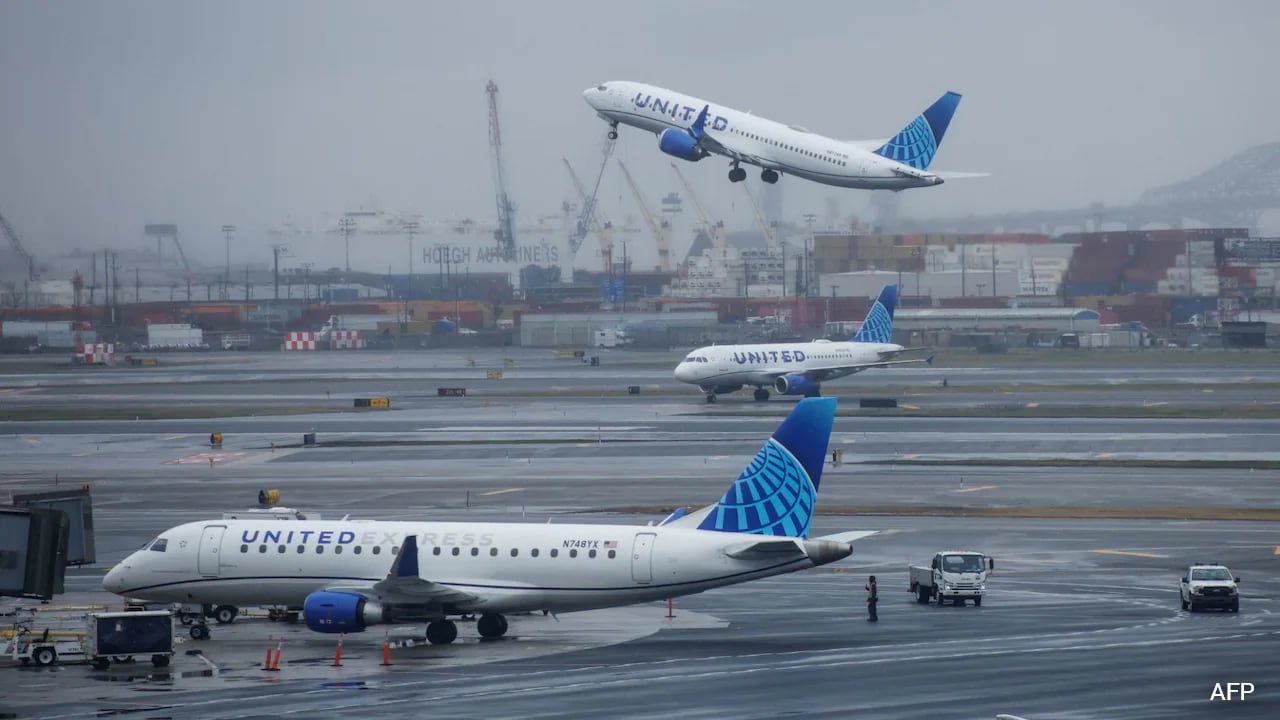
Every time a few hundred flights stall out on the tarmac, the playbook opens to the exact same page. A glitch hits an air traffic control system, a monitor flickers out in a regional center, or a communications line drops for twenty minutes. Instantly, the corporate PR machine kicks into high gear. They point a collective finger at the federal infrastructure, shake their heads at crumbling public utilities, and issue press releases about circumstances entirely beyond their control.
It is a masterpiece of corporate misdirection. And the traveling public buys it every single time.
I have spent years watching airlines treat air traffic control malfunctions as the ultimate get-out-of-jail-free card. Whenever scheduling arrogance, razor-thin fleet redundancies, and aggressive gate-turn algorithms collide with basic reality, they pray for a radar hiccup. Because the moment a system warning flashes on a terminal screen, every systemic failure of airline management vanishes behind a wall of bureaucratic sympathy.
Let us dismantle the lazy consensus. The problem is not that our national airspace management is fragile. The problem is that commercial aviation has engineered a system where any minor external friction causes total structural collapse, and they use government facilities as a convenient shield for their own operational decay.
The Fragility Illusion
When a primary radar feed drops or a flight plan system goes offline for an hour, the standard narrative treats it like a catastrophic structural failure of the entire grid. That is nonsense. Modern airspace architecture features built-in redundancies, fallback frequencies, and manual routing protocols that have kept planes separated safely for decades.
Yet, when a minor disruption forces a temporary ground stop, commercial flight schedules do not just pause. They shatter. Why? Because airlines run a high-stakes game of operational chicken. They schedule aircraft and crews with zero margin for error. Every plane is booked on a relentless multi-leg daily loop. Every pilot and flight attendant is scheduled right up to the legal limit of their duty hours.
Imagine a row of dominoes spaced a millimeter apart. When someone taps the first piece, blaming the breeze that rustled the table is dishonest. The catastrophe happened the moment you set the dominoes up to fall at the slightest provocation.
When air traffic control slows down for safety procedures, they are doing their actual job: keeping metal from colliding in the clouds. But airlines treat air traffic management capacity as an infinite, frictionless conveyor belt. When that belt stutters for twenty minutes, the cascading delays take twelve hours to clear. That is not a government failure. That is an operational vulnerability born of sheer greed.
The Myth Of The Infinite Buffer
Let us address the core question everyone asks when the departure boards turn crimson: Why can't the system handle a simple technical glitch without grounding half the country?
The premise of the question is already poisoned. The system does handle the glitch. The computers reboot, the backup voice channels open, and operations resume within an hour. What fails to recover is the airline schedule.
Airlines have systematically stripped out the operational fat that used to absorb shocks. Decades ago, carriers maintained spare aircraft at major hubs. They had reserve crews sitting on standby, paid to drink coffee and wait for a mechanical failure or a weather delay. They built recovery time into turnaround windows.
Then came the spreadsheet warriors. Finance departments looked at grounded planes and standby crews as idle capital. They optimized every ounce of slack out of the network. They turned airlines into ultra-lean logistics engines that perform brilliantly under laboratory conditions and implode the second a cloud drops below minimums or a server reboots.
When an air traffic control malfunction occurs, the government agency involved is forced to throttle the flow of traffic to maintain safety margins. That is a feature, not a bug. The air traffic system prioritizes one thing above all else: non-negotiable separation of aircraft. If visibility drops or automated handoff tools stutter, the logical move is to slow the pace.
Airlines hate this because it exposes their lack of resilience. Instead of admitting that their network has no shock absorbers, they act aggrieved that the people guarding the skies refused to rush aircraft through a blinded intersection.
The Real Cost Of Pointing Fingers
Let us be entirely transparent about the downside of this contrarian view. Is air traffic control modernization moving at the speed of a glacier? Yes. Are there outdated automation stacks running on hardware older than the pilots flying the jets? Absolutely. Funding battles, procurement delays, and bureaucratic inertia plague federal aviation infrastructure.
Conceding that point does not absolve the carriers. It makes their exploitation of the situation worse.
Airlines know the public infrastructure has weak spots. They know modernization programs face political roadblocks. Instead of fortifying their own networks against these known, inevitable realities, they treat them as external hazards they can blame whenever their tight-coupling strategy backfires. If you build a house on a flood plain without a sump pump, you do not get to scream at the rain when your basement fills up. You knew the water was coming. You chose not to build for it.
The executives standing on television stages bemoaning outdated federal technology are the same people who cut maintenance budgets, outsourced heavy checks to third-party providers with questionable oversight, and loaded their balance sheets with stock buybacks rather than digital infrastructure investments. They want public subsidy for private risk.
How To Read The Board When The System Breaks
Next time you find yourself staring at a wall of cancelled flights while an agent blames a computer glitch in a regional center, apply some basic analytical hygiene.
First, look at which airlines recover first. If carrier A is back in the air ninety minutes after a control center reboot, while carrier B cancels forty percent of its schedule for the next three days, the issue was never the radar system. The issue was carrier B's crew scheduling software and asset utilization strategy.
Second, ignore the press releases that conflate a twenty-minute technical pause with a multi-day operational meltdown. A pause is an event. A meltdown is a symptom of poor architecture.
We keep treating these events as black swan anomalies. They are not anomalies. They are predictable outputs of a brittle system designed to maximize short-term yield at the expense of structural integrity.
Stop blaming the people holding the radar scope for the fact that the airline running the plane has nowhere to put it, no crew legal to fly it, and no spare frame to swap it out. They are doing their job. It is time the airlines started doing theirs.