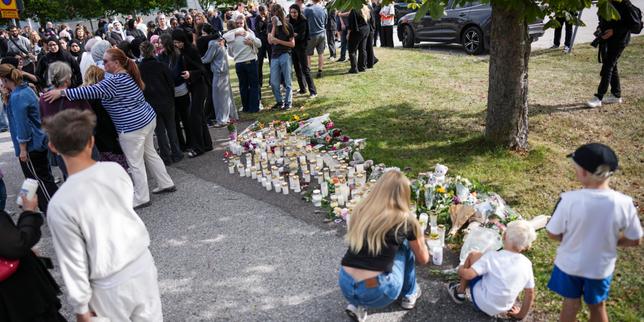
Another school term begins, and another Swedish community bleeds. When an eighteen-year-old former student walked into the Brinell School in Fagersta wearing a helmet and wielding a sword, murdering a seventeen-year-old girl and severely injuring others, the media machine whirred into its familiar, predictable motion. Pundits wrung their hands. Politicians rushed to makeshift memorials to offer solemn, empty platitudes about national grief. Editorial boards reached for the well-worn security blanket of attributing the slaughter to a vague, systemic failure in mental health support.
Stop accepting this comforting delusion.
The lazy consensus in modern reporting treats targeted mass violence by youths as an unpredictable weather event, an inexplicable medical tragedy that simply happens to societies. This framing is not just intellectually dishonest. It is actively dangerous. It shields institutions from accountability and misdiagnoses a cultural rot as a clinical malfunction.
The Diagnostic Fallacy
Let us define terms precisely. Mental illness manifests as depression, anxiety, schizophrenia, or bipolar disorder. The vast majority of people struggling with these conditions are a danger only to themselves, if anyone at all. Conflating clinical psychological distress with the meticulous, premeditated planning of digital-age mass violence—such as posting countdowns, studying previous manifestos, and donning tactical gear to slaughter children—is a severe analytical error.
When a young man uploads photos of a weapon to social media minutes before a targeted rampage, he is not suffering a sudden psychotic break. He is executing a script. He is participating in an underground digital subculture that rewards infamy with immortality.
To call this a mental health crisis is to suggest that handing out more therapy vouchers would have stopped an attacker who spent weeks consuming violent ideation online. I have seen organizations and public bodies blow millions on generic wellness campaigns while ignoring the structural plumbing of radicalization right in front of them. Treating a behavioral contagion with psychiatric prescriptions is like trying to fix a structural foundation fire with a glass of water.
The Digital Radicalization Pipeline
The mainstream narrative wants you to focus exclusively on the physical weapon—whether it is a gun, an axe, or a sword. This is a deliberate distraction. The weapon is merely the final delivery mechanism.
Consider the mechanics of modern youth alienation in hyper-digitized Western Europe. Sweden has transitioned from an egalitarian social democracy into a fractured landscape where isolated young men find community not in local sports clubs or civic associations, but in toxic digital echo chambers. These spaces glorify past atrocities, transforming domestic terrorists and school killers into internet saints.
When investigators uncovered the social media footprint behind the Fagersta attack—complete with nods to historical massacres and extremist tropes—it confirmed a grim reality. The blueprint is open-source. Yet, media outlets continue to act surprised when copycat violence erupts right after school holidays begin. They report on the fallout while ignoring the factory line producing the perpetrators.
The illusion of safety in institutional buildings crumbles the moment we realize that no amount of locked doors or security guards can protect a society from young men who actively want to burn it down for digital clout.
Dismantling the Political Theater
Following the tragedy, Prime Minister Ulf Kristersson and opposition leaders descended upon Fagersta, suspending campaign trails for an upcoming parliamentary election. This ritualized grief has become a recurring political performance. They express shock, promise tougher laws, and convene emergency meetings.
It is time to admit that politicians do not have the tools to solve this because their framework is obsolete. Law enforcement agencies are perpetually playing catch-up, treating each event as an isolated anomaly rather than a symptom of systemic social atomization. Security theater—adding cameras, tightening school entry points, and holding solemn parliamentary debates—gives citizens the placebo of safety while failing to address why a teenager decides that massacring his peers is a valid life choice.
If we want to stop these tragedies, we must stop treating perpetrators as tragic medical anomalies. We must dismantle the digital radicalization funnels that recruit lonely youth in broad daylight. Until we look past the weapon and confront the cultural vacuum underneath, the candles will keep burning for children who never had a chance to grow up.